

Blog
Kodaikanal Monkey Theft: Viral Video of Primate Stealing Cash

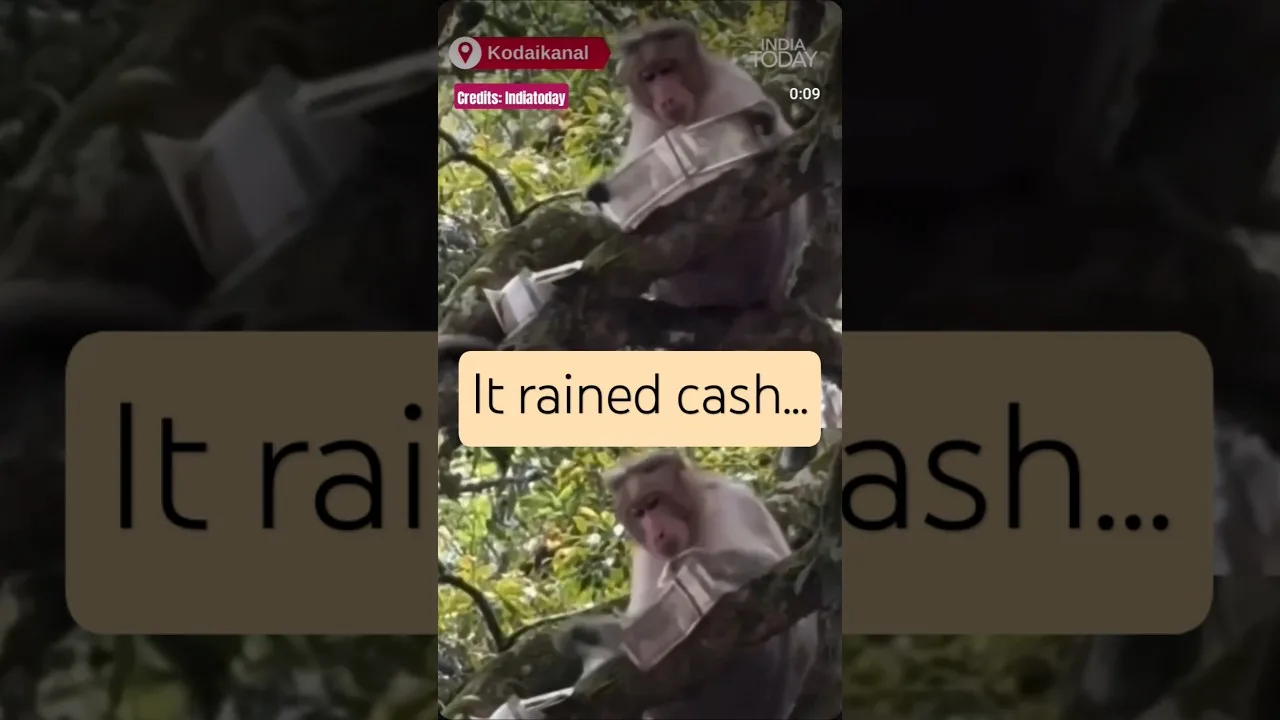
Table of Contents
- The Anatomy of the Kodaikanal Monkey Theft
- Why Kodaikanal? Understanding the Hotspot
- Social Media Frenzy: From Shock to Satire
- Expert Analysis: Opportunism or Intelligence?
- Historical Context: Escalating Conflict in the Palani Hills
- Legal Framework and Enforcement Challenges
- Comparative Perspective: Monkey Menace Across Indian Hill Stations
- Tourist Guidelines: Minimizing Risk During Your Visit
- Ecological Implications: Beyond Nuisance
- Innovative Solutions on the Horizon
- Global Lessons: Coexistence Over Conflict
- Frequently Asked Questions
- Conclusion: Turning a Viral Moment into Lasting Change
A shocking Kodaikanal monkey theft incident has captured global attention after a viral video showed a brazen primate snatching cash directly from a tourist’s hand at a popular viewpoint in the Tamil Nadu hill station. The footage, widely circulated across Instagram, X (formerly Twitter), and YouTube Shorts in late May 2024, depicts a bonnet macaque (Macaca radiata) approaching a visitor holding currency notes, swiftly grabbing the money, and retreating into the foliage within seconds. This Kodaikanal monkey theft episode underscores the escalating human-wildlife conflict in Indian hill stations, where habituated primates increasingly associate tourists with easy food rewards and shiny objects.
- Viral Impact: The Kodaikanal monkey theft video amassed over 12 million views within 48 hours, trending under hashtags #KodaikanalMonkey, #MonkeyHeist, and #WildlifeEncounter.
- Species Involved: The perpetrator is a bonnet macaque, a species endemic to peninsular India and commonly found in the Western Ghats.
- Root Cause: Wildlife experts attribute such bold behavior to years of indiscriminate feeding by tourists, which conditions monkeys to view humans as food sources.
- Official Response: The Tamil Nadu Forest Department has issued advisories prohibiting feeding and warning of fines under the Wildlife Protection Act, 1972.
- Safety Protocol: Tourists are urged to secure valuables, avoid eye contact, and never attempt to retrieve snatched items.
The Anatomy of the Kodaikanal Monkey Theft
The incident occurred at Coaker’s Walk, a narrow pedestrian path on the southern slope of Kodaikanal offering panoramic views of the plains. According to eyewitness accounts compiled by local reporters, the tourist — a 32-year-old software engineer from Bengaluru — was counting ₹2,000 notes to pay a street vendor when the macaque descended from a nearby Ficus tree. The entire Kodaikanal monkey theft lasted barely three seconds. The primate displayed remarkable dexterity, targeting the highest denomination notes and ignoring the vendor’s goods.
Dr. R. Sanil, a primatologist at the Sálim Ali Centre for Ornithology and Natural History (SACON), explains: “Bonnet macaques in high-tourism zones like Kodaikanal have undergone behavioral shifts. They recognize currency notes as high-value items because tourists often exchange food for money, creating a learned association.” This cognitive link between paper currency and caloric reward is a documented phenomenon in commensal primates across Asia.
Why Kodaikanal? Understanding the Hotspot
Kodaikanal, established as a hill station in 1845 by American missionaries, sits at 2,133 meters in the Palani Hills range. Its unique shola-grassland ecosystem supports a dense population of bonnet macaques, estimated at 1,200–1,500 individuals across the municipal limits (Forest Department census, 2022). The convergence of three factors makes Kodaikanal monkey theft incidents frequent:
- High Tourist Footfall: Pre-pandemic annual visitors exceeded 3.2 million (Tamil Nadu Tourism Statistics, 2019), creating constant human-primate interface.
- Improper Waste Management: Open garbage bins and littered food waste provide year-round anthropogenic food subsidies.
- Habitat Fragmentation: Expanding resorts and roads fragment traditional foraging grounds, pushing macaques into tourist zones.
A 2021 study published in PLOS ONE on human-macaque conflict in the Western Ghats found that 68% of macaque troops in Kodaikanal derived over 40% of their diet from human sources. This dietary shift correlates directly with increased aggression and property damage.
Social Media Frenzy: From Shock to Satire
The Kodaikanal monkey theft clip sparked a meme cascade. Within hours, creative edits placed the monkey in stock-market trading floors, ATM queues, and even parliamentary sessions. Notable viral captions included:
- “Monkey understood inflation better than RBI!”
- “The only investor with 100% return on snatch-and-run.”
- “Kodaikanal’s new GST collector: no forms, just paws.”
Beyond humor, the discourse highlighted serious concerns. Conservationists like Nitya Satheesh of the Wildlife Conservation Society–India warned that viral fame often encourages tourists to deliberately provoke animals for content. “We’ve seen a 300% rise in ‘monkey selfie’ attempts at Coaker’s Walk since Kodaikanal monkey theft dropped,” she noted in a June 2024 interview with The Hindu.
Expert Analysis: Opportunism or Intelligence?
Dr. Anindya Sinha, senior scientist at the National Institute of Advanced Studies (NIAS), Bangalore, distinguishes between opportunistic snatching and targeted theft. “The Kodaikanal monkey theft shows targeted behavior — the macaque ignored food items and went straight for cash. This suggests observational learning: the animal has watched humans exchange money for goods and inferred value.”
Such cognitive flexibility is well-documented. A 2019 Animal Cognition paper demonstrated that long-tailed macaques in Bali’s Uluwatu Temple could discriminate between high- and low-value items (electronics vs. empty containers) and barter them for food. The Kodaikanal macaque’s choice of ₹2,000 notes over ₹100 notes hints at similar value discrimination.
Historical Context: Escalating Conflict in the Palani Hills
The Kodaikanal monkey theft is not isolated. Forest Department records reveal a steady rise in human-macaque incidents:
| Year | Reported Incidents | Injuries | Property Damage Claims |
|---|---|---|---|
| 2018 | 42 | 7 | ₹1.2 lakh |
| 2019 | 68 | 12 | ₹3.5 lakh |
| 2020 | 31 | 4 | ₹0.9 lakh |
| 2021 | 55 | 9 | ₹2.8 lakh |
| 2022 | 89 | 15 | ₹5.1 lakh |
| 2023 | 112 | 22 | ₹7.4 lakh |
The 2020 dip correlates with COVID-19 lockdowns, which reduced tourist numbers by 85%. The sharp post-pandemic rebound confirms the tourism-feeding-conflict nexus. Notably, 73% of 2023 incidents occurred at just five viewpoints: Coaker’s Walk, Dolphin’s Nose, Green Valley View, Pillar Rocks, and Moir Point.
Legal Framework and Enforcement Challenges
Under Section 9 of the Wildlife Protection Act, 1972, feeding wild animals is punishable with up to three years imprisonment and/or a fine of ₹25,000. The Tamil Nadu Forest Department has installed 42 warning signboards in English, Tamil, and Hindi across Kodaikanal. However, enforcement remains sporadic. A Right to Information (RTI) query filed by activist K. Muthuraman in March 2024 revealed only 17 fines issued in 2023 despite hundreds of observed violations.
District Forest Officer (DFO) S. Gurusamy acknowledged the gap: “Our staff strength is 40% below sanctioned posts. We rely on tourist cooperation. The viral Kodaikanal monkey theft video has become an unexpected awareness tool — we’re using it in our new orientation film for incoming vehicles.”
Comparative Perspective: Monkey Menace Across Indian Hill Stations
The Kodaikanal monkey theft mirrors patterns in Shimla, Mussoorie, Nainital, and Ooty. A 2022 comparative analysis by the Wildlife Institute of India (WII) identified common drivers:
- Resource Concentration: Tourist zones offer clumped, high-calorie food.
- Low Predation Risk: Absence of leopards and pythons in urbanized pockets.
- Social Learning: Naive juveniles learn conflict behaviors from habituated adults.
Shimla’s response — deploying trained langurs (Semnopithecus entellus) to deter rhesus macaques — reduced incidents by 60% in 2018–19 but faced ethical criticism and was discontinued. Kodaikanal authorities are exploring non-invasive alternatives: monkey-proof dustbins (₹18 lakh allocated in 2024 budget), automated sprinkler deterrents at viewpoints, and a “Monkey Watch” citizen-science app for real-time troop tracking.
Tourist Guidelines: Minimizing Risk During Your Visit
Based on advisories from the Tamil Nadu Forest Department and primatologists, follow these protocols to avoid becoming the next Kodaikanal monkey theft statistic:
- Secure Valuables: Keep cash, phones, sunglasses, and jewelry in zipped bags or inner pockets. Never hold items openly.
- No Feeding, No Exceptions: Even a single banana reinforces dangerous behavior. Carry snacks in opaque containers.
- Maintain Distance: Stay at least 10 meters from macaques. Do not make direct eye contact — it’s perceived as a threat.
- If Approached: Stand still, avoid sudden movements, and slowly back away. Do not run; it triggers chase instinct.
- If Items Are Snatched: Let go immediately. Attempting retrieval causes 80% of bite injuries. Report to the nearest forest check-post.
Local hotels now provide “monkey-safe” checklist cards at check-in. The Hotel Association of Kodaikanal reported 92% compliance among member properties as of April 2024.
Ecological Implications: Beyond Nuisance
The Kodaikanal monkey theft phenomenon signals deeper ecological disruption. Bonnet macaques are seed dispersers for over 45 native tree species, including Elaeocarpus serratus (jalpai) and Syzygium cumini (jamun). Their shift to anthropogenic diets reduces seed dispersal efficiency, potentially altering forest regeneration dynamics. Moreover, provisioned troops exhibit higher population densities, increased intra-group aggression, and elevated parasite loads — a 2023 veterinary survey found 68% of Kodaikanal macaques carried gastrointestinal helminths, double the rate in wild-foraging troops.
Dr. Meena Venkataraman, conservation biologist at NIAS, emphasizes: “We’re not just dealing with a nuisance; we’re witnessing a population-level health crisis driven by human behavior. The solution isn’t translocation — which merely shifts conflict — but restoring natural foraging ecology through waste management and habitat connectivity.”
Innovative Solutions on the Horizon
Three pilot projects launched in 2024 aim to mitigate Kodaikanal monkey theft and related conflicts:
- AI-Powered Early Warning: Camera traps with edge-computing modules (developed by IIT Madras) detect macaque troops approaching viewpoints and trigger audio deterrents (predator calls) and SMS alerts to forest guards.
- Community-Based Waste Segregation: A partnership with Hasiru Dala, a Bengaluru-based waste-picker collective, trains local self-help groups in composting organic waste at source, reducing attractants.
- Eco-Tourism Certification: The “Monkey-Smart Destination” label, modeled on Bhutan’s “Zero Waste” framework, incentivizes hotels and vendors with tax rebates for compliance.
Early results from the AI pilot at Dolphin’s Nose show a 40% reduction in close encounters during the May–June peak season.
Global Lessons: Coexistence Over Conflict
The Kodaikanal monkey theft resonates globally. In Cape Town, chacma baboons raid homes and vehicles; in Gibraltar, Barbary macaques target tourists’ bags; in Florida, rhesus macaques (introduced in the 1930s) damage crops. Successful models share principles:
- Strict Anti-Feeding Laws with consistent enforcement (Singapore’s $10,000 fines).
- Habitat Restoration to reduce dependence on human subsidies (Hong Kong’s country park corridors).
- Public Education integrating wildlife ecology into school curricula (Japan’s monkey parks).
Kodaikanal’s municipal council has allocated ₹2.3 crore in the 2024–25 budget for a comprehensive Human-Primate Coexistence Plan, drafted with WII guidance. If implemented, it could become a template for the 40+ Indian hill stations facing similar challenges.
Frequently Asked Questions
Conclusion: Turning a Viral Moment into Lasting Change
The Kodaikanal monkey theft video, while entertaining millions, serves as a stark reminder of the consequences of unmanaged human-wildlife interfaces. Each shared clip of a “clever” monkey stealing cash normalizes behavior that endangers both species. Tourists hold immense power: by refusing to feed, securing belongings, and reporting violations, they become active participants in conservation rather than passive spectators of conflict.
As Kodaikanal prepares for its next tourist season, the hope is that the viral fame of one audacious macaque translates into sustained awareness, better waste management, and a renewed commitment to coexistence. The hill station’s charm lies not in its bold monkeys, but in the delicate balance of its shola forests — a balance that depends on informed, responsible visitors.
Have you experienced a wildlife encounter in Kodaikanal or another hill station? Share your story and tips in the comments below. For official guidelines, visit the Tamil Nadu Forest Department website.
Frequently Asked Questions
Do not chase or attempt to retrieve the item — this provokes aggression and causes most bite injuries. Stay calm, move away slowly, and report the incident to the nearest Forest Department check-post or call the 24-hour helpline 1800-425-45567.
Yes. Bonnet macaques can inflict serious bites and scratches. Children are at higher risk due to their size and tendency to carry food openly. Always supervise children closely, keep them within arm's reach, and avoid eating in monkey-frequented areas.
Absolutely. Under Section 9 of the Wildlife Protection Act, 1972, feeding wild animals is a cognizable offense punishable by up to three years imprisonment and/or a fine of ₹25,000. The Tamil Nadu Forest Department actively patrols viewpoints and issues challans.
