Blog
International Trade Class 12: Complete NCERT Geography Chapter 8 Guide

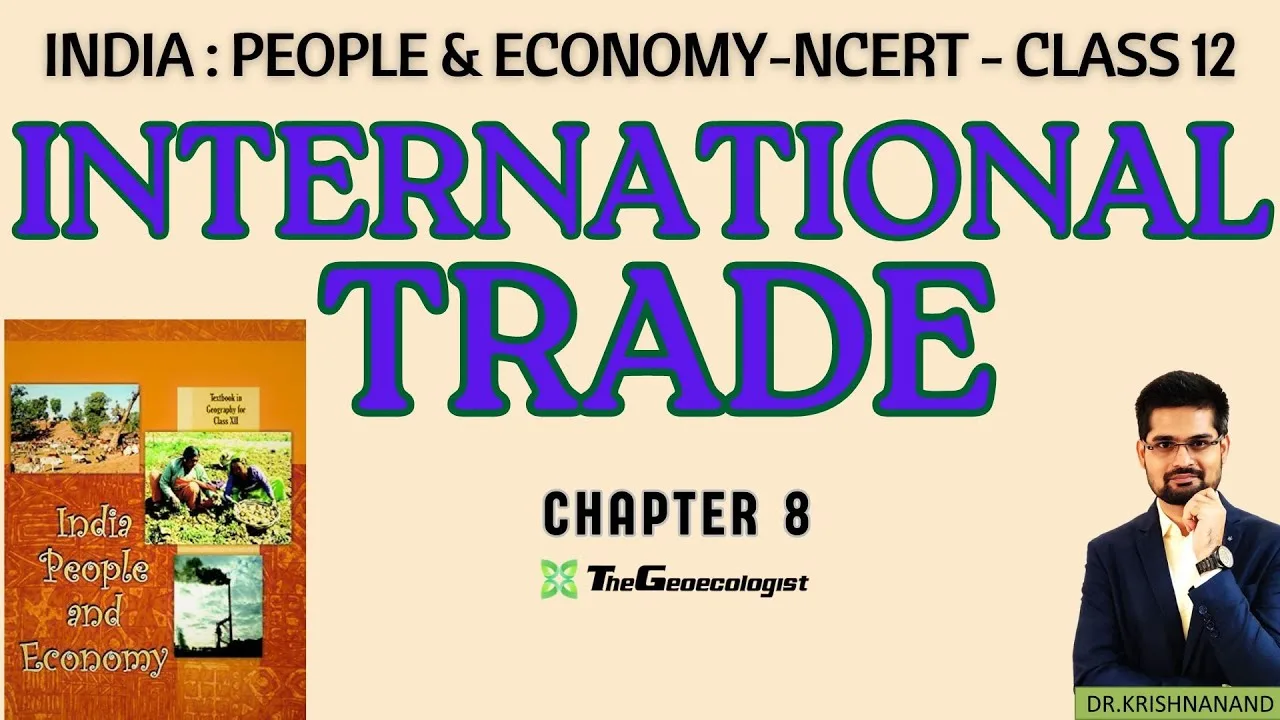
Table of Contents
- What Is International Trade Class 12 NCERT Definition
- Key Characteristics of International Trade
- Balance of Trade: Surplus vs Deficit Analysis
- India's Trade Deficit Trends
- Evolution of India's International Trade
- Colonial Era (Pre-1947)
- Post-Independence to 1991
- Post-1991 Liberalization
- India's Major Exports and Imports Composition
- Top Export Categories (2023-24 Data)
- Top Import Categories
- Major Trade Partners and Agreements
- Top 5 Trading Partners (2023-24)
- Trade Agreements Framework
- Seaports: Gateways of International Trade Class 12
- Major Ports and Specializations
- Sagarmala Programme
- Challenges and Future Prospects
- Persistent Challenges
- Strategic Initiatives
- Sustainability in International Trade
- Green Trade Opportunities
- Exam Preparation Strategy for International Trade Class 12
- Conclusion
International Trade Class 12 NCERT Geography Chapter 8 is a cornerstone topic for students preparing for CBSE board exams, CUET, UPSC, and other competitive examinations. This comprehensive guide covers every critical concept from the ‘India’s People and Economy’ textbook, explaining how exchange of goods, services, and capital across national borders shapes India’s economic landscape. Understanding International Trade Class 12 concepts provides not just academic marks but a foundational framework for analyzing global economic interdependence, trade policies, and India’s evolving position in world commerce.
- International Trade Class 12 distinguishes between bilateral and multilateral trade mechanisms
- Balance of Trade (BoT) analysis reveals India’s persistent trade deficit driven by crude oil imports
- Post-1991 liberalization transformed India’s export basket from raw materials to engineering goods, IT services, and pharmaceuticals
- 13 major ports handle 95% of India’s EXIM volume, with JNPT as the largest container port
- Initiatives like Make in India, Sagarmala, and renewable energy focus aim to reduce trade deficits
What Is International Trade Class 12 NCERT Definition
According to the NCERT Geography textbook for Class 12, International Trade Class 12 refers to the exchange of goods, services, and capital across international borders or territories. Unlike domestic trade, it involves complex regulations, multiple currencies, tariff barriers, and diverse legal frameworks. The chapter emphasizes that trade is not merely economic transaction but a catalyst for globalization, fostering interdependence among nations. Students must grasp the distinction between bilateral trade (between two countries) and multilateral trade (involving multiple nations through agreements like WTO).
Key Characteristics of International Trade
- Cross-border movement: Goods and services traverse national boundaries
- Currency conversion: Transactions require foreign exchange mechanisms
- Regulatory complexity: Customs duties, quotas, trade agreements govern flows
- Risk factors: Political instability, exchange rate fluctuations, transport hazards
Balance of Trade: Surplus vs Deficit Analysis
The International Trade Class 12 curriculum places significant emphasis on Balance of Trade (BoT) — the difference between a nation’s exports and imports of goods. A trade surplus occurs when exports exceed imports (examples: China, Germany), while a trade deficit arises when imports surpass exports. India has consistently recorded a trade deficit since liberalization in 1991, primarily due to high crude oil imports which constitute approximately 25% of the total import bill.
India’s Trade Deficit Trends
Post-1991, India’s trade deficit widened from $5.7 billion in 1990-91 to over $190 billion in recent years. The Reserve Bank of India’s annual reports provide authoritative data on these trends. Key drivers include:
- Energy security concerns: 85% of crude oil demand met through imports
- Gold imports for jewelry and investment demand
- Electronics and machinery imports for industrial growth
- Fertilizer imports for agricultural sector
Evolution of India’s International Trade
The historical trajectory covered in International Trade Class 12 reveals three distinct phases:
Colonial Era (Pre-1947)
India served as a supplier of raw materials (cotton, jute, indigo, tea) and a market for British manufactured goods. This exploitative pattern created structural distortions — deindustrialization of traditional handicrafts, drain of wealth, and dependency on primary exports.
Post-Independence to 1991
Import substitution industrialization (ISI) dominated policy. High tariffs, licensing (License Raj), and inward-looking strategy aimed at self-reliance but resulted in low export growth (averaging 3-4% annually) and periodic balance of payments crises.
Post-1991 Liberalization
The 1991 reforms — devaluation, trade policy reforms, dismantling of quantitative restrictions — unleashed export dynamism. Merchandise exports grew from $18 billion (1990-91) to over $450 billion (2023-24). Services exports, particularly IT/ITES, now contribute ~40% of total exports, making India a global services hub.
India’s Major Exports and Imports Composition
International Trade Class 12 requires memorizing the shifting composition of India’s trade basket:
Top Export Categories (2023-24 Data)
- Engineering Goods: ~$110 billion (largest category)
- Petroleum Products: ~$85 billion (refined exports)
- Gems & Jewelry: ~$35 billion
- Textiles & Apparel: ~$30 billion
- Chemicals & Pharmaceuticals: ~$28 billion
- IT/ITES Services: ~$200 billion (services exports)
Top Import Categories
- Crude Oil: ~$160 billion (~25% of import bill)
- Gold: ~$45 billion
- Electronics & Components: ~$60 billion
- Machinery: ~$40 billion
- Fertilizers: ~$25 billion
Major Trade Partners and Agreements
The International Trade Class 12 syllabus highlights India’s top trading partners and institutional frameworks:
Top 5 Trading Partners (2023-24)
| Rank | Country | Trade Type |
|---|---|---|
| 1 | United States | Largest export destination |
| 2 | UAE | Major re-export hub, energy partner |
| 3 | China | Largest import source |
| 4 | Hong Kong | Key gems/jewelry market |
| 5 | Germany | Major EU partner |
Trade Agreements Framework
- Multilateral: WTO membership since 1995, active in Doha Development Agenda
- Regional: SAFTA (South Asian Free Trade Area), APTA (Asia-Pacific Trade Agreement)
- Bilateral FTAs: India-UAE CEPA (2022), India-Australia ECTA (2022), India-UK FTA (under negotiation)
The WTO’s dispute settlement mechanism plays a crucial role in resolving trade conflicts, as highlighted in the NCERT chapter.
Seaports: Gateways of International Trade Class 12
India’s 7,516 km coastline hosts 13 major ports and 200+ minor ports handling 95% of EXIM trade by volume and 70% by value. International Trade Class 12 students must know key port functions:
Major Ports and Specializations
- Mumbai Port: Largest natural harbor, handles petroleum, textiles, chemicals
- JNPT (Nhava Sheva): India’s largest container port, handles 55% of container traffic
- Chennai Port: Gateway for South India, automobiles, textiles
- Kolkata/Haldia Port: Riverine port serving Eastern India, jute, tea, iron ore
- Mundra Port (Private): Largest private port, coal, containers, crude
- Visakhapatnam Port: Iron ore, coal, fertilizers
Sagarmala Programme
Launched in 2015, this flagship initiative aims to modernize port infrastructure, enhance connectivity (rail/road/inland waterways), and promote port-led industrialization. Target: reduce logistics cost from 14% to <10% of GDP by 2025.
Challenges and Future Prospects
The International Trade Class 12 chapter concludes with critical challenges and policy responses:
Persistent Challenges
- Structural trade deficit: Energy import dependency limits correction
- Export concentration: Top 10 products account for 60% of exports
- Market concentration: Over-reliance on few partners (USA, EU, UAE)
- Infrastructure bottlenecks: High logistics cost (14% GDP vs 8-9% global avg)
- Non-tariff barriers: Sanitary/phytosanitary measures in developed markets
Strategic Initiatives
- Make in India: Boost manufacturing share to 25% GDP, create export champions
- PLI Schemes: Production Linked Incentives for 14 sectors (electronics, pharma, auto)
- Green Energy Transition: National Green Hydrogen Mission, 500 GW renewable target by 2030 to cut oil imports
- Digital Trade: E-commerce exports target $200-300 billion by 2030
- Trade Facilitation: National Logistics Policy (2022), ICEGATE, single window clearance
Sustainability in International Trade
Modern International Trade Class 12 analysis must incorporate sustainability dimensions. The chapter emphasizes eco-friendly practices — carbon border adjustment mechanisms (CBAM) by EU, green shipping corridors, circular economy principles in textile and electronics exports. India’s commitment to net-zero by 2070 will reshape trade patterns, creating opportunities in green technology exports while challenging carbon-intensive sectors.
Green Trade Opportunities
- Solar PV modules and green hydrogen equipment exports
- Sustainable textiles and organic agricultural products
- EV components and battery technology
- Carbon credit markets under Article 6 of Paris Agreement
Exam Preparation Strategy for International Trade Class 12
To master International Trade Class 12 for board and competitive exams:
- NCERT First: Read Chapter 8 line-by-line; 70% questions derive directly
- Map Work: Locate 13 major ports, major trade routes, partner countries
- Data Memorization: Key statistics — trade deficit figures, top 5 exports/imports, partner shares
- Conceptual Clarity: BoT vs BoP, bilateral vs multilateral, tariff vs non-tariff barriers
- Current Affairs: Latest EXIM policy, FTA negotiations, PLI scheme updates
- Previous Year Questions: Analyze 10-year papers for CUET, UPSC, CBSE patterns
Conclusion
International Trade Class 12 NCERT Geography Chapter 8 provides an indispensable framework for understanding India’s economic engagement with the world. From colonial exploitation to post-liberalization dynamism, from persistent trade deficits to strategic port modernization, the chapter encapsulates the complexities of a nation finding its place in global value chains. For students targeting CBSE, CUET, UPSC, or UGC NET, mastering this chapter builds not just exam readiness but analytical capacity to interpret India’s evolving trade diplomacy, sustainability commitments, and aspirations for a $2 trillion export target by 2030. Regular revision, map practice, and current affairs integration will ensure comprehensive command over this vital topic.
Frequently Asked Questions
Balance of Trade (BoT) records only visible goods (merchandise) exports and imports, while Balance of Payments (BoP) is a comprehensive record including goods, services, capital transfers, and financial flows. BoT is a subset of BoP's current account.
Engineering goods, petroleum products, and gems & jewelry are India's top three merchandise export categories. IT/ITES services constitute ~40% of total exports when services are included.
India has 13 major ports. Jawaharlal Nehru Port Trust (JNPT) at Nhava Sheva, Navi Mumbai is the largest container port handling approximately 55% of India's containerized cargo traffic.