Blog
Geosynclines: Concepts and Theories | Kober | Hall and Dana | Haug |Schuchert | Dr. Krishnanand

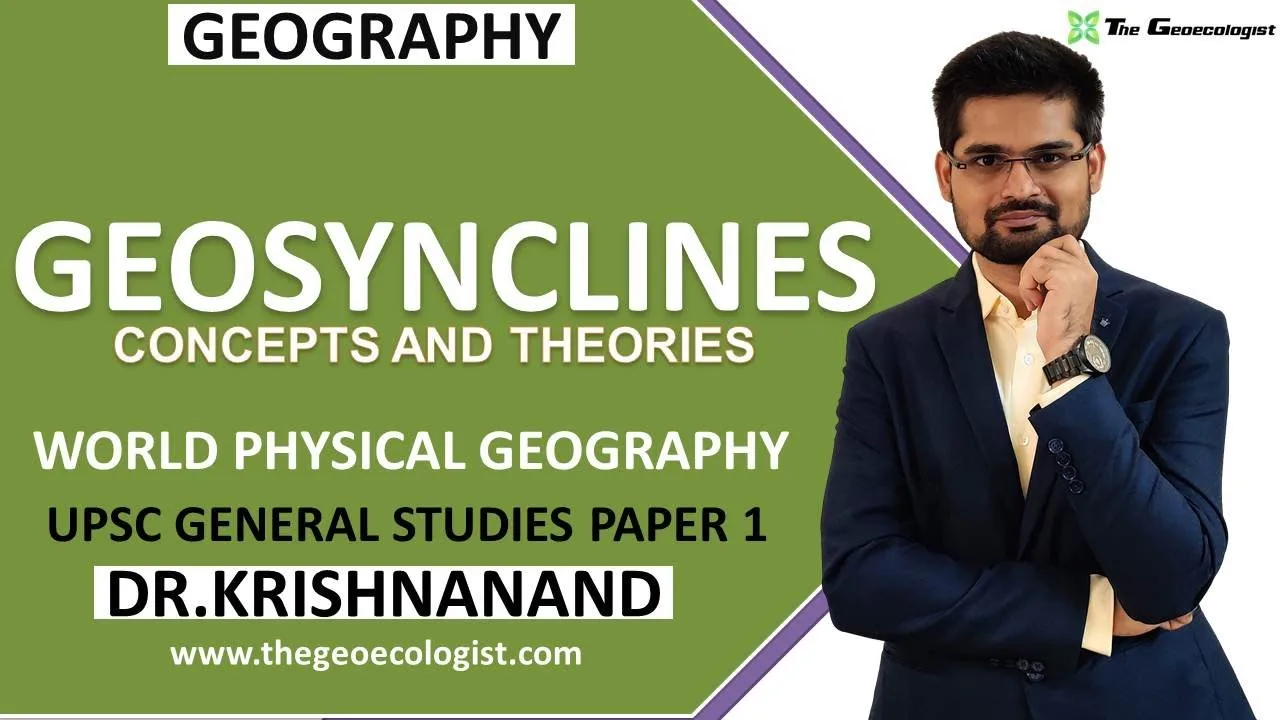
Geosynclines: Concepts and Theories | Kober | Hall and Dana | Haug |Schuchert | Dr. Krishnanand
Geosynclines: Concepts and Theories in Physical Geography
Introduction
Geosynclines are fundamental geological concepts that have shaped our understanding of mountain-building processes and the evolution of Earth’s crust. The study of geosynclines has evolved through various theories proposed by prominent geologists such as Kober, Hall and Dana, Haug, and Schuchert. These concepts are crucial for students of World Physical Geography, particularly for UPSC General Studies Paper-1 and competitive geography examinations.
This article explores the key theories of geosynclines, their significance, and their relevance in modern geology. For a deeper understanding, refer to the Simplified Geomorphology E-book available at MithilaCraft.
What is a Geosyncline?
A geosyncline refers to a large, elongated depression in Earth’s crust where sediments accumulate over millions of years. These deposits eventually undergo intense folding, faulting, and metamorphism, leading to the formation of mountain ranges—a process known as orogenesis.
Geosynclinal theory was instrumental in explaining how mountains form before the acceptance of plate tectonics. However, modern geology has modified these concepts to align with tectonic movements.
Key Theories of Geosynclines
1. James Hall and James Dana (American Geologists – 19th Century)
- Proposed the Geosynclinal Theory based on their studies of the Appalachian Mountains.
- Hall observed that thick sedimentary deposits in basins later became mountain belts.
- Dana refined the idea, suggesting that geosynclines were subsiding areas that eventually turned into folded mountains due to lateral compression.
- Their work laid the foundation for future geosynclinal theories.
2. Émile Haug (French Geologist – Early 20th Century)
- Classified geosynclines into two types:
- Orthogeosynclines: Large-scale depressions in oceanic regions, later forming major mountain chains.
- Parageosynclines: Smaller, marginal basins with lesser deformation.
- His classification helped in distinguishing between different sedimentary basins and their tectonic significance.
3. Charles Schuchert (American Geologist)
- Expanded on Hall and Dana’s concepts, emphasizing the role of continental and marine sedimentation.
- Demonstrated how geosynclines evolved through different stages—subsidence, sedimentation, folding, and uplift—to form orogenic belts.
4. Leopold Kober (Austrian Geologist – Early 20th Century)
- Proposed the concept of paired geosynclines:
- Miogeosyncline (near continent): Shallow water deposits.
- Eugeosyncline (away from continent): Deep-water deposits with volcanic activity.
低调的现代革命:.mlmodel构想 (Kober)的贡献为后来的板块构造学说提供了早期思路。
Modern Interpretation and Plate Tectonics
While geosynclinal theories dominated pre-tectonic geology, the Theory of Plate Tectonics (mid-20th century) provided a more comprehensive explanation for mountain formation. However, many geosynclinal concepts remain relevant:
- Ocean trenches (modern equivalents of eugeosynclines).
- Passive continental margins (similar to miogeosynclines).
- Subduction zones causing crustal compression and mountain-building.
Geosynclinal theories thus serve as a historical bridge between early geological thought and modern tectonic models.
Importance for UPSC and Geography Students
Understanding geosynclines is essential for:
- UPSC General Studies (GS Paper-1): Physical geography of the world.
- Geography Optional: Concepts of orogeny, sedimentation, and crustal evolution.
- Competitive Exams: Geological processes and historical geology.
For detailed insights, refer to Dr. Krishnanand’s lecture series on THEGEOECOLOGIST YouTube Channel or the Simplified Geomorphology E-book from MithilaCraft.
Conclusion
From the early theories of Hall and Dana to Kober’s classification, geosynclinal concepts have significantly influenced geology. Although plate tectonics has replaced many of these ideas, the study of geosynclines remains vital for understanding Earth’s dynamic processes.
For UPSC aspirants and geography students, mastering these concepts is a stepping stone to comprehending larger geomorphological phenomena.
Subscribe to THEGEOECOLOGIST for more expert insights on geography!
Geography #Geosynclines #UPSC #GeneralStudies #PhysicalGeography #TheGeoecologist #Geomorphology
To Download E-Books & Study Material Visit The Shop Page