Blog
Geography Field Survey Notes: Why MA/MSc Students Trust This E-Book for Exam Success


Many MA/MSc geography students struggle to find reliable, concise Geography Field Survey Notes that align with the latest CBCS syllabus and cover both theory and practical report writing.
- Get clear, point‑wise explanations that match university exam patterns.
- Benefit from diagrams, maps, and images that make field concepts easy to grasp.
- Save time with a structured guide that replaces scattered PDF notes.
- Learn ethical fieldwork practices and data‑management skills required for research.
- Boost confidence in writing field reports that score high in practicals.
Why MA/MSc Geography Practical Field Survey Notes Matter for Exam Success
When preparing for MA/MSc geography practicals, students often search for Geography Field Survey Notes because lecture slides and generic textbooks lack the step‑by‑step detail needed for field assignments. The pressure to submit accurate field reports, maintain a proper database, and adhere to ethical guidelines can overwhelm even the most diligent learners. A focused study resource that condenses fieldwork methodology, data collection techniques, and report‑writing format into a single, syllabus‑aligned document reduces preparation time and improves retention. By using a dedicated guide, students can quickly revisit key concepts before viva voce or practical exams, ensuring they can answer questions on sampling methods, questionnaire design, and spatial analysis with confidence.
Common Gaps in Free PDF Resources and How They Affect Learning
A quick search for “MA/MSc Geography Practical Field Survey Notes PDF” returns numerous free downloads, but many suffer from outdated content, missing diagrams, or incomplete coverage of the CBCS framework. Some PDFs contain only scanned handwritten notes that are hard to read, while others skip crucial chapters such as ethics of fieldwork or database management. These gaps force students to piece together information from multiple sources, leading to inconsistencies and wasted study hours. Moreover, without authoritative explanations, learners may develop misconceptions about techniques like transect surveys or participatory rural appraisal, which can affect both exam scores and future fieldwork credibility.
Evaluating a Quality Field Work Guide: What to Look For
To choose a trustworthy supplement, students should verify that the material:
- Follows the current UGC‑approved CBCS syllabus for geography practicals.
- Includes point‑wise headings, highlighted key terms, and visual aids like maps and flowcharts.
- Covers the full workflow: from planning and ethics to data collection, database creation, and report writing.
- Provides practical examples, sample formats, and tips for avoiding common mistakes.
- Is authored by an experienced academic or practitioner with a proven record in geography education.
When a resource meets these criteria, it becomes a reliable one‑stop solution that eliminates the need to hunt for fragmented PDFs.
How Field Work And Report Writing by Dr. Krishnanand Bridges the Gap
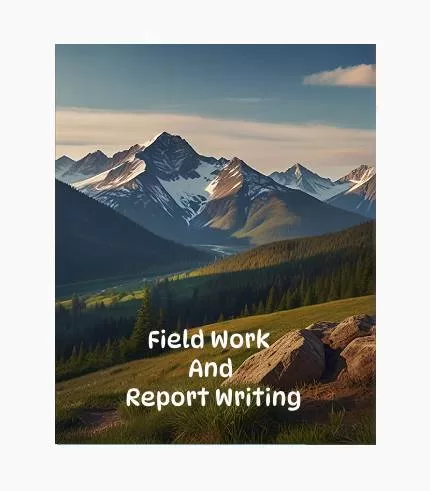
The e‑book titled Field Work And Report Writing | E‑Book | Dr. Krishnanand | Bestseller directly addresses the shortcomings of free PDFs. Aligned with the prescribed CBCS syllabus, it delivers Geography Field Survey Notes in a clear, point‑wise format enriched with diagrams, maps, and real‑world images. Each chapter walks the reader through a specific aspect of fieldwork:
- Chapter 1 introduces the importance and relevance of field surveys in geographical research.
- Chapter 2 explains the approach and need for fieldwork, linking theory to practical objectives.
- Chapter 3 traces the evolution of fieldwork techniques, helping students appreciate modern methods.
- Chapter 4 discusses the role and value of fieldwork in generating reliable geographic insights.
- Chapter 5 covers ethics, emphasizing consent, confidentiality, and respect for study sites.
- Chapter 6 guides learners in building and managing geographical databases for accuracy.
- Chapter 7 details various data collection methods, from questionnaires to remote sensing.
- Subsequent chapters focus on data analysis, report structure, and presentation tips.
Because the content is designed for UPSC CSE aspirants, undergraduates, and geography enthusiasts, it balances depth with accessibility. The highlighted points and visual aids enable quick revision, making it an ideal companion for students who need Geography Field Survey Notes that are both comprehensive and exam‑focused.
Real-World Applications of Field Survey Techniques Beyond the Classroom
Mastering fieldwork is not limited to clearing practical exams; it forms the foundation for careers in urban planning, environmental consultancy, disaster management, and academic research. For instance, a graduate equipped with solid Geography Field Survey Notes can design a watershed assessment, conduct a socio‑economic survey for a rural development project, or create a GIS‑ready database for urban heat‑island studies. The e‑book’s emphasis on ethical practices ensures that graduates conduct responsible research, a quality increasingly valued by employers and funding agencies. By internalizing the workflow presented in the guide, students transition smoothly from academic assignments to professional field projects.
Practical Tips for Using the E-Book in Your Study Routine
To maximize the benefit of Field Work And Report Writing, consider the following strategies:
- Begin each study session by reviewing the point‑wise summary at the start of a chapter; this activates prior knowledge.
- Use the diagrams and maps to create flashcards for terminology and procedural steps.
- After reading a chapter, attempt to draft a mini‑report on a familiar topic (e.g., a local park) using the provided format.
- Refer to the ethics chapter before any field visit to ensure compliance with institutional guidelines.
- Leverage the database chapter to set up a simple spreadsheet template for your own survey data.
- Revisit the report‑writing section before submission deadlines to check structure, referencing, and presentation.
Integrating these habits turns the e‑book from a static reference into an active learning tool that improves both understanding and output quality.
Buying Guide: Getting the Most Value from Your Purchase
When you decide to invest in Field Work And Report Writing | E‑Book | Dr. Krishnanand | Bestseller, keep these points in mind:
- Verify that you are purchasing the latest edition, as updates may include new case studies or revised CBCS alignment.
- Check the file format compatibility; the PDF works on laptops, tablets, and smartphones, enabling study on the go.
- Look for any bundled offers, such as complimentary sample chapters or discount codes for other geography titles.
- After download, organize the file in a dedicated folder with your lecture notes and past papers for easy retrieval.
- If you encounter any issues with the download, the seller’s customer support is responsive and can provide a fresh link.
By following this simple checklist, you ensure that your purchase translates into tangible academic improvement and long‑term reference value.
Further reading: Geography Field Survey Notes on Wikipedia
Our Recommendation
📖 Part of our complete guide: Evolution of Geographical Thought: A Comprehensive Guide for UPSC Aspirants and Geography Enthusiasts
Frequently Asked Questions
Is the e-book aligned with the latest UGC CBCS syllabus for geography practicals?
Yes, Field Work And Report Writing by Dr. Krishnanand follows the prescribed CBCS syllabus, ensuring that all topics match current university requirements for MA/MSc geography practicals.
How does this e-book differ from free Geography Field Survey Notes PDFs available online?
Unlike many free PDFs that are outdated, incomplete, or lack visual aids, this e-book offers point‑wise explanations, detailed diagrams, maps, and a full workflow from ethics to report writing, all in one updated, syllabus‑aligned resource.
Can I use this e-book for UPSC CSE geography preparation as well?
Absolutely. The content is designed for UPSC CSE aspirants, undergraduates, and geography enthusiasts, making it useful for both academic practicals and competitive exam preparation.