
Blog
Embracing Life Dualities: The Kaleidoscope of Existence

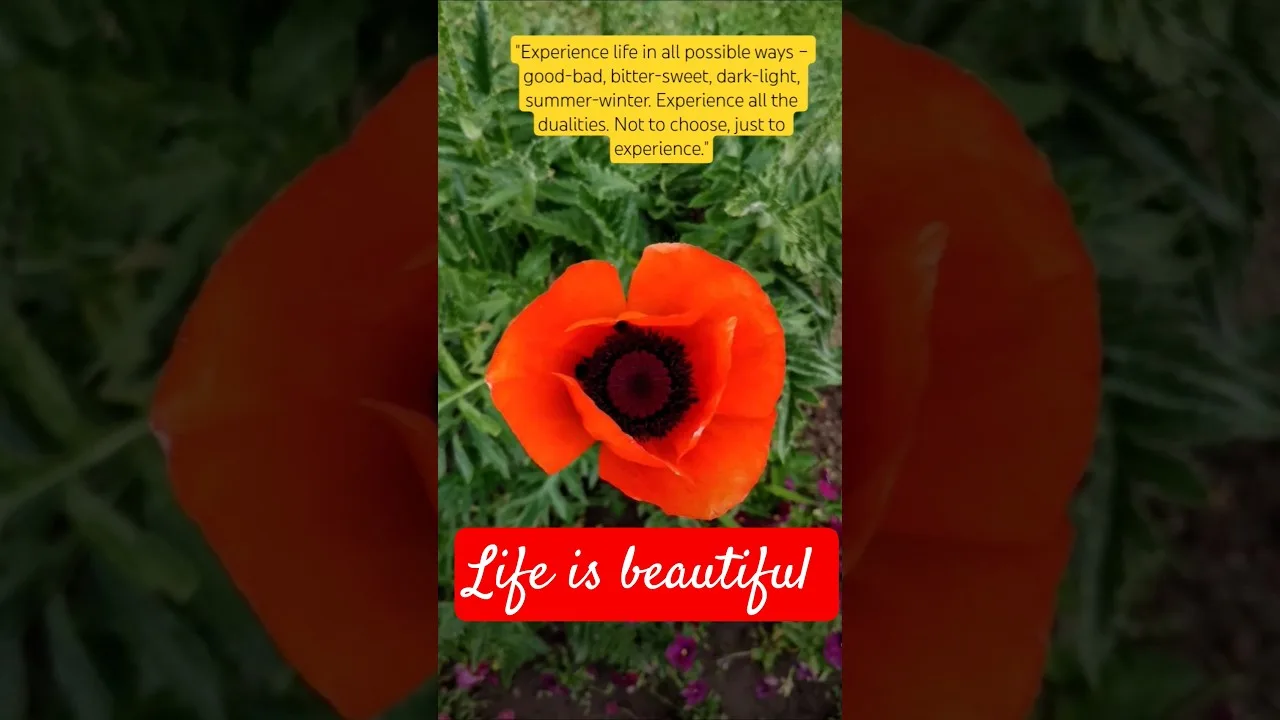
Table of Contents
- The Philosophy of Dualities in Human Experience
- Historical Perspectives on Embracing Life Dualities
- Stoic Wisdom on Obstacles
- Eastern Philosophy and Yin-Yang
- Modern Psychological Research
- Why Resisting Half of Life Diminishes the Whole
- Practical Ways to Practice Embracing Life Dualities
- Mindful Awareness of Emotional Weather
- Reframing Challenges as Teachers
- Rituals for Integration
- The Kaleidoscope Metaphor: Shifting Patterns of Meaning
- Scientific Evidence for Emotional Diversity
- Common Misconceptions About Acceptance
- Building a Life That Holds It All
- Frequently Asked Questions
- What does embracing life dualities mean in practice?
- Is embracing life dualities the same as toxic positivity?
- How can I start embracing life dualities today?
Embracing life dualities means recognizing that existence is not a singular note but a symphony of contrasting melodies—a grand tapestry woven with threads of opposites. Joy and sorrow, success and failure, light and darkness: these are not flaws in the design but essential elements that give depth to our journey. When we stop resisting discomfort and start allowing experiences to flow through us, we discover a resilience that transforms how we live. This article explores the philosophy, science, and daily practice of welcoming every hue of the human experience.
- Life thrives on contrast: Without darkness, light loses its brilliance; without pain, joy would not be so precious.
- Wisdom lies in non-resistance: Neither clinging to pleasure nor rejecting pain allows experiences to move through us like weather.
- Ancient traditions agree: Stoicism, Taoism, and modern psychology all point to acceptance as the path to wholeness.
- Emotional diversity predicts well-being: Research shows that experiencing a rich array of emotions—both positive and negative—correlates with better mental health.
- Practice makes it possible: Mindful awareness, reframing, and simple rituals help us build the capacity to hold it all.
The Philosophy of Dualities in Human Experience
Every culture in human history has grappled with the fundamental polarity of existence. The ancient Greeks spoke of agon—struggle or contest—as the engine of excellence. The Chinese Taoists mapped the interplay of yin and yang, recognizing that each force contains the seed of its opposite. In the Hebrew wisdom literature, Ecclesiastes declares: “To everything there is a season, and a time to every purpose under heaven.” Embracing life dualities is not a modern self-help concept; it is a perennial insight into the structure of reality itself.
Consider the kaleidoscope metaphor. A kaleidoscope creates beauty precisely because fragments of colored glass shift against a dark background. Turn the tube, and the pattern changes—sometimes symmetrical, sometimes chaotic—but the darkness remains essential. Remove the dark spaces, and the colors lose definition. This is the core truth of embracing life dualities: contrast creates meaning.
Historical Perspectives on Embracing Life Dualities
Stoic Wisdom on Obstacles
The Stoics of ancient Greece and Rome elevated the acceptance of difficulty into a systematic philosophy. Marcus Aurelius, emperor and philosopher, wrote in his Meditations: “The impediment to action advances action. What stands in the way becomes the way.” This principle—that obstacles are not interruptions of the path but the path itself—captures the essence of embracing life dualities. The Stoics did not merely endure hardship; they trained themselves to welcome it as raw material for virtue. Seneca advised: “Fire tests gold, suffering tests brave men.” For the Stoic, every external circumstance—poverty, illness, betrayal, loss—was an opportunity to exercise wisdom, courage, justice, and temperance.
Stoicism flourished for centuries because it offered a practical framework for embracing life dualities in a volatile world. Its influence extends into modern cognitive behavioral therapy (CBT), which teaches that our judgments about events—not the events themselves—determine our suffering.
Eastern Philosophy and Yin-Yang
In Taoist thought, the taijitu symbol—commonly called the yin-yang—visualizes the dynamic interplay of opposites. The black swirl (yin) contains a white dot; the white swirl (yang) contains a black dot. This illustrates a profound truth: each pole carries the seed of its opposite. Winter holds the promise of spring; success plants the roots of complacency; grief cracks the heart open for deeper love. Yin and yang are not static categories but a dance of transformation. The Tao Te Ching teaches: “Under heaven all can see beauty as beauty only because there is ugliness. All can know good as good only because there is evil.” Embracing life dualities, from this perspective, means aligning with the natural flow of change rather than freezing one half of the cycle.
Modern Psychological Research
Contemporary science has validated what philosophers intuited. The concept of emodiversity—the variety and relative abundance of emotions a person experiences—has emerged as a robust predictor of mental and physical health. A landmark 2012 study published in the Journal of Experimental Psychology: General found that people who experience a wider range of emotions, including negative ones, have lower levels of systemic inflammation and better overall health than those whose emotional lives are narrow, even if the narrow range is predominantly positive. The researchers concluded that “emotional monocultures”—whether of happiness or sadness—are maladaptive. Embracing life dualities, in psychological terms, means cultivating high emodiversity: allowing grief, anger, awe, serenity, jealousy, and gratitude to each arise and pass without censorship.
Why Resisting Half of Life Diminishes the Whole
Most of us spend enormous energy chasing pleasure and avoiding pain. This strategy seems rational—who wouldn’t prefer comfort?—but it carries a hidden cost. When we reject uncomfortable experiences, we also dampen our capacity for the rich ones. Neuroscientist Antonio Damasio’s work on patients with damage to emotion-processing brain regions revealed a startling fact: without the ability to feel negative emotions, decision-making collapses. The patients could not learn from mistakes, assess risk, or navigate social situations. Pain, it turns out, is information.
Psychologist Carl Jung framed this in shadow terms: “One does not become enlightened by imagining figures of light, but by making the darkness conscious.” When we exile parts of our experience—grief, failure, anxiety, boredom—they don’t disappear. They operate unconsciously, driving behavior we don’t understand. Embracing life dualities means inviting the exiled parts back into awareness, not to wallow but to integrate. The alternative is a fragmented self, perpetually at war with its own nature.
Practical Ways to Practice Embracing Life Dualities
Mindful Awareness of Emotional Weather
Mindfulness teachers often compare emotions to weather: storms pass, skies clear, seasons change. The practice is simple but radical: when a difficult feeling arises, name it. “This is sadness.” “This is irritation.” “This is fear.” Naming activates the prefrontal cortex and reduces amygdala reactivity, creating a pause between stimulus and response. In that pause, we can choose to stay present rather than numb, distract, or lash out. Over time, this builds what psychologists call distress tolerance—the ability to remain functional and values-aligned even when inner conditions are turbulent.
Reframing Challenges as Teachers
The Stoic exercise of premeditatio malorum (premeditation of adversity) involves vividly imagining potential difficulties each morning—not to catastrophize but to rehearse equanimity. Modern research on stress mindset shows that people who view stress as enhancing (rather than debilitating) exhibit healthier cortisol profiles, better cognitive performance, and greater resilience. Embracing life dualities means asking of every challenge: “What is this here to teach me? What capacity is it inviting me to develop?” This doesn’t minimize suffering; it transmutes it into data for growth.
Rituals for Integration
Rituals mark transitions and hold space for complex feelings. A weekly “review and release” practice—writing down the week’s joys and sorrows, then burning or burying the paper—creates a container for embracing life dualities. Annual rituals like the Japanese Obon festival (honoring ancestors) or the Mexican Día de los Muertos (celebrating deceased loved ones) culturally encode the integration of grief and gratitude. Personal rituals—a morning walk, a candle lit for a loss, a toast to a failure that redirected you—serve the same function: they say, “This happened. It matters. I am still here.”
The Kaleidoscope Metaphor: Shifting Patterns of Meaning
Return to the kaleidoscope. The fragments inside are fixed—your history, your temperament, your losses and triumphs. But the pattern changes with every turn. A divorce that looked like pure tragedy at 30 may reveal itself at 50 as the catalyst for a more authentic life. A career failure may redirect you to work that aligns with your deepest values. Embracing life dualities means trusting that the pattern is still forming, that today’s dark fragment may refract tomorrow’s light in an unforeseen way. This is not toxic positivity; it is epistemic humility. We cannot know the final geometry of a life still being lived.
Scientific Evidence for Emotional Diversity
The emodiversity research mentioned earlier has been replicated across cultures and age groups. A 2017 study in Emotion found that adolescents with higher emodiversity showed fewer depressive symptoms over time, regardless of their average positive or negative affect. A 2020 cross-cultural study spanning 16 countries confirmed that emotional diversity predicts lower depression and better physical health across diverse societies. The mechanism appears to be informational: each emotion signals a specific need or opportunity. Sadness signals loss and the need for support; anger signals a boundary violation; fear signals threat; joy signals resource-building opportunities. When we suppress any channel, we lose its data. Embracing life dualities keeps the full dashboard operational.
The American Psychological Association defines resilience not as bouncing back but as “the process of adapting well in the face of adversity, trauma, tragedy, threats, or significant sources of stress.” Note the phrasing: “adapting well in the face of”—not “avoiding” or “eliminating.” Resilience requires the raw material of difficulty. A muscle never challenged never strengthens. A psyche never tested never deepens.
Common Misconceptions About Acceptance
Embracing life dualities is often confused with passivity, resignation, or toxic positivity. Let’s clarify:
- Acceptance ≠ Agreement: Acknowledging that grief exists does not mean you wanted the loss. It means you stop fighting the reality of your own feeling.
- Acceptance ≠ Inaction: The Serenity Prayer captures the distinction: accept what you cannot change, courage to change what you can, wisdom to know the difference. Embracing life dualities sharpens that wisdom.
- Acceptance ≠ Wallowing: Feeling an emotion fully typically takes 90 seconds physiologically (per neuroanatomist Jill Bolte Taylor). What prolongs it is the story we tell about it. Acceptance lets the wave crest and break; resistance builds a dam.
- Acceptance ≠ Toxic Positivity: “Good vibes only” is emotional bypassing. True embracing life dualities makes room for the full spectrum.
Building a Life That Holds It All
The capacity for embracing life dualities expands through community, narrative, and purpose. Sharing our struggles with trusted others metabolizes shame. Writing our story—especially the messy chapters—creates coherence. Viktor Frankl, psychiatrist and Holocaust survivor, observed in Man’s Search for Meaning: “Those who have a ‘why’ to live can bear almost any ‘how.'” Purpose doesn’t eliminate suffering; it contextualizes it. A parent enduring sleep deprivation for a newborn; an artist persisting through rejection for a vision; an activist facing arrest for justice—each holds pain and meaning simultaneously.
Practical steps to widen your container:
- Daily check-in: Three times a day, pause and name what you’re feeling. No editing.
- Weekly reflection: Review the week’s emotional weather. What did each feeling signal?
- Annual inventory: On your birthday or New Year’s, map the year’s kaleidoscope. What patterns emerged? What fragments shifted?
- Community witness: Join or create a circle where the full range of human experience is welcome—no fixing, no silver-lining, just presence.
- Creative expression: Paint, write, dance, cook, garden—any medium that lets the inexpressible take form.
Embracing life dualities is not a destination but a daily returning. The kaleidoscope turns; the pattern shifts; we meet each configuration with curiosity instead of judgment. In the end, life isn’t about choosing one side over another—it’s about experiencing it all. The bitterness of coffee and the sweetness of honey. The sting of loss and the warmth of love. The storm and the clearing. This is what it means to be fully human: not a single note, but the whole symphony.
Frequently Asked Questions
What does embracing life dualities mean in practice?
It means allowing yourself to feel the full spectrum of human emotion without censorship—grief alongside gratitude, anxiety alongside excitement—recognizing that each feeling carries information and that contrast creates meaning.
Is embracing life dualities the same as toxic positivity?
No. Toxic positivity demands constant optimism and suppresses negative emotions. Embracing life dualities welcomes difficult emotions as valid, temporary, and instructive parts of the human experience.
How can I start embracing life dualities today?
Begin with a simple practice: pause three times daily, notice what you’re feeling, name it without judgment (“This is disappointment,” “This is joy”), and let it be there for 90 seconds. This builds the muscle of non-resistance.
Frequently Asked Questions
It means allowing yourself to feel the full spectrum of human emotion without censorship—grief alongside gratitude, anxiety alongside excitement—recognizing that each feeling carries information and that contrast creates meaning.
No. Toxic positivity demands constant optimism and suppresses negative emotions. Embracing life dualities welcomes difficult emotions as valid, temporary, and instructive parts of the human experience.
Begin with a simple practice: pause three times daily, notice what you're feeling, name it without judgment ("This is disappointment," "This is joy"), and let it be there for 90 seconds. This builds the muscle of non-resistance.