
Blog
Tourism Careers Geographers: Complete Guide to Geography Jobs in Travel

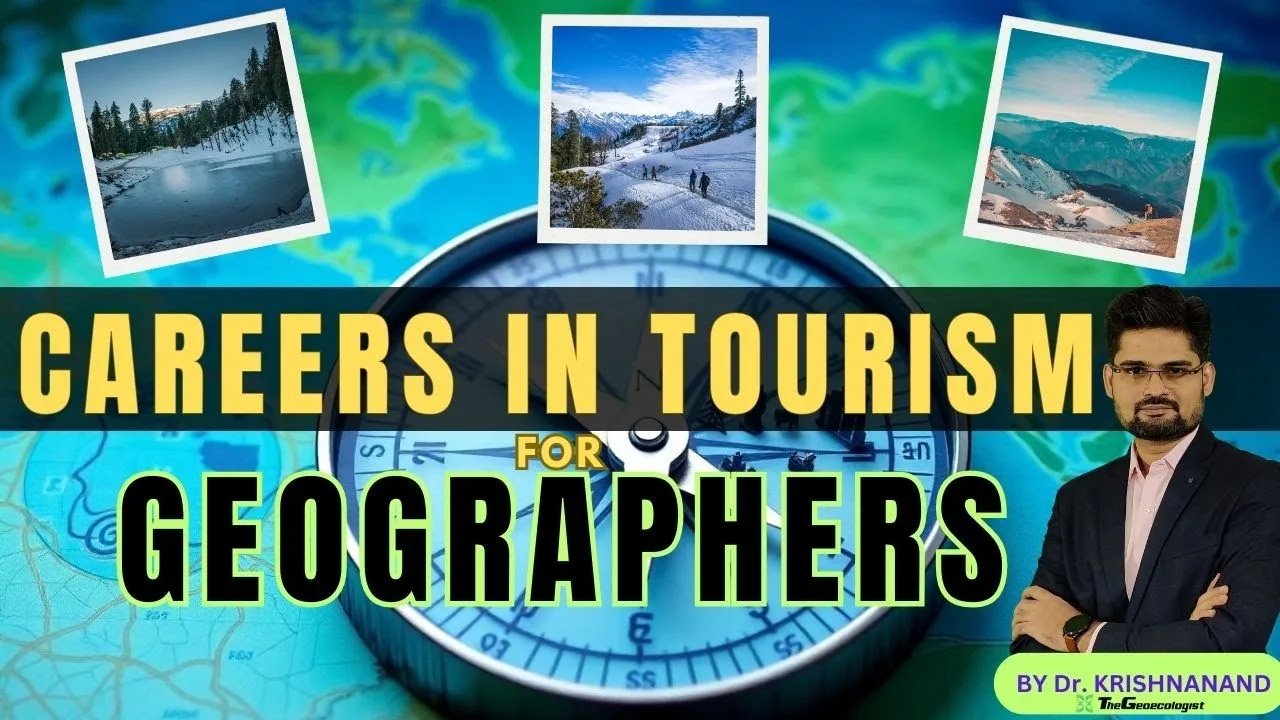
Table of Contents
- Why Geography Graduates Are Uniquely Qualified for Tourism Roles
- Spatial Analysis & Pattern Recognition
- Environmental Sustainability Expertise
- GIS & Remote Sensing Proficiency
- Cultural Landscape & Heritage Interpretation
- Top 5 Tourism Careers for Geographers: Roles, Skills & Entry Routes
- 1. Sustainable Tourism & Eco-Tourism Specialist
- 2. Heritage & Cultural Tourism Manager
- 3. Adventure Tourism & Outdoor Recreation Planner
- 4. Destination Management & Travel Operations
- 5. Tourism GIS Analyst & Spatial Planner
- Academic & Certification Roadmap for Aspiring Tourism Geographers
- Degree Pathways
- High-Value Certifications
- Emerging Trends Reshaping Tourism Careers for Geographers
- Regenerative Tourism & Nature-Positive Travel
- Digital Twins & Smart Destination Management
- Climate-Adaptive Tourism Planning
- Geo-Tourism & Geopark Development
- Salary Benchmarks & Geographic Mobility
- Building Your Professional Portfolio: Practical Steps
- India-Specific Context: "Dekho Apna Desh" & Beyond
- Frequently Asked Questions
- Can a pure geography graduate (without tourism degree) enter the tourism industry?
- Is coding necessary for tourism GIS roles?
- What's the difference between tourism geography and tourism management degrees?
The tourism careers geographers can pursue represent one of the most dynamic and rapidly expanding professional landscapes in the global economy. With international tourist arrivals reaching 1.3 billion in 2023 according to UN Tourism (formerly UNWTO), and the sector contributing 7.6% to global GDP, the demand for spatially literate professionals has never been higher. Geography graduates possess a unique analytical toolkit—spatial analysis, GIS proficiency, environmental science grounding, and cultural landscape interpretation—that aligns perfectly with the industry’s pivot toward sustainable, data-driven, and experience-rich travel models.
- High Demand: Tourism employs 1 in 10 people worldwide; geographers fill critical roles in planning, sustainability, and technology.
- Diverse Pathways: From eco-tourism consulting and heritage management to GIS analytics and adventure operations.
- Skill Synergy: Spatial thinking, GIS/remote sensing, environmental assessment, and cultural geography directly map to employer needs.
- Growth Sectors: Sustainable tourism, smart destination management, digital mapping, and regenerative travel are expanding fastest.
- Actionable Entry: Combine a geography degree with GIS certification, sustainability credentials, and field experience.
Why Geography Graduates Are Uniquely Qualified for Tourism Roles
The tourism careers geographers excel in stem from the discipline’s core competencies. Unlike generic business or hospitality graduates, geographers bring:
Spatial Analysis & Pattern Recognition
Geographers analyze tourist flows, seasonality patterns, carrying capacity thresholds, and spatial clustering of attractions. This enables evidence-based destination planning—identifying optimal locations for infrastructure, predicting congestion hotspots, and designing dispersal strategies that protect fragile ecosystems. – a key consideration for tourism careers geographers.
Environmental Sustainability Expertise
With overtourism threatening venues from Venice to Bali, employers prioritize candidates who can conduct Environmental Impact Assessments (EIAs), define ecological sensitivity zones, and design regenerative tourism models. The Global Sustainable Tourism Council (GSTC) criteria explicitly require spatial and environmental competencies that geography curricula deliver. – a key consideration for tourism careers geographers.
GIS & Remote Sensing Proficiency
Modern destination management runs on geospatial data. Geographers skilled in ArcGIS, QGIS, Google Earth Engine, and satellite imagery analysis build interactive tourism dashboards, monitor land-use change around heritage sites, and model climate vulnerability for coastal resorts. Esri’s tourism GIS solutions are deployed by national tourism boards worldwide, creating direct employment pipelines for GIS-literate geographers. – a key consideration for tourism careers geographers.
Cultural Landscape & Heritage Interpretation
Cultural tourism accounts for an estimated 40% of global tourism (UN Tourism). Geographers trained in historical geography, cultural landscape theory, and heritage valuation authenticate visitor narratives, advise UNESCO World Heritage site management plans, and develop community-based tourism that safeguards intangible cultural heritage. – a key consideration for tourism careers geographers.
Top 5 Tourism Careers for Geographers: Roles, Skills & Entry Routes
1. Sustainable Tourism & Eco-Tourism Specialist
This is the fastest-growing segment within tourism careers geographers target. Roles include:
- Sustainable Tourism Consultant: Advises governments, NGOs, and private operators on GSTC-aligned certification, carbon footprint reduction, and community benefit-sharing models.
- Eco-Resort Planner: Designs low-impact accommodations using bioclimatic architecture, renewable energy integration, and waste-to-resource systems.
- Wildlife Corridor & Protected Area Tourism Manager: Balances visitor access with conservation objectives in national parks and biosphere reserves.
Core Skills: EIA methodology, carrying capacity modeling, stakeholder participatory planning, carbon accounting, knowledge of IUCN protected area categories.
Credentials: GSTC Professional Certificate, LEED Green Associate, Conservation International’s tourism modules.
2. Heritage & Cultural Tourism Manager
Heritage tourism generates $1.3 trillion annually (World Travel & Tourism Council). Geographers fill roles such as:
- World Heritage Site Coordinator: Manages nomination dossiers, monitoring reports, and visitor management plans for UNESCO sites.
- Cultural Route Developer: Designs transnational thematic itineraries (e.g., Silk Road, Roman Frontier) linking tangible and intangible heritage.
- Museum & Interpretation Planner: Creates spatially informed exhibits and digital storytelling experiences.
Core Skills: Heritage impact assessment (HIA), cultural landscape mapping, multilingual interpretation, community engagement, UNESCO Operational Guidelines fluency.
Authority Reference: UNESCO World Heritage & Sustainable Tourism Programme publishes technical guidelines that geography professionals routinely implement.
3. Adventure Tourism & Outdoor Recreation Planner
Adventure tourism grows at 15-20% CAGR (Adventure Travel Trade Association). Geographers’ physiography expertise is indispensable for:
- Trekking & Mountaineering Route Developer: Maps safe, scenic, and ecologically sound high-altitude corridors using DEM analysis and glacial hazard assessment.
- Water Sports & Coastal Zone Planner: Models wave dynamics, rip current risk, and marine spatial planning for surfing, diving, and kayaking hubs.
- Risk & Safety Systems Designer: Builds GIS-based emergency response frameworks for remote adventure operations.
Core Skills: Geomorphological hazard assessment, wilderness first response, Leave No Trace principles, topographic map literacy, UAV-based terrain scouting.
4. Destination Management & Travel Operations
Traditional but evolving, these tourism careers geographers enter now require data fluency:
- Destination Management Organization (DMO) Analyst: Uses mobile positioning data, credit card transaction patterns, and social media geotags to optimize marketing spend and visitor dispersal.
- Smart Tourism City Officer: Implements IoT sensor networks, real-time crowd monitoring, and dynamic pricing for attractions (e.g., Barcelona’s Smart Tourism Master Plan).
- Tour Operator Product Developer: Designs niche itineraries—geo-tourism, astro-tourism, agritourism—grounded in regional geographic distinctiveness.
Core Skills: Tourism satellite account (TSA) methodology, big data analytics, CRM platforms, multilingual customer engagement, crisis management.
5. Tourism GIS Analyst & Spatial Planner
This is the most technically specialized track within tourism careers geographers pursue, commanding premium salaries:
- Tourism Infrastructure Siting Analyst: Applies multi-criteria evaluation (MCE) and analytic hierarchy process (AHP) in GIS to locate hotels, visitor centers, and transport nodes.
- Recreational Carrying Capacity Modeler: Simulates visitor density thresholds using agent-based modeling (NetLogo, GIS-coupled).
- Climate Adaptation Planner for Coastal Tourism: Projects sea-level rise impacts on resort zones using IPCC scenarios and LiDAR-derived DEMs.
Core Skills: Advanced Python/R for geospatial analysis, PostGIS/PostgreSQL, web mapping (Leaflet, Mapbox), spatial statistics, scenario modeling.
Academic & Certification Roadmap for Aspiring Tourism Geographers
Degree Pathways
- Bachelor’s: B.A./B.Sc. Geography with tourism/electives in GIS, environmental management, regional planning.
- Master’s: M.A. Tourism Management, M.Sc. Geoinformatics, M.A. Sustainable Tourism Development, M.Plan. Urban & Regional Planning (tourism specialization).
- Ph.D.: Research foci—overtourism governance, geospatial AI in tourism, climate-resilient destinations, indigenous tourism geographies.
High-Value Certifications
| Certification | Provider | Relevance |
|---|---|---|
| GSTC Sustainable Tourism Professional | Global Sustainable Tourism Council | Global standard for sustainability roles |
| Esri Technical Certification | Esri | Validates ArcGIS proficiency for tourism GIS jobs |
| Certified Tourism Professional (CTP) | Tourism Industry Association | Industry-recognized operations credential |
| Leave No Trace Master Educator | Leave No Trace Center | Essential for adventure/eco-tourism roles |
| UNESCO World Heritage Management | UNESCO/ICOMOS | Specialized heritage site management |
Emerging Trends Reshaping Tourism Careers for Geographers
Regenerative Tourism & Nature-Positive Travel
Beyond “sustainable” (do no harm), regenerative tourism aims to leave destinations better—ecologically, socially, economically. Geographers design rewilding-linked visitor economies, coral restoration dive programs, and agricultural tourism that regenerates soil health. The UN Tourism SDGs framework explicitly calls for spatial planning expertise to localize Goal 8.9, 12.b, and 14.7. – a key consideration for tourism careers geographers.
Digital Twins & Smart Destination Management
Cities like Singapore, Dubai, and Helsinki deploy digital twins—real-time 3D virtual replicas integrating sensor data, mobility flows, and environmental metrics. Geographers with 3D GIS, CityGML, and game-engine (Unity/Unreal) skills build these platforms for tourism crowd simulation, heat mitigation planning, and immersive pre-visit experiences. – a key consideration for tourism careers geographers.
Climate-Adaptive Tourism Planning
With 80% of tourism concentrated in coastal and mountain zones (IPCC AR6), climate vulnerability assessment is now a core planning function. Geographers model snow-reliability for ski resorts, coral bleaching risk for dive destinations, and heat-stress indices for urban tourism—informing diversification strategies and infrastructure relocation. – a key consideration for tourism careers geographers.
Geo-Tourism & Geopark Development
UNESCO Global Geoparks (213 sites across 48 countries as of 2024) represent a direct employment niche. Geographers interpret geological heritage, design geotrails, develop educational programming, and manage geopark governance structures—merging physical geography with community development. – a key consideration for tourism careers geographers.
Salary Benchmarks & Geographic Mobility
Compensation varies by specialization, region, and employer type:
- Entry-level GIS Tourism Analyst: ₹4–7 LPA (India) | $45–65K (US/UK) | €35–50K (EU)
- Mid-level Sustainable Tourism Consultant: ₹10–18 LPA | $70–100K | €55–80K
- Senior Destination Planner / DMO Director: ₹25–40 LPA | $110–160K | €90–130K
- International NGO / UN Tourism Specialist: $90–140K + benefits (P3–P4 UN scale)
Geographic mobility is high—tourism is inherently global. Professionals frequently rotate between field postings in emerging destinations (Southeast Asia, East Africa, Latin America) and headquarters roles in Europe, North America, or Gulf hubs. – a key consideration for tourism careers geographers.
Building Your Professional Portfolio: Practical Steps
- Capstone Project: Produce a GIS-based tourism carrying capacity study for a local site; publish on GitHub Pages or ArcGIS StoryMaps.
- Field Experience: Volunteer with protected area management, community homestay networks, or festival/event planning committees.
- Network Strategically: Join Association of Geographic Information Laboratories (AGILE), International Geographical Union (IGU) Tourism Commission, Adventure Travel Trade Association (ATTA), or Pacific Asia Travel Association (PATA) student chapters.
- Publish & Present: Submit applied research to Journal of Sustainable Tourism, Tourism Geographies, Annals of Tourism Research, or regional conferences.
- Multilingual Advantage: Spanish, French, Mandarin, Arabic, or Portuguese fluency dramatically expands international placement odds.
India-Specific Context: “Dekho Apna Desh” & Beyond
India’s tourism strategy creates distinct tourism careers geographers can access domestically:
- Swadesh Darshan 2.0 & PRASHAD Schemes: Central funding for theme-based circuit development and pilgrimage infrastructure requires district-level tourism planners with GIS skills.
- Ministry of Tourism’s NIDHI+ Portal: Digital inventory of hospitality units—data analysts needed for validation and spatial analytics.
- State Tourism Boards: Kerala, Rajasthan, Uttarakhand, Goa, and Northeast states hire geography postgraduates for carrying capacity studies, homestay certification, and adventure tourism regulation.
- UNESCO Nominations: India’s tentative list (57 sites as of 2024) needs heritage impact assessment specialists for dossier preparation.
- Gati Shakti & PM GatiShakti National Master Plan: Multi-modal connectivity planning integrates tourism node identification—geographers contribute to the GIS decision-support system.
Frequently Asked Questions
Can a pure geography graduate (without tourism degree) enter the tourism industry?
Absolutely. Employers value the spatial-analytical foundation of geography over tourism-specific theory. Supplement with a 3–6 month GIS certification, a sustainability short course (GSTC or Coursera), and a demonstrable project (e.g., StoryMap of a local destination). Many DMOs and consultancies actively recruit from geography departments.
Is coding necessary for tourism GIS roles?
Not mandatory for entry-level, but Python (ArcPy, geopandas, folium) and SQL (PostGIS) become essential for mid-senior automation, web-mapping, and big-data analytics. Invest 80–120 hours in a focused geospatial Python course—tourism careers geographers differentiates you significantly.
What’s the difference between tourism geography and tourism management degrees?
Tourism geography emphasizes spatial patterns, environmental interactions, GIS, and regional analysis. Tourism management focuses on marketing, finance, HR, operations, and hospitality service delivery. For planning, policy, GIS, and sustainability roles, geography is superior; for hotel/resort/airline operations, management degrees align better.
The convergence of sustainability imperatives, geospatial technology maturation, and experiential travel demand creates a historic window for geography professionals. Whether your passion lies in protecting high-altitude wetlands, decoding ancient cultural landscapes, coding real-time visitor dashboards, or designing regenerative community tourism—the tourism careers geographers can now build are limited only by imagination and skill investment. Start with one certified skill, one field project, and one professional connection this quarter. The map is yours to draw.
Frequently Asked Questions
Absolutely. Employers value the spatial-analytical foundation of geography over tourism-specific theory. Supplement with a 3–6 month GIS certification, a sustainability short course (GSTC or Coursera), and a demonstrable project (e.g., StoryMap of a local destination). Many DMOs and consultancies actively recruit from geography departments.
Not mandatory for entry-level, but Python (ArcPy, geopandas, folium) and SQL (PostGIS) become essential for mid-senior automation, web-mapping, and big-data analytics. Invest 80–120 hours in a focused geospatial Python course—it differentiates you significantly.
Tourism geography emphasizes spatial patterns, environmental interactions, GIS, and regional analysis. Tourism management focuses on marketing, finance, HR, operations, and hospitality service delivery. For planning, policy, GIS, and sustainability roles, geography is superior; for hotel/resort/airline operations, management degrees align better.