


The Himalayas: Geological Formations & Distribution #upsc
The Himalayas: Geological Formations, Zonation, and Distribution – A Comprehensive Guide for UPSC Aspirants
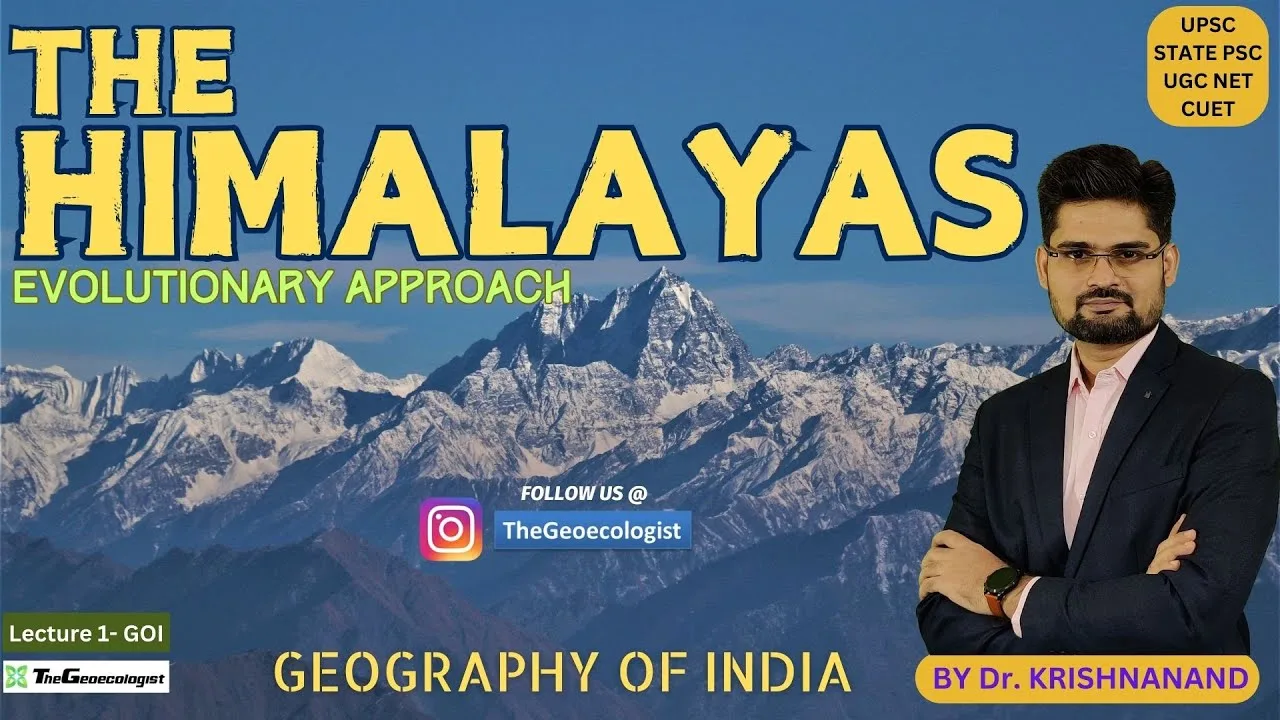
The Himalayas, often termed the "Abode of Snow," stand as a majestic natural wonder and a critical subject for UPSC Civil Services Exam (CSE) aspirants. Dr. Krishnanand, founder of thegeoecologist, offers an in-depth exploration of this mountain range in his video lecture, "The Himalayas: Geological Formations, Zonation & Distribution." Tailored for competitive exams, the video sheds light on the Himalayas’ geological evolution, structure, and significance. Here’s a detailed breakdown of the key concepts covered, essential for geography and general studies preparation.
Geological Formation: Tectonic Processes and Phases of Uplift
The Himalayas owe their existence to tectonic activity stemming from the collision between the Indian Plate and the Eurasian Plate around 50 million years ago. This collision, part of the Alpine-Himalayan orogenic belt, occurred in distinct phases:
- Eocene Phase (50-30 million years ago): Initial collision led to the formation of the Tethys Himalayas, now seen as the Trans-Himalayan Tibetan Plateau.
- Miocene Phase (25-5 million years ago): Intense folding and faulting created the Greater Himalayas (Himadri), featuring towering peaks like Mount Everest and Kanchenjunga.
- Pleistocene Phase (2 million years ago to present): Rapid uplift formed the Lesser Himalayas (Himachal) and the Shiwalik ranges, along with ongoing seismic activity due to tectonic stress.
This phased uplift explains the Himalayas’ youthful topography, characterized by steep slopes, deep valleys, and frequent earthquakes.
Zonation: Major Divisions of the Himalayas
The Himalayas are divided into four parallel longitudinal zones:
- Trans-Himalayas (Tibetan Himalayas): Composed of ancient granitic and metamorphic rocks, this northernmost zone includes the Karakoram and Ladakh ranges.
- Greater Himalayas (Himadri): The core zone with snow-capped peaks and glaciers (e.g., Gangotri Glacier). It acts as a climatic barrier, influencing India’s monsoon.
- Lesser Himalayas (Himachal): Situated south of Himadri, this zone features lush valleys (e.g., Kashmir, Kullu) and hill stations.
- Shiwaliks (Outer Himalayas): The youngest, low-altitude foothills prone to landslides and composed of loose sediments.
The Purvanchal Himalayas extend eastward into Arunachal Pradesh, Nagaland, and Myanmar, marked by dense forests and rugged terrain.
Distribution: Spanning Nations and States
The Himalayas stretch over 2,400 km across five countries: India, Nepal, Bhutan, China (Tibet), and Pakistan. In India, they span:
- Jammu & Kashmir: Karakoram and Pir Panjal ranges.
- Himachal Pradesh and Uttarakhand: Prominent peaks and pilgrimage sites.
- Sikkim and Arunachal Pradesh: Home to Kanchenjunga and strategic border passes like Nathu La.
Nepal hosts Mount Everest, while Bhutan’s Himalayas are known for biodiversity and glacial lakes.
Key Geological Features and Significance
- Peaks and Glaciers: Mount Everest (8,848 m), Kanchenjunga (8,586 m), and Siachen Glacier (longest in Asia).
- Rivers: Major river systems like the Ganges, Indus, and Brahmaputra originate here, supporting agriculture and hydropower.
- Biodiversity: A global hotspot hosting species like snow leopards and diverse flora.
- Strategic Importance: Acts as a natural defense and houses sensitive border areas.
Why Are the Himalayas Crucial for India?
- Climate Regulation: Shields India from cold Central Asian winds and drives monsoon patterns.
- Economic Resources: Source of water, timber, and hydropower potential.
- Cultural and Ecological Value: Sacred sites, tourism, and unique ecosystems.
Conclusion
For UPSC aspirants, understanding the Himalayas’ geology, zonation, and distribution is vital for both Prelims and Mains. Dr. Krishnanand’s video simplifies these complex topics, aligning with UPSC’s demand for interdisciplinary knowledge. Dive deeper into this subject by subscribing to thegeoecologist’s channel, visiting their website (https://thegeoecologist.com/), or exploring their paid geography courses.
Enhance your UPSC preparation with strategic insights into India’s physical geography – the Himalayas are not just a mountain range but a cornerstone of the nation’s natural heritage!
For updates, follow on Instagram @thegeogeographer or email krishna.geography@gmail.com. Stay tuned for more UPSC-focused content!
Himalayas #UPSCGeography #CompetitiveExams #IndiasGeography #thegeoecologist
To Download E-Books & Study Material Visit The Shop Page