
Blog
Sources of Ancient Indian History: A Comprehensive Guide to Unlocking India’s Past

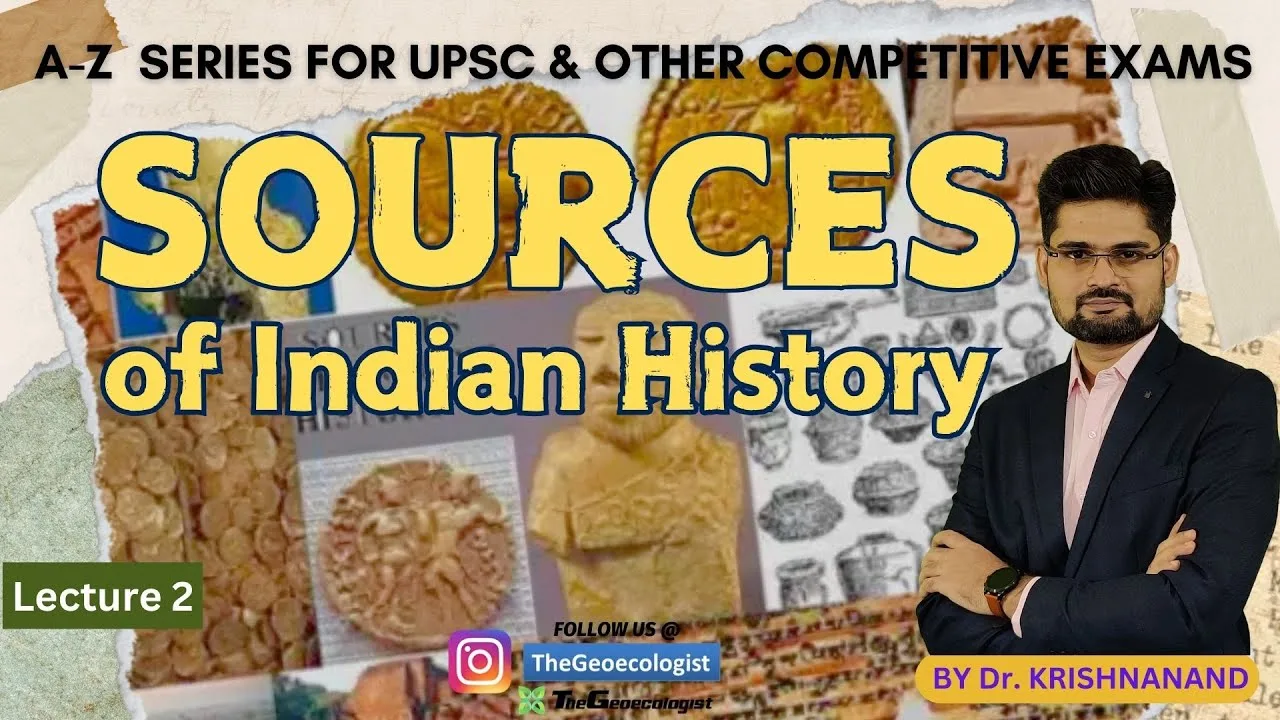
https://www.youtube.com/watch?v=d9n64xle4ro
Table of Contents
- Literary Sources: The Textual Foundation of Ancient India
- Indigenous Religious and Secular Texts
- Foreign Accounts: The Outsider's Gaze
- Archaeological Sources: Material Evidence from the Soil
- The Indus Valley Civilization (c. 3300–1300 BCE)
- Inscriptions: The Voice of Kings and Commoners
- Monuments, Sculpture, and Pottery
- Numismatics: Coins as Historical Documents
- Punch-Marked Coins (c. 6th cent. BCE – 2nd cent. CE)
- Indo-Greek, Saka, and Kushana Coinage (2nd cent. BCE – 3rd cent. CE)
- Gupta Gold Coinage (c. 320–550 CE): The Apex
- Oral Traditions: The Subaltern Voice
- Methodology: Cross-Referencing and Interdisciplinary Synthesis
- Digital Revolution and Future Frontiers
- Conclusion: The Ongoing Dialogue with the Past
The Sources of Ancient Indian History form the bedrock of our understanding of the subcontinent’s rich and complex past. From the urban sophistication of the Indus Valley Civilization to the philosophical depths of the Vedic age and the imperial grandeur of the Mauryas and Guptas, historians reconstruct this vast narrative using a diverse toolkit of evidence. Unlike civilizations with continuous written records, ancient India requires a multidisciplinary approach where Sources of Ancient Indian History are weighed against one another to separate historical fact from myth and interpolation. Sources of Ancient Indian History explores the primary categories of these sources—literary, archaeological, numismatic, and oral—detailing their specific contributions, limitations, and the methodologies historians use to synthesize them into a coherent timeline.
- Literary sources (Vedic texts, Epics, Puranas, Buddhist/Jain canons, and foreign accounts) provide the narrative framework, dynastic lists, and socio-cultural context.
- Archaeological sources (excavations, inscriptions, monuments, pottery, and art) offer tangible, datable proof of material culture, urban planning, and technological advancement.
- Numismatic sources (coins) serve as precise markers of political authority, economic health, trade routes, and iconographic evolution.
- Oral traditions preserve the history of marginalized communities and cultural continuity often absent from elite-written records.
- Critical cross-referencing is essential; no single source type is sufficient on its own for accurate historical reconstruction.
Literary Sources: The Textual Foundation of Ancient India
Literary texts constitute the most voluminous category of Sources of Ancient Indian History. However, they present a unique challenge: most ancient Indian literature was transmitted orally for centuries before being committed to writing, and they often prioritize dharma (duty/righteousness) and moksha (liberation) over chronological history. Historians classify these into indigenous and foreign accounts.
Indigenous Religious and Secular Texts
The Vedic corpus (Samhitas, Brahmanas, Aranyakas, Upanishads), composed roughly between 1500 BCE and 500 BCE, is the earliest literary window into the Indo-Aryan culture. The Rigveda details early geography (Sapta Sindhu), tribal polity (Sabha, Samiti), and pastoral economy. The later Vedic texts reveal the shift to settled agriculture in the Ganges valley, the varna system’s crystallization, and the rise of territorial kingdoms (Mahajanapadas). – a key consideration for Sources of Ancient Indian History.
The two great Epics, the Mahabharata and Ramayana, while mythological in core, contain layers of historical memory. The Mahabharata reflects the transition from clan-based chiefdoms to state societies in the Kuru-Panchala region, while the Ramayana maps the cultural expansion into the Deccan and South India. The Puranas (compiled 300–1000 CE) are vital for Sources of Ancient Indian History because they preserve dynastic genealogies (Vamshanucharita) and cosmological time cycles (Manvantaras, Yugas), offering a framework for royal chronology, particularly for the post-Mauryan period.
Buddhist and Jain canons provide a crucial counter-narrative to Brahmanical texts. The Tripitakas (Pali Canon) and Agamas detail the life of the Buddha and Mahavira, the 16 Mahajanapadas, the rise of Magadha, and the socio-economic conditions of the 6th century BCE urban revolution (Second Urbanization). Texts like the Arthashastra (attributed to Kautilya/Chanakya, c. 300 BCE–300 CE) and the Dharmashastras (Manusmriti, c. 200 BCE–200 CE) are indispensable for understanding Mauryan administration, law, economy, and social hierarchy. – a key consideration for Sources of Ancient Indian History.
Foreign Accounts: The Outsider’s Gaze
Greek, Chinese, and Arabic travelers offer external validation for indigenous claims. Megasthenes (c. 300 BCE), ambassador to Chandragupta Maurya’s court, wrote Indika (surviving in fragments), describing Pataliputra’s splendor, the caste system (seven classes), and the absence of slavery—a claim debated by historians. Later, Chinese Buddhist pilgrims Faxian (Fa-Hien) (c. 400 CE) and Xuanzang (Hiuen Tsang) (c. 630 CE) left detailed travelogues. Faxian documented the Gupta ‘Golden Age’—prosperity, charitable hospitals, and mild administration. Xuanzang’s Great Tang Records on the Western Regions is a goldmine for 7th-century political geography, Nalanda University’s curriculum, and Harshavardhana’s empire. The Persian scholar Al-Biruni (c. 1030 CE), in Kitab al-Hind, provided a scientific, comparative analysis of Indian astronomy, mathematics, religion, and social customs, marking a methodological leap in Sources of Ancient Indian History.
Archaeological Sources: Material Evidence from the Soil
Archaeology transforms Sources of Ancient Indian History from text-dependent narratives into evidence-based science. Sources of Ancient Indian History provides the ‘hard data’—carbon-dated strata, architecture, ecofacts, and artifacts—that anchors literary claims in physical reality.
The Indus Valley Civilization (c. 3300–1300 BCE)
The discovery of Harappa (1921) and Mohenjo-daro (1922) by the Archaeological Survey of India (ASI) under Sir John Marshall revolutionized Indian history, pushing the civilization’s antiquity back by 2,000 years. The Sources of Ancient Indian History for this Bronze Age urban culture are entirely archaeological because its script remains undeciphered. Excavations reveal staggering urban planning: grid-pattern streets, standardized baked bricks (ratio 4:2:1), advanced drainage systems, the Great Bath (ritual?), and granaries. Artifacts like the ‘Dancing Girl’ bronze, ‘Priest-King’ steatite bust, seals depicting the ‘Unicorn’ and ‘Pashupati’ motif (proto-Shiva?), and standardized weights (binary and decimal systems) indicate a complex, possibly theocratic, state-level society with long-distance trade links to Mesopotamia (Meluhha). Recent excavations at Rakhigarhi (Haryana), Dholavira (Gujarat), and Sanauli (UP—chariots, coffins c. 2000 BCE) continue to refine the IVC’s extent, chronology, and late-phase cultural transformation.
Inscriptions: The Voice of Kings and Commoners
Epigraphy (study of inscriptions) is the most reliable Sources of Ancient Indian History for political history. The Edicts of Ashoka (c. 268–232 BCE), inscribed on rocks and pillars across the subcontinent in Brahmi, Kharosthi, Greek, and Aramaic, are the earliest deciphered Indian inscriptions. They reveal Ashoka’s conversion to Buddhism, his policy of Dhamma (moral law), administrative structure, and international diplomacy (missions to Antiochus II, Ptolemy II). Post-Mauryan inscriptions—like the Hathigumpha inscription of Kharavela (Kalinga, 1st cent. BCE), Nasik and Junagadh inscriptions of the Satavahanas and Rudradaman (Saka), and the Allahabad Pillar inscription (Prayaga Prashasti) of Samudragupta by Harisena (c. 350 CE)—provide precise regnal years, military campaigns, genealogies, and land grant records. The Copper Plate Grants (Tamrapatra) from the Gupta period onward are critical for agrarian history, revealing land tenure, revenue terms, and the emergence of feudal intermediaries (Samantas).
Monuments, Sculpture, and Pottery
Stupas (Sanchi, Bharhut, Amaravati), rock-cut caves (Ajanta, Ellora, Barabar), and structural temples (Deogarh, Bhitargaon, Aihole, Badami) trace the evolution of religious architecture and iconography. The shift from aniconic (empty throne, Bodhi tree, footprints) to iconic representation of the Buddha (Gandhara and Mathura schools, 1st–3rd cent. CE) reflects doctrinal changes in Buddhism. Pottery sequences—Ochre Coloured Pottery (OCP), Painted Grey Ware (PGW) (associated with Later Vedic/Iron Age), Northern Black Polished Ware (NBPW) (marker of Second Urbanization/Mahajanapadas/Mauryas)—serve as ‘index fossils’ for dating archaeological layers across North India. – a key consideration for Sources of Ancient Indian History.
Numismatics: Coins as Historical Documents
Numismatics, the study of coins, is a high-precision tool among Sources of Ancient Indian History. Coins are minted by state authority, carry dates (sometimes), legends (names/titles), and iconography, making them primary evidence for political chronology, economic policy, and cultural synthesis.
Punch-Marked Coins (c. 6th cent. BCE – 2nd cent. CE)
The earliest Indian coinage, silver/copper pieces with symbols (sun, six-armed, hill, tree) punched separately, were issued by Mahajanapadas (Kashi, Kosala, Magadha) and later the Mauryas. Their widespread distribution maps the extent of Mauryan monetary integration. The absence of a ruler’s name reflects a state-controlled, rather than royal-personal, currency system.
Indo-Greek, Saka, and Kushana Coinage (2nd cent. BCE – 3rd cent. CE)
The Indo-Greeks introduced die-struck, bilingual (Greek/Kharosthi) coins with realistic royal portraits—Heliodotus, Menander (Milinda). The Kushanas (Vima Kadphises, Kanishka) issued gold dinars and copper coins depicting a syncretic pantheon: Greek (Helios, Selene), Iranian (Mithra, Mao), Indian (Shiva, Buddha), proving their role as cultural brokers on the Silk Road. Kanishka’s coins showing the Buddha in human form (standing, robed) are crucial for dating the Gandhara art and the Fourth Buddhist Council.
Gupta Gold Coinage (c. 320–550 CE): The Apex
Gupta coins represent the zenith of Indian numismatic art. Chandragupta I’s ‘King and Queen’ type (Licchavi alliance), Samudragupta’s ‘Archer’, ‘Lyrist’, ‘Tiger-slayer’, ‘Asvamedha’ types (visual resumes of his prowess), and Chandragupta II’s ‘Chhatra’, ‘Lion-slayer’, ‘Horseman’ types, all in high-purity gold, reflect a thriving economy, imperial propaganda, and Brahmanical revival. The gradual debasement of gold in later Gupta coins (Skandagupta onwards) correlates with Huna invasions and economic contraction—a key insight from Sources of Ancient Indian History.
Oral Traditions: The Subaltern Voice
Oral traditions—ballads, folk epics, genealogies (Vamshavalis), rituals, and performative arts—are vital Sources of Ancient Indian History for communities outside the Sanskritic mainstream. The Pabuji Ki Phad (Rajasthan), Alha Udal (Bundelkhand), Annanmar Kathai (Tamil Nadu), and tribal narratives (Gonds, Bhils, Santhals) preserve memories of local chieftains, ecological knowledge, resistance to state expansion, and caste negotiations. The Vamshavalis of Nepal and Rajputana, maintained by hereditary bards (Bhats, Charans), often bridge the gap where inscriptions fail. However, oral sources require rigorous textual criticism: they are fluid, telescoping time, conflating characters, and adapting to present political needs. Historians like Romila Thapar advocate treating them as ’embedded history’—valid when cross-checked with archaeology and contemporary texts.
Methodology: Cross-Referencing and Interdisciplinary Synthesis
The gold standard in utilizing Sources of Ancient Indian History is the interdisciplinary method. No source is transparent; each has inherent biases. Literary texts (Brahmanical) over-represent elite, male, orthodox perspectives. Archaeology excels at material life but is silent on ideas and specific events without inscriptions. Coins are state-centric. Foreign accounts reflect cultural filters (Greek ‘barbarian’ lens, Chinese Buddhist pilgrim lens).
Effective reconstruction follows a protocol:
- Internal Criticism: Analyze a source’s authorship, date, purpose, audience, and genre. (e.g., Is the Arthashastra a prescriptive manual or descriptive record? Current consensus: a composite text compiled over centuries, reflecting Mauryan to post-Mauryan practice.)
- External Corroboration: Match literary claims with archaeology/epigraphy. (e.g., Ashoka’s ‘Dhamma missions’ to Sri Lanka confirmed by Dipavamsa/Mahavamsa and Sri Lankan inscriptions; Xuanzang’s Nalanda description validated by excavations.)
- Triangulation: Use three independent source types. (e.g., Satavahana history: Puranas (king lists) + Nasik/Junnar inscriptions (regnal years, donations) + Coins (portraits, titles, metal) + Ptolemy’s Geography (trade ports) = robust chronology.)
- Scientific Dating: Apply C-14, Thermoluminescence (TL), OSL to archaeological layers; paleography for scripts; metallurgy for coins.
This rigor has resolved major debates: the Aryan Migration vs. Indigenous Aryan question (linguistics + archaeology + ancient DNA); the date of the Buddha (long chronology c. 563–483 BCE vs. short c. 448–368 BCE, now leaning long via AMS dating of early Buddhist sites); the nature of the Mauryan state (centralized bureaucracy per Arthashastra vs. segmented empire per inscriptions/archaeology—now seen as a ‘networked polity’ with core/periphery differentiation).
Digital Revolution and Future Frontiers
The study of Sources of Ancient Indian History is entering a digital golden age. Projects like the Digital Corpus of Sanskrit, Epigraphia Indica Online, Coin Hoards of the Indian Subcontinent (CHIS), and the Harappa Archaeological Research Project (HARP) databases democratize access. 3D scanning of monuments (Rani ki Vav, Hampi), LiDAR for landscape archaeology (revealing Angkor-like urban sprawl at medieval sites), and ancient DNA (aDNA) analysis from Rakhigarhi, Sanauli, and Roopkund are rewriting population history. GIS mapping of inscription find-spots, coin hoards, and PGW/NBPW sites visualizes political boundaries and trade networks dynamically. These tools transform static sources into queryable, spatial-temporal datasets, allowing historians to test hypotheses at scale.
Conclusion: The Ongoing Dialogue with the Past
The Sources of Ancient Indian History are not static relics but active participants in a dialogue between the present and the past. Each generation asks new questions—of gender, ecology, technology, subaltern agency—and the sources answer differently. The Rigvedic hymns, once read only for Aryan migration, now yield data on Sarasvati river hydrology and horse domestication. Ashoka’s edicts, once mined for Buddhist history, now inform theories of early imperial communication and soft power. The undeciphered Indus script remains the ultimate challenge; its cracking would unlock a literate Bronze Age voice. As scientific methods sharpen and digital archives expand, the Sources of Ancient Indian History will continue to yield richer, more inclusive, and more precise narratives of one of humanity’s most enduring civilizations. For students, scholars, and enthusiasts, the journey is not merely reading history, but learning how history is made—critically, collaboratively, and constantly.
For a visual exploration of these sources, watch our detailed video on YouTube. To dive deeper with structured modules, primary source translations, and expert lectures, enroll in our comprehensive course at TheGeoecologist. Follow us on Instagram @thegeoecologist for daily insights into India’s historical heritage.
Frequently Asked Questions
The four main sources of ancient Indian history are Literary Sources (Vedic texts, Epics, Puranas, Buddhist/Jain canons, foreign accounts), Archaeological Sources (excavations, inscriptions, monuments, pottery), Numismatic Sources (coins from punch-marked to Gupta gold), and Oral Traditions (folk epics, ballads, tribal genealogies, bardic records).
Inscriptions (epigraphy) are considered the most reliable for political history because they are contemporary, official documents issued by rulers (like Ashoka's edicts or Gupta copper plates), often dated, providing direct evidence of regnal years, territorial extent, administrative policies, and genealogies without the interpolations common in later literary copies.
Historians analyze coins (numismatics) for metal purity (gold/silver/copper ratios indicating economic health), weight standards, mint marks (mapping trade routes), iconography (religious/cultural shifts), and legends (ruler names/titles). Hoard finds reveal circulation zones; debasement patterns (e.g., later Guptas) signal fiscal crises.