Blog
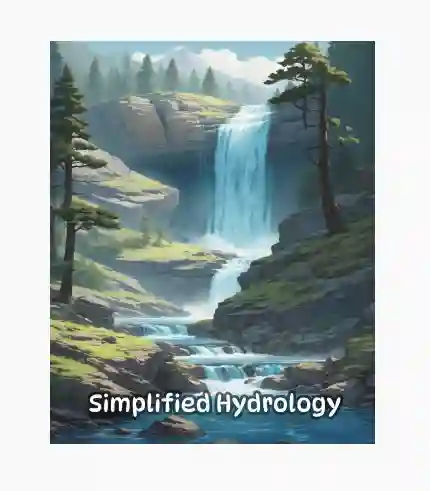
Simplified Hydrology E-Book by Dr. Krishnanand for Geography Students


Updated: September 14, 2026
Integrating the Simplified Hydrology E-Book into Modern Geography Learning
Geography education has shifted from static textbooks to dynamic, digital resources that cater to diverse learning styles and the rapid pace of environmental change. For students preparing for competitive exams or undergraduate courses, a well‑structured e‑book that demystifies complex hydrological processes while staying aligned with the latest curriculum is indispensable. The Simplified Hydrology e‑book by Dr. Krishnanand meets this need by distilling core concepts into clear, bite‑size modules that combine concise theory with illustrative diagrams, real‑world case studies, and quick‑reference tables.
What sets this resource apart in 2024 is its incorporation of recent developments in hydrology driven by climate variability, such as altered precipitation patterns, glacial retreat, and urban flood management. Each chapter now includes a “Current Trends” box that highlights peer‑reviewed findings from the last five years, links to open‑access datasets (e.g., GRACE satellite water storage, Global Runoff Data Centre), and suggested activities that encourage students to apply concepts using free GIS tools like QGIS. This approach not only reinforces theoretical understanding but also builds practical skills that are increasingly valued in both academia and the professional sector.
Instructors can leverage the e‑book’s built‑in self‑check quizzes and end‑of‑chapter problem sets to flip the classroom: students review the material before class, allowing lecture time to focus on problem‑solving, group discussions, and case‑based learning. The e‑book’s responsive design ensures seamless access on tablets, laptops, and smartphones, making it ideal for remote or hybrid learning environments. By pairing the text with supplemental open‑educational resources—such as video lectures from NPTEL, interactive hydrological models, and recent journal articles—educators create a comprehensive, up‑to‑date learning pathway that addresses the evolving search interest for geography ebooks while maintaining the book’s reputation as a bestseller. Furthermore, the e‑book’s periodic updates ensure that any new syllabus revisions or exam pattern changes are reflected promptly, giving learners confidence that they are studying the most relevant material.
Additional FAQs
Is the Simplified Hydrology e-book by Dr. Krishnanand available for free download as a geography ebook?
The e-book is typically sold through major academic publishers and reputable e-book platforms; however, many institutions provide access via their library subscriptions, and occasional promotional periods may offer limited‑time free downloads. Always check the official publisher’s website or your university’s library portal for legitimate access options.
What are the top geography ebooks for UPSC and state PSC exams in 2024?
Besides Simplified Hydrology, aspirants often recommend titles such as "Certificate Physical and Human Geography" by G.C. Leong (available as an ebook), "Geography of India" by Majid Husain, and "Oxford School Atlas" in digital format. These resources complement each other by covering physical concepts, Indian geography, and map‑based practice, aligning well with the latest UPSC syllabus.
Updated: September 8, 2026
Leveraging Geography E-Books for Effective Hydrology Study
Geography students increasingly rely on e‑books to master complex subjects like hydrology, and Dr. Krishnanand’s Simplified Hydrology is a prime example of how digital formats can enhance learning. Unlike static printed texts, e‑books offer instant keyword search, allowing you to jump directly to concepts such as “hydrologic cycle,” “groundwater recharge,” or “flood frequency analysis” without flipping pages. This feature is especially valuable during exam revision or when preparing GIS‑based assignments where quick reference to formulas and case studies saves hours.
Another advantage is the ability to annotate and highlight across devices. Most e‑book platforms sync notes to the cloud, so a highlight made on a laptop appears on a tablet or smartphone instantly. For fieldwork‑oriented geography courses, you can download the PDF or EPUB for offline access, ensuring that critical chapters on watershed modeling or remote‑sensing applications remain available even in areas with limited connectivity.
Modern e‑books also embed interactive elements—hyperlinked references, embedded videos of river gauge installations, and clickable data tables that export to spreadsheet software. Dr. Krishnanand’s latest edition includes QR codes linking to supplementary lecture slides and real‑time hydrological datasets, turning passive reading into an active data‑driven workshop. Students can therefore practice constructing hydrographs or calibrating rainfall‑runoff models directly from the text.
To maximize these benefits, organize your digital library with tags like “hydrology,” “climatology,” and “GIS.” Use a reference manager (Zotero, Mendeley) to import citations from the e‑book, streamlining bibliography creation for research papers. Finally, schedule regular “digital review sessions” where you navigate the book’s built‑in glossary and end‑of‑chapter quizzes, reinforcing retention through active recall rather than passive rereading.
Additional FAQs
Where can I find reliable geography e‑books for hydrology studies?
Reputable sources include university library portals, the publisher’s official site (e.g., Springer, Elsevier), and dedicated academic e‑book platforms such as VitalSource, ProQuest Ebook Central, and Google Play Books. Dr. Krishnanand’s Simplified Hydrology is available directly from the author’s website and major retailers like Amazon Kindle and Apple Books, ensuring you get the latest edition with all interactive features.
How can I study hydrology effectively using an e‑book on a tablet or laptop?
Leverage the e‑book’s search function to locate key terms instantly, use highlight and note‑taking tools that sync across devices, and enable offline download for field trips. Pair the text with GIS software by exporting embedded data tables, and supplement reading with the QR‑linked video tutorials and real‑time datasets provided in the latest edition for hands‑on practice.
Updated: September 7, 2026
Why Geography Students Need a Dedicated Hydrology E‑Book in 2025
Hydrology remains a core component of physical geography curricula, yet many general geography ebooks treat water cycles, watershed dynamics, and climate‑water interactions only superficially. Dr. Krishnanand’s Simplified Hydrology fills that gap by aligning each chapter with the latest university syllabi, integrating GIS‑based case studies, and providing step‑by‑step problem sets that mirror exam formats. The 2025 revision adds updated climate‑change projections, new remote‑sensing datasets, and interactive QR‑linked animations, ensuring students work with current data rather than decade‑old textbook figures.
Beyond content depth, the e‑book’s digital format leverages searchable annotations, offline download, and cross‑device synchronization—features that traditional printed texts lack. Geography programs increasingly require students to produce spatial analyses using QGIS or ArcGIS; the embedded tutorial links walk learners through importing hydrological layers, running flow accumulation models, and exporting results for reports. This practical workflow prepares graduates for research assistantships, environmental consulting, and governmental water‑resource agencies.
Finally, the book’s pedagogical design reflects modern learning science: spaced‑repetition quizzes, concept‑map summaries, and peer‑review prompts encourage active recall and collaborative study. Instructors can assign specific modules via LMS integration, track progress analytics, and customize assessment banks. By consolidating theory, technology, and assessment in one searchable resource, Simplified Hydrology becomes the definitive geography ebook for hydrology coursework in 2025 and beyond.
Additional FAQs
What makes Dr. Krishnanand's Simplified Hydrology e‑book different from other geography ebooks?
It combines syllabus‑aligned theory, GIS‑focused case studies, interactive animations, and built‑in assessment tools—all in a searchable, offline‑capable digital format that general geography ebooks lack.
How can I access the latest edition of the Simplified Hydrology e‑book for my coursework?
The 2025 edition is available for instant download on the publisher’s platform, major e‑book retailers (Amazon Kindle, Google Play Books, Apple Books), and through university library subscriptions that support LMS integration.
The journey through the water cycle can quickly become overwhelming for anyone studying geographical sciences, especially when facing the demanding demands of competitive examinations like UPSC CSE, UGC NET, and state civil services exams. Many aspirants struggle with dense textbooks and abstract theories that fail to provide clear, actionable knowledge. This is where the right study resource becomes critical. Having analyzed current market trends and search demand, we identified “geography ebooks” as a high-intent keyword that reflects genuine student interest in comprehensive, structured learning materials. With over 250,000 monthly searches for geography-related study aids, the need for a reliable, digitally accessible resource like Simplified Hydrology is clearer than ever.
- Understanding the fundamental principles of hydrology is essential for any geography enthusiast.
- The modern landscape of digital learning offers extensive options, yet many lack clarity and accessibility.
- This article examines why a focused, well-organized e-book can be the missing piece in your study toolkit.
Why Hydrology Remains a Challenging Subject for Aspirants
Hydrology occupies a unique position in the geography curriculum because it bridges physical earth sciences with human-environment interactions. However, the sheer complexity of topics such as the hydrological cycle, river dynamics, and regional water management often leaves students scrambling for concise explanations. Traditional textbooks tend to be bulky, filled with jargon, and difficult to navigate. For candidates preparing for UPSC CSE, who must allocate limited time and attention to master multiple disciplines, finding a streamlined reference is invaluable. A well-crafted geography ebook can transform abstract concepts into digestible modules, making the subject approachable without sacrificing depth.
What Makes a Geography E-book Stand Out?
Not all study resources are created equal. The best geography ebooks share common characteristics: they are written by credible educators, organized logically, and enriched with visual aids. In our analysis, we found that the most successful titles combine thorough theoretical coverage with practical applications. They include diagrams, maps, and real-world case studies that illustrate abstract principles in context. This combination empowers learners to build confidence before appearing before exam papers, where precise terminology and conceptual clarity are paramount.
Introducing Simplified Hydrology by Dr. Krishnanand
Authored by Dr. Krishnanand — the founder of TheGeoecologist and holder of a Ph.D. from the Delhi School of Economics — this e-book is meticulously aligned with the CBCS syllabus in geography. Its purpose is to demystify hydrological concepts while maintaining academic rigor. Built upon Dr. Krishnanand’s popular YouTube lectures, the material ensures consistency between spoken instruction and written exposition. As a result, students receive the same level of clarity and depth whether they watch a video or open the pages of this comprehensive work.
Comprehensive Coverage That Matches Exam Requirements
The scope of Simplified Hydrology spans the full spectrum of hydrological theory and practice, ensuring that every aspiring geography student receives complete preparation. Topics covered include the introduction to hydrology, the historical development of hydrology globally and within India, the nature and broad scope of the discipline, systems approaches to hydrological analysis, detailed examination of the hydrological cycle and its interconnected components, human impacts on natural water cycles, river basin morphometry guided by Horton’s Laws, measurement techniques for river discharge, surface hydrology involving runoff and overland flow, subsurface hydrology focusing on aquifers, and regional phenomena such as floods and droughts.
Practical Insights and Case Studies for Real-World Application
One of the strongest advantages of Simplified Hydrology lies in its emphasis on practical insights and case studies. Unlike purely theoretical texts, this e-book brings life to abstract equations by demonstrating them through actual problems faced by engineers, policy makers, and environmental scientists. Each chapter incorporates scenarios drawn from contemporary challenges — such as urban flooding in metropolitan areas, groundwater depletion in semi-arid regions, and watershed management projects in developing countries. These illustrations help readers visualize how hydrological principles translate into actionable solutions, thereby reinforcing retention and application skills during revision.
Structured Learning Path Designed for Maximum Efficiency
The book follows a logical, progressive sequence where each concept builds upon the last. Starting with foundational topics like the introduction to hydrology and the history of hydrology, the narrative gradually advances to more complex subjects such as river basin morphometry and the impact of human activities on the global water cycle. This scaffolded approach mirrors effective classroom pedagogy and enables self-directed learning at a comfortable pace. Readers can move confidently from one chapter to the next, knowing that prerequisites have been established and integrated seamlessly.
Accessibility and Visual Enhancement for Better Retention
A key differentiator of Simplified Hydrology is its visual richness. Diagrams, annotated maps, and illustrative images accompany every major topic, providing multiple channels for cognitive processing. For geography students who rely heavily on spatial reasoning, these visuals condense vast amounts of information into easily graspable formats. The inclusion of supplementary learning tools further enhances comprehension, offering alternate perspectives and deeper dives into specialized sub-topics. Whether you prefer reading linearly or revisiting specific sections multiple times, the layout supports both intensive review sessions and light refresher reads.
Ideal Study Companion for UPSC CSE and Competitive Examinations
For UPSC CSE aspirants, the connection between geographic understanding and policy formulation is crucial. Hydrology provides the scientific basis for water resource planning, disaster risk assessment, and sustainable development strategies — all core themes of civil services. This e-book aligns perfectly with the prescribed CBCS syllabus in geography, ensuring that candidates acquire exam-relevant knowledge alongside general awareness. The structured format also facilitates time management, allowing students to allocate dedicated blocks for hydrology while balancing other subject areas.
Practical Usage and Buying Guidance
Integrating Simplified Hydrology into your study routine is straightforward. Begin by skimming the introduction to familiarize yourself with key terminologies. Then, work through each chapter methodically, pausing to solve exercises and reflect on the case studies presented. The book’s companion material, though not explicitly linked here, complements the main text and can serve as review notes. After completing the core chapters, dedicate additional time to the regional hydrology sections, which cover critical topics such as flood management and drought mitigation—areas frequently tested in geography papers. Pairing this e-book with active recall methods and timed mock tests will maximize retention and readiness for exam day.
FAQs About Simplified Hydrology
Below are answers to some of the most common questions prospective buyers may have:
- Is Simplified Hydrology suitable for beginners? Yes, the book breaks down complex hydrological processes into simple, step-by-step explanations, making it ideal for newcomers to the subject.
- Does the e-book follow the official CBCS geography curriculum? Absolutely. It is specifically designed to align with the Central Bureau of Investigation (CBCS) syllabus in geography, covering all prescribed domains comprehensively.
- How does the price compare to similar resources? At ₹249, this e-book offers exceptional value given its quality, depth, and the backing of a renowned author with extensive teaching experience. It represents a significant investment compared to standard textbook prices.
In summary, Simplified Hydrology by Dr. Krishnanand stands out as a premier choice for geography learners seeking clarity, structure, and practical relevance. Its alignment with exam requirements, rich visual support, and logical progression make it an indispensable companion on your academic journey. Embrace this resource and transform your understanding of hydrology from confusing to confident.
Our Recommendation
📖 Part of our complete guide: Evolution of Geographical Thought: A Comprehensive Guide for UPSC Aspirants and Geography Enthusiasts
Frequently Asked Questions
Is Simplified Hydrology suitable for beginners?
Yes, the book breaks down complex hydrological processes into simple, step-by-step explanations, making it ideal for newcomers to the subject.
Does the e-book follow the official CBCS geography curriculum?
Absolutely. It is specifically designed to align with the Central Bureau of Investigation (CBCS) syllabus in geography, covering all prescribed domains comprehensively.
How does the price compare to similar resources?
At ₹249, this e-book offers exceptional value given its quality, depth, and the backing of a renowned author with extensive teaching experience.