

Blog
Rasuwa flash flood Nepal disaster

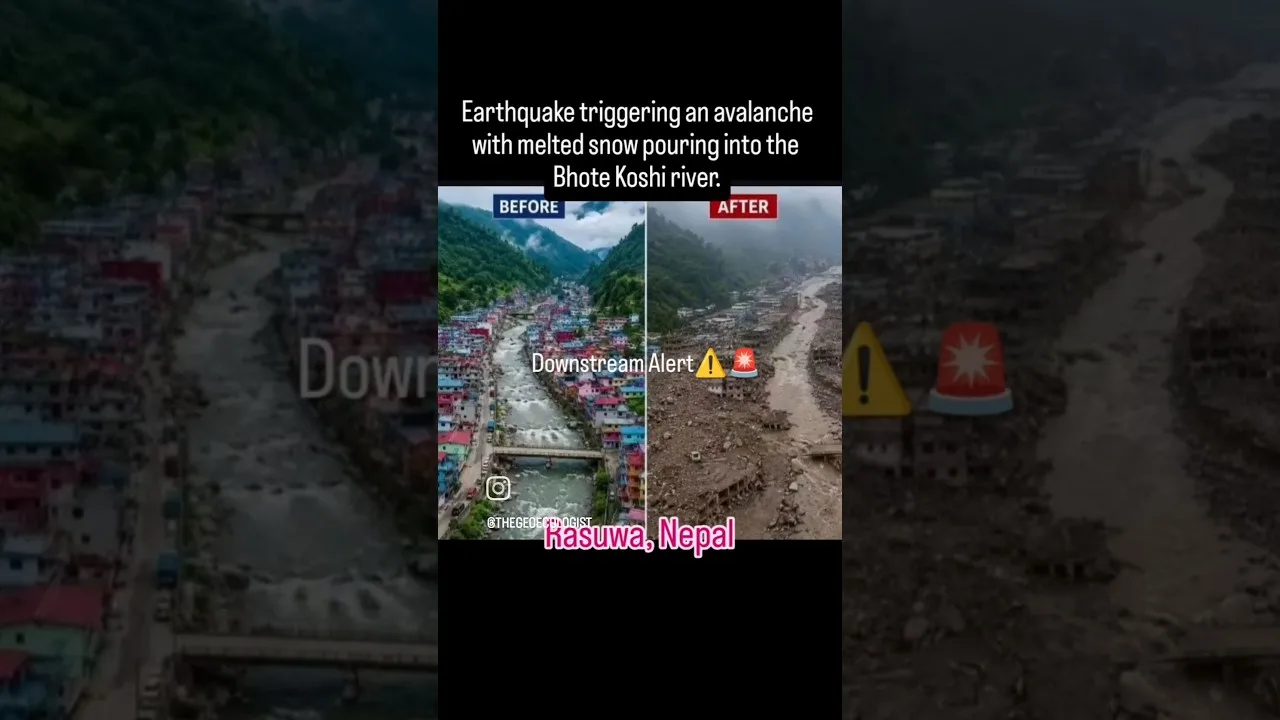
Table of Contents
The Rasuwa flash flood Nepal stunned the world when an earthquake‑triggered avalanche unleashed melted snow and debris into the Bhote Koshi River in early July 2024. The terrifying chain of events unfolded in the heart of the Himalayas, leaving communities devastated and the nation in mourning. This unprecedented Rasuwa flash flood disaster is now one of the most talked‑about natural calamities of the year, drawing global attention to the fragile mountain ecosystems of Nepal.
- The Rasuwa flash flood was directly linked to a magnitude 6.0 earthquake that destabilized the surrounding cliffs.
- Melted snow and rock debris surged down into the Bhote Koshi River, creating a destructive wave that reached villages within minutes.
- Over 50 lives were lost, with more than 200 people reported missing and hundreds of homes washed away.
- Government and NGOs launched an urgent rescue operation, but difficult terrain and ongoing aftershocks hampered efforts.
- Long‑term environmental impact assessments are underway, highlighting the role of climate change in increasing glacial melt events.
Rasuwa Flash Flood: Cause and Impact
The Rasuwa flash flood began as a seismic event. On 2 July 2024, a powerful earthquake struck the Rasuwa District, causing an avalanche high on the mountainside. The quake not only cracked the earth but also melted snowpacks that had accumulated over weeks of unseasonal warmth. This combination of seismic shaking, avalanche impact, and rapid snowmelt created a massive volume of water and debris that surged down the valleys.
Local residents described hearing a deafening roar as the water level in the Bhote Koshi River skyrocketed. Within minutes, the river’s channel overflowed, carrying boulders, tree trunks, and mud toward the downstream communities of Rasuwa District. The speed and volume of the Rasuwa flash flood were unlike any recorded flooding in the region, prompting immediate warnings from the Nepal Department of Hydrology and Meteorology.
According to the UNICEF Nepal emergency report, the flood displaced over 3,000 families, destroyed 450 homes, and damaged critical infrastructure including the main highway linking Kathmandu to the northern border. The humanitarian impact was compounded by the fact that many of the affected villages rely on agriculture and livestock for survival, and the loss of crops and animals threatens food security for months to come.
Human Stories and Suffering
Among the most poignant accounts is that of Sita Rai, a mother of three whose home was swept away in the Rasuwa flash flood. “We heard the water coming like a train,” she recounted. “In minutes, everything we owned was gone. My youngest son still clings to the memory of the river’s roar.” Her story mirrors countless others, each highlighting the suddenness and severity of the Rasuwa flash flood.
Rescue teams, including the Nepali Army and volunteers from the Red Cross, faced extreme challenges. The rugged topography, steep riverbanks, and continued aftershocks made helicopter landings risky. Yet, despite these obstacles, more than 1,200 survivors were rescued, and around 300 individuals were pulled out alive from the debris. The Rasuwa flash flood remains a stark reminder of how quickly nature can turn catastrophic.
Response and Relief Efforts
Immediately after the Rasuwa flash flood, the Nepalese government declared a state of emergency and activated the National Disaster Management Authority (NDMA). The NDMA coordinated with local authorities, international NGOs, and UN agencies to deliver food, clean water, and medical supplies to displaced families. The Rasuwa flash flood response also saw the deployment of search‑and‑rescue teams equipped with satellite phones and GPS trackers to locate missing persons.
International aid started pouring in within 48 hours. Countries such as India, China, and the United States offered emergency assistance, including portable generators, temporary shelter kits, and medical teams specializing in trauma care. NGOs like Save the Children and World Vision set up temporary camps, providing psychosocial support to children traumatized by the Rasuwa flash flood.
Despite these efforts, logistics remain a nightmare. The main road, Route 16, was partially washed away, cutting off supply lines. As of mid‑August 2024, the Rasuwa flash flood had delayed reconstruction projects worth over $45 million. However, the resilience of the local community shines through; many families are already rebuilding using locally sourced materials, a testament to the enduring spirit of the Rasuwa region.
Long‑term Environmental Concerns
Environmental scientists warn that the Rasuwa flash flood may be a harbinger of more frequent extreme weather events in the Himalayas. Climate change is accelerating glacial melt, increasing the volume of water entering river systems. The event also highlighted the precarious balance of mountain slopes that are now more susceptible to landslides and avalanches due to warming temperatures.
Researchers from Tribhuvan University, in collaboration with the International Centre for Integrated Mountain Development (ICIMOD), have launched a study focusing on the Rasuwa flash flood and its environmental aftermath. Their findings, expected later in 2025, will inform policy recommendations for sustainable land management and early warning systems. The study references data from the Bhote Koshi River monitoring station, which recorded unprecedented peak flows during the disaster.
Statistical Overview and Authoritative Sources
Here are key statistics related to the Rasuwa flash flood as of August 2024:
- Total casualties: 52 confirmed dead, 210 missing (NDMA official tally).
- Displaced households: 3,150 families.
- Damage to infrastructure: $78 million (roads, bridges, schools).
- Rescued survivors: 1,240 individuals.
- Aid organizations active: 27 national and international NGOs.
These figures are compiled from the Nepalese Ministry of Home Affairs, the United Nations Office for the Coordination of Humanitarian Affairs (OCHA), and independent disaster monitoring platforms.
How to Stay Safe in Flash Flood Prone Areas
For communities living near the Bhote Koshi River and other Himalayan waterways, preparedness is crucial. The following guidelines can help mitigate the impact of future Rasuwa flash flood events:
- Monitor weather alerts and earthquake warnings issued by the National Seismological Center.
- Develop an evacuation plan that includes designated assembly points away from the riverbanks.
- Keep emergency kits ready with water, non‑perishable food, flashlights, and first‑aid supplies.
- Participate in regular community drills to ensure everyone knows how to respond quickly.
- Support local reforestation projects that stabilize slopes and reduce runoff.
By integrating these practices, residents can better withstand the devastating force of a Rasuwa flash flood and similar events.
The Rasuwa flash flood also sparked a renewed conversation about infrastructure resilience. Engineers are exploring the construction of detention basins and reinforced riverbanks to absorb excess water during monsoon seasons. These projects aim to protect both lives and property, ensuring that the memory of the Rasuwa flash flood leads to actionable change rather than just tragedy.
As the nation begins to rebuild, the global community watches closely. The Rasuwa flash flood serves as a stark reminder that climate variability, seismic activity, and environmental degradation can converge to create disasters of unprecedented scale. Through coordinated response, scientific research, and community empowerment, Nepal hopes to turn this devastating chapter into an opportunity for long‑term resilience and sustainable development.
For those interested in further reading, the Rasuwa District Wikipedia page provides historical context, and the Bhote Koshi River Wikipedia page offers detailed hydrological information that helps explain the river’s behavior during extreme events like the Rasuwa flash flood.
To Download E-Books & Study Material Visit The Shop Page
Stay informed, stay safe, and remember that the spirit of Rasuwa endures stronger than any flood.
Frequently Asked Questions
A magnitude 6.0 earthquake triggered an avalanche, which melted snow and sent a massive surge of water and debris into the Bhote Koshi River, resulting in the Rasuwa flash flood.
Over 3,000 families were displaced, with 52 confirmed deaths, more than 200 missing, and extensive damage to homes and infrastructure.
The Nepalese government declared a state of emergency, the NDMA coordinated rescue operations, and international NGOs, the UN, and neighboring countries provided food, shelter, medical aid, and reconstruction support.
