Planning for Sustainable Development-Geoecologist-UPSC
Planning for Sustainable Development: A Comprehensive Guide for UPSC Geography Optional
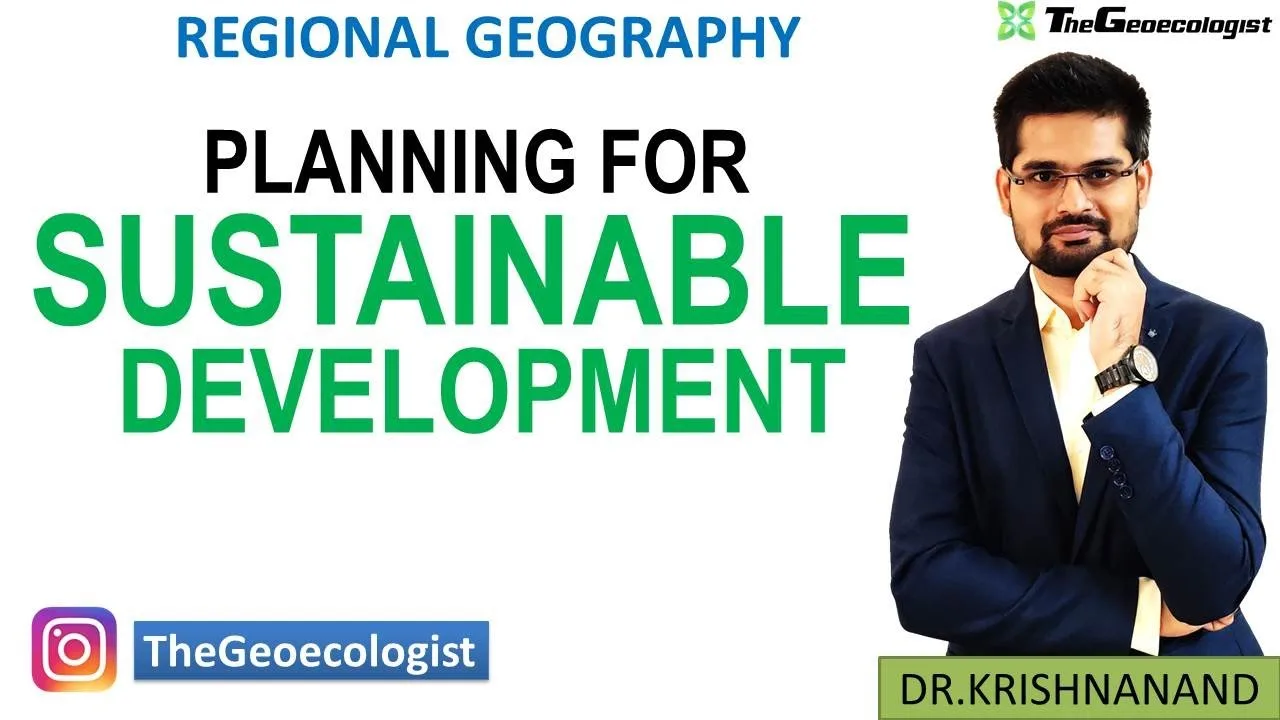
Sustainable development has emerged as a cornerstone of global discourse, aiming to balance ecological integrity, economic growth, and social equity. For UPSC aspirants, especially those opting for Geography Optional, understanding Planning for Sustainable Development is critical. This article simplifies key concepts from Dr. Krishnanand’s enlightening video lecture on TheGeoecologist YouTube channel, tailored for UPSC preparation.
Understanding Sustainable Development
Sustainable development focuses on meeting present needs without compromising future generations. The concept integrates three pillars:
- Environmental Sustainability: Protecting ecosystems, reducing carbon footprints, and promoting renewable resources.
- Economic Sustainability: Fostering inclusive growth, green economies, and ethical resource management.
- Social Sustainability: Ensuring equity, justice, and improved quality of life for all.
Dr. Krishnanand emphasizes that sustainable planning requires intergenerational equity, where development today does not deplete resources for tomorrow.
Key Principles in Planning for Sustainability
Balancing Economy and Environment:
- Strategies like green infrastructure, circular economies, and low-carbon technologies minimize environmental degradation while promoting growth.
- Example: Kerala’s decentralized planning model integrates local ecology with community needs.
Integrative Regional Planning:
- Spatial planning ensures resource distribution aligns with regional capacities.
- Tools like GIS and remote sensing help assess land use, water availability, and biodiversity hotspots.
- Policy Frameworks:
- National initiatives like the National Action Plan on Climate Change (NAPCC) and global commitments like the Sustainable Development Goals (SDGs) guide sustainable policies.
Case Studies & Real-World Applications
- Curitiba, Brazil: A model of urban sustainability with efficient public transport, waste recycling, and green spaces.
- Bhutan’s Gross National Happiness: Prioritizes environmental conservation and cultural values over mere GDP growth.
- India’s Solar Power Push: Aligns with SDG 7 (Affordable and Clean Energy) to reduce fossil fuel dependency.
Challenges in Sustainable Planning
- Implementation Gaps: Policies often fail due to bureaucratic hurdles or lack of grassroots participation.
- Conflicting Interests: Industries prioritizing profit clash with environmental mandates.
- Global Inequalities: Developing nations face resource constraints in adopting green technologies.
Dr. Krishnanand notes that addressing these challenges requires decentralized governance, stakeholder collaboration, and public awareness.
UPSC Relevance
For Geography Optional, focus on:
- Theoretical Frameworks: Brundtland Report, Triple Bottom Line, and Planetary Boundaries.
- Indian Context: Examine schemes like Smart Cities Mission, Jal Shakti Abhiyan, and agro-ecological practices.
- Critical Analysis: Debate trade-offs between development and conservation, e.g., dam projects vs. displacement.
Conclusion
Planning for sustainable development is not just an academic topic but a roadmap for humanity’s survival. Aspirants must grasp its multidimensional nature, regional variations, and policy linkages. As Dr. Krishnanand highlights, “Sustainability is a journey, not a destination”—a mantra that resonates in UPSC preparation and beyond.
Enhance Your Preparation
For deeper insights, watch Dr. Krishnanand’s video on Planning for Sustainable Development and follow @thegeoecologist on Instagram. Join THEGEOECOLOGIST’s YouTube channel for perks and updates on Geography Optional content.
planningforsustainability #sustainabledevelopment #upsc
Keywords: Sustainable Development, UPSC Geography Optional, Regional Planning, Geoecologist, Dr. Krishnanand, SDGs, Environmental Sustainability
To Download E-Books & Study Material Visit The Shop Page