
Blog
Nepal Gen Z protests: Youth-Led Revolution Against Corruption

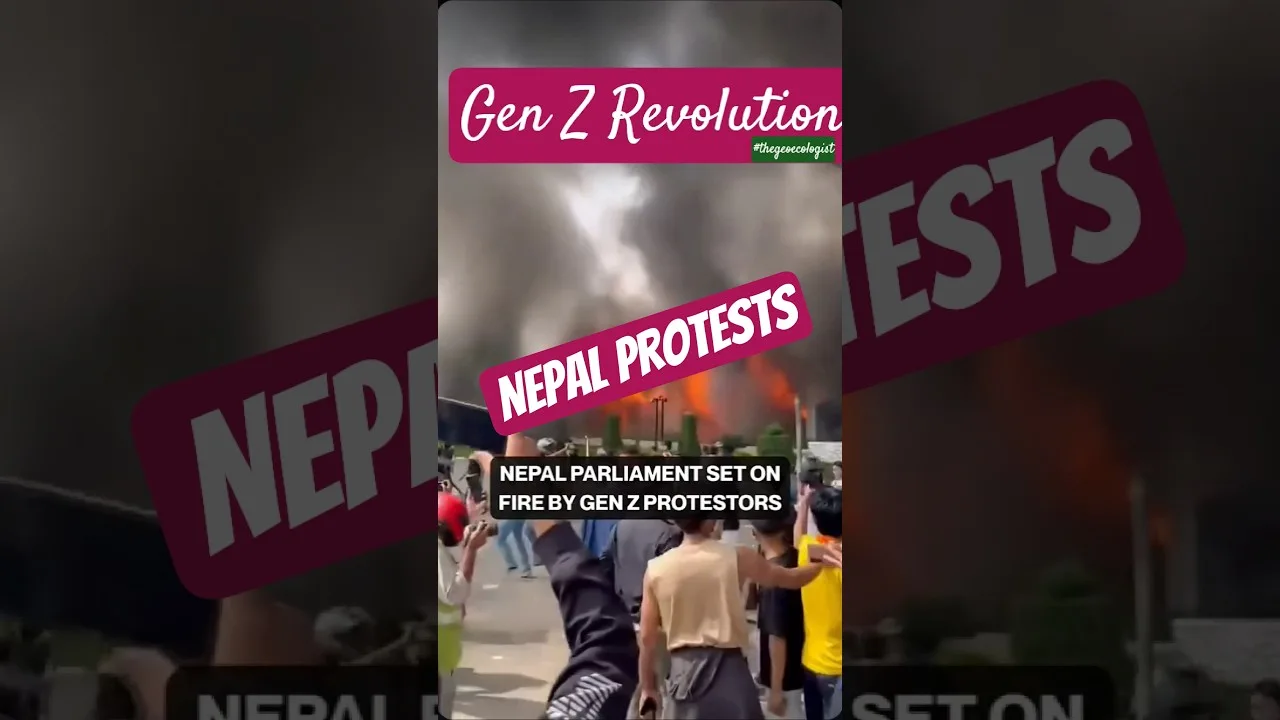
Table of Contents
- Historical Context: Nepal's Fragile Democracy
- The Spark: Social Media Ban Fuels Digital Resistance
- Digital Activism as Force Multiplier
- Escalation: From Streets to Parliament
- Symbolism of the Parliament Attack
- Gen Z Leadership: A New Political Grammar
- Intersectionality and Inclusivity
- Government Response: Repression and Narrative Control
- Legal Countermeasures
- International Dimensions
- Economic Drivers: Beyond Corruption
- Role of the Diaspora
- Comparative Perspective: Nepal in Global Protest Wave
- Future Scenarios
- Scenario 1: Negotiated Reform
- Scenario 2: Protracted Confrontation
- Scenario 3: Systemic Transformation
- Conclusion: A Generation's Reckoning
The Nepal Gen Z protests have erupted into a nationwide movement that is reshaping the Himalayan nation’s political landscape. What began as digital outrage over a government-imposed social media blackout has transformed into a sustained uprising demanding systemic change, with young Nepalis at the forefront of a struggle that observers are calling a generational reckoning.
- Youth-led movement: The Nepal Gen Z protests are distinctively driven by citizens under 30, bypassing traditional political parties.
- Digital catalyst: A government ban on TikTok, Facebook, and X (formerly Twitter) in late 2023 backfired, accelerating mobilization.
- Core demands: Protesters seek an end to endemic corruption, transparent governance, and economic justice.
- Escalation: Demonstrations turned violent in June 2024, with the parliament complex set ablaze and the finance minister assaulted.
- Government stance: Authorities label the unrest “anarchy”; protesters call it a revolution for accountability.
Historical Context: Nepal’s Fragile Democracy
To understand the Nepal Gen Z protests, one must examine the country’s turbulent political trajectory. Since the abolition of the monarchy in 2008 and the promulgation of a new constitution in 2015, Nepal has cycled through 13 governments in 16 years. Chronic instability, fueled by factionalism among major parties — the Nepali Congress, CPN-UML, and CPN (Maoist Centre) — has eroded public trust. According to Wikipedia’s overview of Nepal’s political system, the nation ranks 110th out of 180 countries on Transparency International’s 2023 Corruption Perceptions Index, a decline from previous years that resonates deeply with a generation facing 20% youth unemployment.
The Spark: Social Media Ban Fuels Digital Resistance
In November 2023, the government banned TikTok, citing “social harmony” concerns, and intermittently restricted access to Facebook and X. The move, widely seen as an attempt to curb dissent ahead of the National Assembly elections, instead became the catalyst for the Nepal Gen Z protests. Young Nepalis, who constitute over 40% of the country’s 30 million population, circumvented blocks using VPNs and migrated to encrypted platforms like Signal and Telegram. Hashtags such as #NepalProtests, #GenZRevolution, and #NoMoreCorruption trended globally, drawing diaspora support and international media attention.
Digital Activism as Force Multiplier
Unlike previous movements led by party cadres, the Nepal Gen Z protests leverage decentralized digital organization. Anonymous coordinators use Instagram Reels, YouTube Shorts, and TikTok (accessed via VPN) to disseminate protest schedules, legal aid resources, and real-time documentation of police actions. A June 2024 BBC report on the Nepal youth uprising noted that protest-related content garnered over 500 million views across platforms in a single month, illustrating the movement’s unprecedented reach.
Escalation: From Streets to Parliament
Peaceful demonstrations in Kathmandu’s Maitighar Mandala and Durbarmarg areas began in early 2024, swelling to tens of thousands by May. The turning point arrived on June 28, 2024, when a faction of protesters breached security cordons and set fire to the Federal Parliament building in Singha Durbar. Simultaneously, Finance Minister Barshaman Pun was physically assaulted near the ministry, sustaining minor injuries. These events marked a dramatic escalation in the Nepal Gen Z protests, shifting the narrative from civic dissent to what Prime Minister Pushpa Kamal Dahal “Prachanda” denounced as “orchestrated anarchy.”
Symbolism of the Parliament Attack
The torching of the parliament — inaugurated only in 2018 at a cost of $50 million — carried potent symbolism. For protesters, the building represented a political elite that has enriched itself while public services crumble. “They built a palace for themselves while our hospitals lack medicine,” said a 24-year-old protester interviewed by The Kathmandu Post. The finance minister’s assault, meanwhile, underscored rage over alleged embezzlement in infrastructure projects and the controversial Citizenship Amendment Bill, which critics say disenfranchises marginalized communities.
Gen Z Leadership: A New Political Grammar
The Nepal Gen Z protests reject hierarchical leadership. There is no single face, no party affiliation, and no negotiated settlement framework. Instead, the movement operates through fluid collectives: “Youth for Accountability,” “Digital Rebels Nepal,” and “Students Against Corruption.” Their demands, articulated in a widely circulated 12-point charter, include:
- Independent anti-corruption commission with prosecutorial powers
- Public audit of all infrastructure projects above 1 billion rupees
- Repeal of repressive cyber laws used to silence dissent
- Guaranteed youth representation in constitutional bodies
- Economic policy reform addressing brain drain — over 500,000 Nepalis left for foreign employment in FY 2023/24 alone
Intersectionality and Inclusivity
Unlike past uprisings dominated by hill-based elites, the Nepal Gen Z protests explicitly center Madhesi, Tharu, Dalit, and LGBTQ+ voices. Protest art incorporates Maithili, Bhojpuri, and Newari languages alongside Nepali. This intersectionality has broadened the movement’s base but also complicated negotiations, as the government struggles to identify interlocutors.
Government Response: Repression and Narrative Control
Authorities have deployed a twin strategy: force and framing. Over 2,000 arrests were recorded between April and July 2024, with Human Rights Watch documenting excessive force, including pellet guns and water cannons in residential areas. The government’s “anarchy” narrative, amplified through state media and allied influencers, portrays protesters as foreign-funded destabilizers. A July 2024 directive required ISPs to log VPN usage, signaling intensified digital surveillance.
Legal Countermeasures
The Electronic Transactions Act (2008) and the proposed Social Media Bill (2024) provide legal scaffolding for suppression. Critics argue these laws criminalize legitimate dissent. The Nepal Gen Z protests have responded with “legal literacy camps” teaching protesters their constitutional rights under Article 17 (freedom of assembly) and Article 19 (freedom of expression).
International Dimensions
The Nepal Gen Z protests have attracted diplomatic attention. India, China, and the US — all with strategic interests in Nepal — have issued measured statements urging restraint and dialogue. The UN Human Rights Office called for independent investigations into protest-related injuries. Nepal’s geopolitical balancing act complicates external pressure; the government leverages its position between rival powers to resist interference while seeking development aid.
Economic Drivers: Beyond Corruption
While corruption is the rallying cry, economic despair fuels the Nepal Gen Z protests. Remittances constitute 24% of GDP, creating a migrant-dependent economy that bleeds skilled youth. Inflation hovered at 5.5% in mid-2024, outpacing wage growth. The education system produces 400,000 graduates annually for an economy generating fewer than 50,000 formal jobs. These structural failures make the movement’s economic justice demands existential, not aspirational.
Role of the Diaspora
Nepal’s 3-million-strong diaspora — concentrated in the US, Australia, Japan, and the Gulf — provides financial, technical, and advocacy support. Crowdfunding for legal aid and medical supplies has raised over $200,000. Diaspora groups organize solidarity protests in London, New York, and Sydney, lobbying host governments to condition aid on human rights compliance. This transnational dimension distinguishes the Nepal Gen Z protests from purely domestic uprisings.
Comparative Perspective: Nepal in Global Protest Wave
The Nepal Gen Z protests echo youth-led movements in Sri Lanka (2022 Aragalaya), Bangladesh (2024 quota reform protests), and Kenya (2024 Finance Bill protests). Common threads include: digital nativity, rejection of traditional opposition parties, economic precarity, and climate anxiety. Nepal’s movement is unique in its explicit anti-monarchy legacy — protesters invoke the 2006 Jana Andolan’s unfulfilled promises — and its navigation of a federal constitution still in its infancy.
Future Scenarios
Three trajectories emerge for the Nepal Gen Z protests:
Scenario 1: Negotiated Reform
Government concedes to an independent anti-corruption body and electoral reforms. Protests de-escalate; youth candidates contest 2027 elections. Probability: moderate, contingent on protest unity and elite fracture.
Scenario 2: Protracted Confrontation
Repression intensifies; movement radicalizes or fragments. Cyclical unrest persists, deterring investment and deepening brain drain. Probability: high if hardliners dominate both sides.
Scenario 3: Systemic Transformation
Constitutional assembly demanded; federal structure overhauled. High risk, high reward. Probability: low but rising if protests sustain through winter.
Conclusion: A Generation’s Reckoning
The Nepal Gen Z protests represent more than anger against corruption — they embody a generation’s refusal to inherit a broken system. Whether this uprising achieves its aims or succumbs to repression, it has already rewritten Nepal’s political grammar. The youth have demonstrated that in the digital age, legitimacy flows not from palace or party, but from the consent of the governed. As one protest banner read: “We are not the future. We are the present. And we are watching.” The establishment’s response will determine whether Nepal becomes a case study in democratic renewal or a cautionary tale of generational betrayal.
Frequently Asked Questions
The Nepal Gen Z protests were triggered by a government-imposed social media ban in November 2023 targeting TikTok, Facebook, and X, which young Nepalis viewed as an attempt to suppress dissent ahead of elections. The ban backfired, accelerating digital mobilization and street demonstrations.
The core demands include an independent anti-corruption commission with prosecutorial powers, public audits of major infrastructure projects, repeal of repressive cyber laws, guaranteed youth representation in constitutional bodies, and economic reforms addressing brain drain and youth unemployment.
The government has deployed a dual strategy of force and narrative control: over 2,000 arrests, use of pellet guns and water cannons, labeling protesters as 'anarchists' and foreign-funded destabilizers, and intensified digital surveillance including VPN logging requirements.