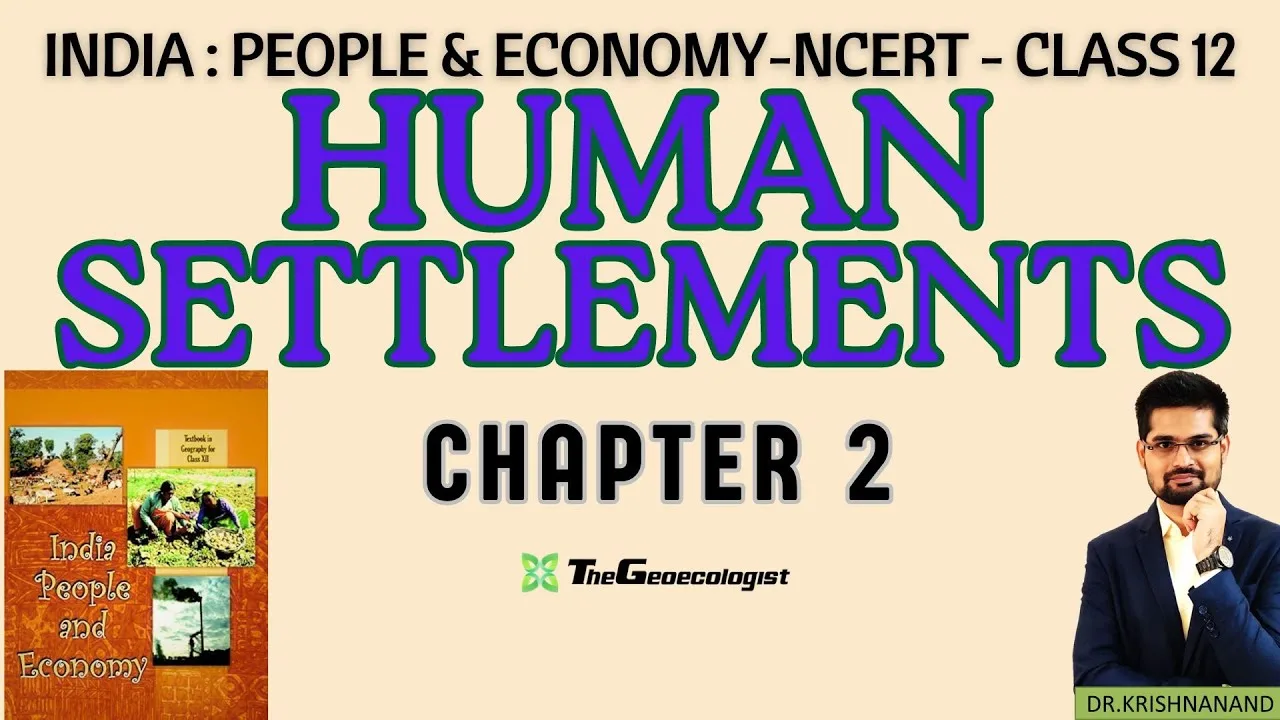
Human Settlements-Chapter 2- Class 12 NCERT Geography
Human Settlements: A Comprehensive Guide for Class 12 and Competitive Exams
Introduction
Human settlements, the cornerstone of human civilization, reflect the dynamic relationship between people and their environment. Chapter 2 of the NCERT Class 12 Geography textbook (India: People and Economy) delves into the nuances of settlements, their types, patterns, and challenges, providing a foundational understanding for students. This article synthesizes key concepts from the NCERT chapter and insights from TheGeoecologist’s Hindi-English video lecture, offering a strategic resource for CBSE Class 12 students, CUET aspirants, and UPSC candidates.
1. Types of Settlements
Settlements are broadly classified into rural (gramin basti) and urban (nagar) based on population size, occupation, and infrastructure:
- Rural Settlements: Predominantly agrarian, with sparse population and low-density housing. Examples include villages in the Indo-Gangetic Plains.
- Urban Settlements: Characterized by non-agricultural activities, higher population density, and advanced infrastructure. Metropolitan cities like Mumbai and Delhi fall under this category.
Key Difference: The Census of India defines urban areas as regions with a minimum population of 5,000, ≥75% male workforce in non-agricultural sectors, and a density of ≥400 persons per sq. km.
2. Patterns of Settlements
Settlements manifest in varied patterns influenced by geographic and cultural factors:
- Clustered/Compact: Densely grouped houses, common in fertile plains (e.g., Rajasthan villages).
- Semi-Clustered: Partial clustering due to social or topographic fragmentation.
- Hamleted: Settlements split into smaller units (panna), seen in West Bengal.
- Dispersed: Isolated dwellings in harsh terrains like the Himalayas or deserts.
3. Factors Influencing Settlements
The location and growth of settlements depend on:
- Physical Factors: Water availability, fertile soil, climate, and terrain.
- Cultural Factors: Religious significance (e.g., Varanasi) or historical legacy.
- Economic Factors: Proximity to resources (coal in Jharia) and transport networks.
Mnemonic (WATER): Water, Altitude, Terrain, Economy, Resources.
4. Human Settlements in India
- Rural Settlements: Over 60% of India’s population resides in villages, with regional variations in housing materials (e.g., bamboo houses in Assam).
- Urbanization Trends: India’s urban population has surged post-independence, with cities like Bengaluru emerging as IT hubs. Challenges include urban sprawl and slum proliferation.
5. Challenges in Urban Settlements
- Infrastructure Strain: Overcrowding, traffic congestion, and inadequate housing.
- Environmental Issues: Pollution and waste management crises.
- Socio-Economic Disparities: Slums lacking basic amenities juxtaposed with high-rise complexes.
6. Government Initiatives for Sustainable Settlements
- Smart Cities Mission: Enhancing urban living through technology and sustainability.
- AMRUT (Atal Mission): Focused on water supply and sewage management.
- PMAY (Pradhan Mantri Awas Yojana): Affordable housing for all by 2022.
7. Relevance to Competitive Exams
This chapter is crucial for:
- CBSE Class 12: Diagrams of settlement patterns and case studies.
- CUET/UPSC: Questions on urbanization trends, census data, and government schemes.
- UGC NET: Theoretical frameworks in human geography.
Conclusion
Understanding human settlements is vital for grasping India’s socio-economic fabric. TheGeoecologist’s video (available on YouTube) complements NCERT content by simplifying complex topics through bilingual explanations. For in-depth preparation, explore paid courses on TheGeoecologist’s website.
Follow for Updates:
- Instagram: @thegeoecologist
- Email: krishna.geography@gmail.com
#ncertgeography #humansettlements #class12geography #indiapeople #upsc #cuet #thegeoecologist
This structured guide bridges textbook knowledge and exam readiness, empowering students to master human settlements holistically.
To Download E-Books & Study Material Visit The Shop Page