


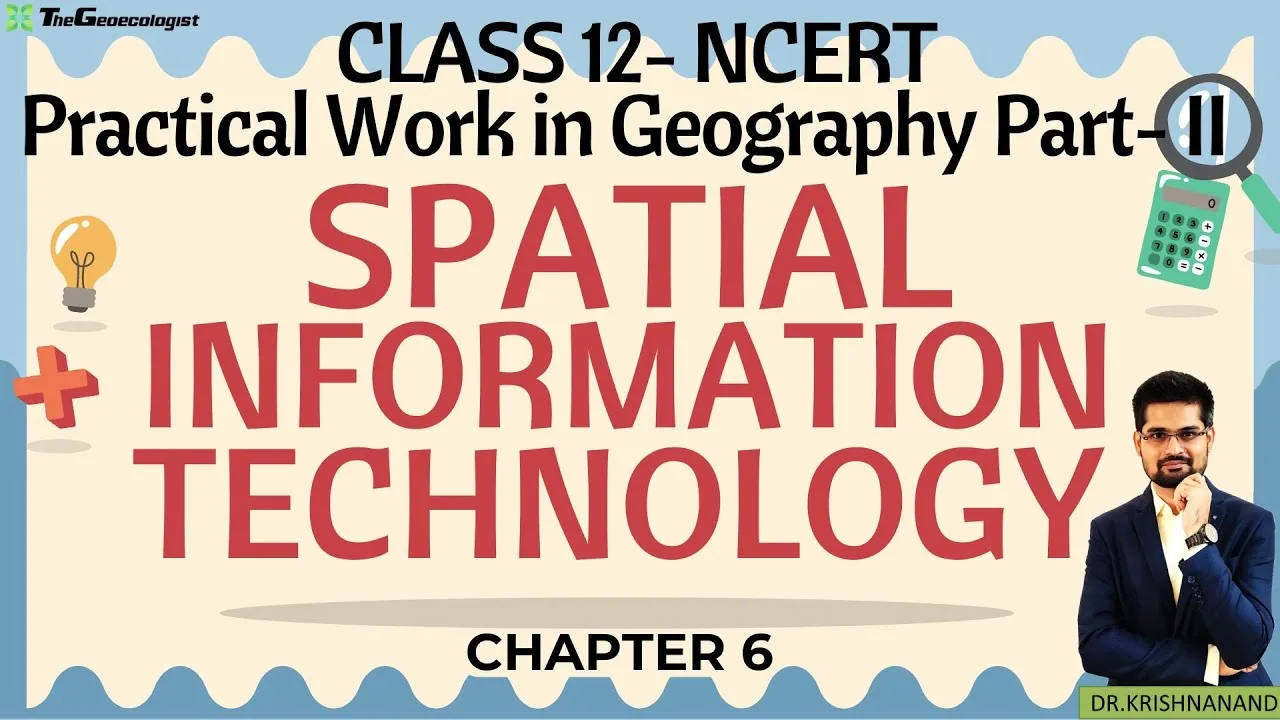
Spatial Information Technology-Chapter 6 -Class 12 NCERT Geography
Understanding Spatial Information Technology: A Comprehensive Guide for Class 12 Geography Students
Spatial Information Technology (SIT) is a fascinating and essential topic in the Class 12 NCERT Geography syllabus, particularly in Chapter 6 of the Practical Geography section. This technology has revolutionized the way we analyze, interpret, and manage spatial data, making it a crucial tool for geographers, researchers, and professionals. Whether you’re a CBSE Class 12 student preparing for your board exams, a CUET aspirant, or someone aiming for competitive exams like UGC NET JRF, UPSC, or other state-level tests, mastering this chapter can give you a significant edge.
In this article, we will explore Spatial Information Technology in detail, drawing insights from the NCERT textbook and the insightful Hindi-English mixed language video by TheGeoecologist, a renowned educator in the field of geography. You can watch the video here: Spatial Information Technology – Chapter 6 – Class 12 NCERT Geography.
What is Spatial Information Technology?
Spatial Information Technology (SIT) refers to the tools and techniques used to collect, store, analyze, and visualize spatial data. It includes Geographic Information Systems (GIS), Remote Sensing (RS), and Global Positioning Systems (GPS). These technologies help us understand the spatial relationships between various geographical phenomena and make informed decisions based on spatial data.
Key Components of Spatial Information Technology
Geographic Information Systems (GIS):
- GIS is a computer-based system used to capture, store, analyze, and display spatial data.
- It allows users to overlay multiple layers of data, such as climate, soil, and population, to identify patterns and relationships.
- Example: Mapping the spread of diseases or planning urban infrastructure.
Remote Sensing (RS):
- Remote sensing involves collecting data about the Earth’s surface from a distance, usually through satellites or aircraft.
- It provides valuable information for monitoring changes in land use, forests, agriculture, and natural disasters like floods or earthquakes.
- Example: Assessing deforestation or tracking cyclones.
- Global Positioning Systems (GPS):
- GPS is a satellite-based navigation system that provides precise location data anywhere on Earth.
- It is widely used in navigation, surveying, and tracking.
- Example: Finding the exact location of a place or mapping a route.
Applications of Spatial Information Technology
SIT has diverse applications across various fields:
- Environmental Management: Monitoring deforestation, soil erosion, and climate change.
- Urban Planning: Designing smart cities and managing resources efficiently.
- Disaster Management: Predicting and responding to natural disasters like floods, earthquakes, and tsunamis.
- Agriculture: Optimizing crop yields and managing water resources.
- Transportation: Planning routes and managing traffic.
Why is Spatial Information Technology Important for Class 12 Students?
- Exam Relevance: SIT is a critical topic in the Class 12 NCERT Geography syllabus and is frequently tested in board exams.
- Competitive Exams: Questions related to GIS, Remote Sensing, and GPS are common in CUET, UGC NET JRF, UPSC, and other competitive exams.
- Practical Applications: Understanding SIT opens doors to careers in geography, environmental science, urban planning, and more.
Tips to Master Spatial Information Technology
- Understand the Basics: Start by learning the definitions and components of GIS, RS, and GPS.
- Practice with Maps: Use maps to understand how spatial data is represented and analyzed.
- Watch Educational Videos: TheGeoecologist’s video on Spatial Information Technology is an excellent resource for visual learners. You can watch it here: Spatial Information Technology – Chapter 6.
- Solve NCERT Questions: Practice the questions at the end of Chapter 6 to test your understanding.
- Stay Updated: Follow TheGeoecologist on Instagram (@thegeoecologist) and visit their website (thegeoecologist.com) for the latest updates and resources.
Conclusion
Spatial Information Technology is an integral part of modern geography, with applications that extend far beyond the classroom. By mastering this topic, Class 12 students can not only excel in their board exams but also build a strong foundation for future academic and professional pursuits.
For more in-depth explanations and practical insights, don’t forget to check out TheGeoecologist’s video: Spatial Information Technology – Chapter 6 – Class 12 NCERT Geography.
Good luck with your studies!
#NCERTGeography #SpatialInformationTechnology #Class12Geography #CBSEBoard #CUETPreparation #UGCNETJRF #UPSCPreparation #TheGeoecologist
To Download E-Books & Study Material Visit The Shop Page