


Human Geography- Nature and Scope -Class 12 -Chapter 1 NCERT
Understanding Human Geography: Nature and Scope for Class 12 and Competitive Exams
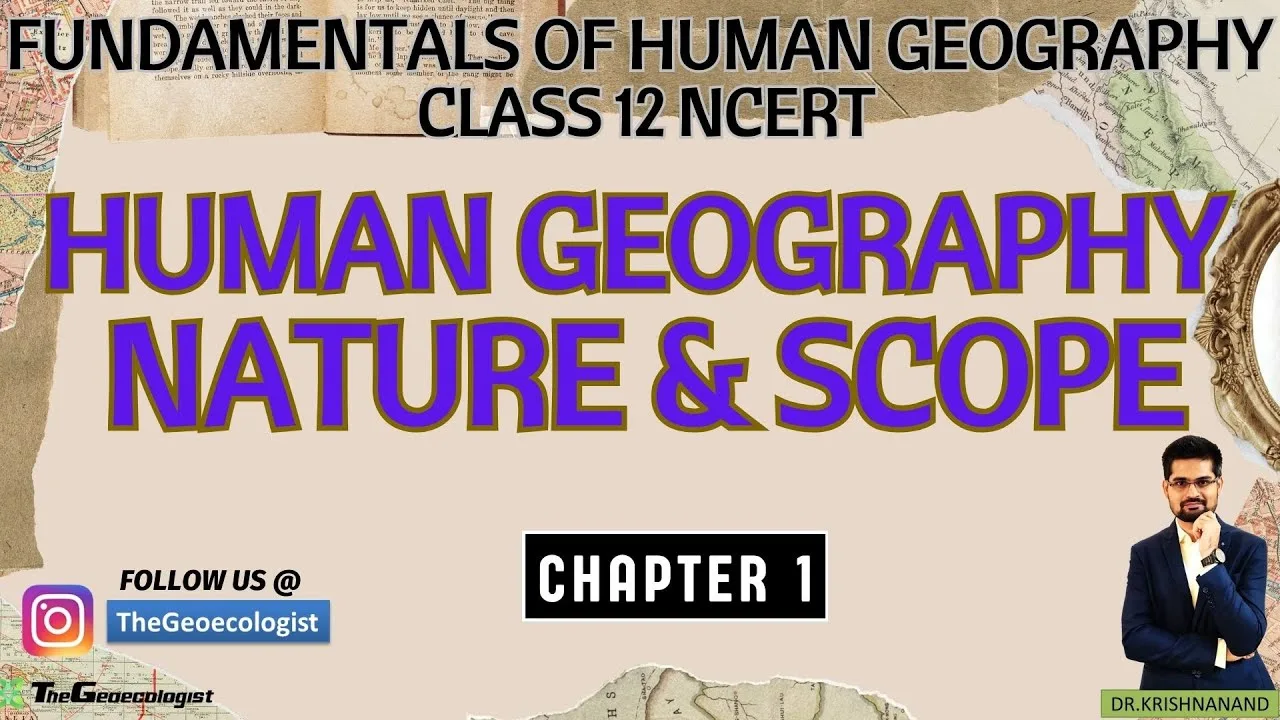
Human Geography, as outlined in the NCERT Class 12 chapter Nature and Scope, explores the dynamic relationship between humans and their environment. This interdisciplinary field bridges the physical and social sciences, offering insights into how societies shape and are shaped by their surroundings. Whether you’re a CBSE student, CUET aspirant, or preparing for UPSC, mastering this chapter lays the groundwork for understanding complex real-world issues.
What is Human Geography?
Human Geography studies the spatial distribution of human activities, cultures, and interactions with the Earth’s surface. As defined by NCERT, it examines "the relationship between the physical/natural and the human worlds, their spatial and temporal variation." Unlike physical geography, which focuses on natural phenomena, human geography delves into urbanization, agriculture, migration, and globalization.
Nature of Human Geography
- Interdisciplinary Approach: It integrates economics, sociology, political science, and environmental studies. For instance, analyzing urbanization involves understanding economics (job markets), sociology (community structures), and environmental science (resource management).
- Dynamic and Ever-Evolving: Human geography adapts to changes like technological advancements or climate crises. The COVID-19 pandemic’s impact on migration patterns is a contemporary example.
- Spatial Analysis: It uses tools like GIS to map and analyze patterns, such as population density or industrial growth.
Scope of Human Geography
The scope spans several sub-fields:
- Economic Geography: Study of industries, trade, and resource allocation.
- Social Geography: Focuses on cultural practices, languages, and religious distributions.
- Urban Geography: Examines city planning, infrastructure, and challenges like slums.
- Political Geography: Explores borders, geopolitics, and administrative regions.
As highlighted in TheGeoecologist’s video, the scope also includes regional geography, which emphasizes unique characteristics of areas (e.g., Kerala’s backwaters vs. Rajasthan’s deserts) through areal differentiation and regional synthesis.
Key Approaches
- Environmental Determinism: Early thinkers like Friedrich Ratzel argued that human behavior is governed by physical conditions (e.g., climate dictating agricultural practices).
- Possibilism: Vidal de la Blache countered that humans adapt to and modify their environment using technology (e.g., irrigation in arid regions).
- Neo-Determinism: A balanced view, introduced by Griffith Taylor, suggests humans navigate possibilities within environmental limits.
Exam Relevance and Real-World Applications
- CBSE Class 12: Focus on differentiating between determinism and possibilism, and understanding sub-fields like urban geography.
- CUET/UPSC: Expect questions on thinkers (Ratzel, Vidal), spatial theories, or case studies like Smart Cities Mission.
- UGC NET: Discuss interdisciplinary methods or regional planning concepts.
Human geography’s relevance extends to tackling modern challenges like sustainable development, climate adaptation, and equitable resource distribution. For example, Kerala’s decentralized planning model showcases regional geography in action.
Conclusion
This chapter forms the bedrock for advanced geographical studies and competitive exams. To deepen your understanding, explore TheGeoecologist’s video resource, which simplifies complex concepts using Hindi-English explanations, ideal for visual learners. For structured courses, visit https://thegeoecologist.com/.
Stay Connected:
- Follow on Instagram: @thegeoecologist
- Email: krishna.geography@gmail.com
class12 #fundamentalsofhumangeography #humangeography #ncertgeography #natureandscopeofhumangeography
Mastering human geography equips you to analyze the world critically—a skill valued in both academia and competitive exams. Dive into the resources, practice case studies, and connect geographical theories to current affairs for success!
To Download E-Books & Study Material Visit The Shop Page