


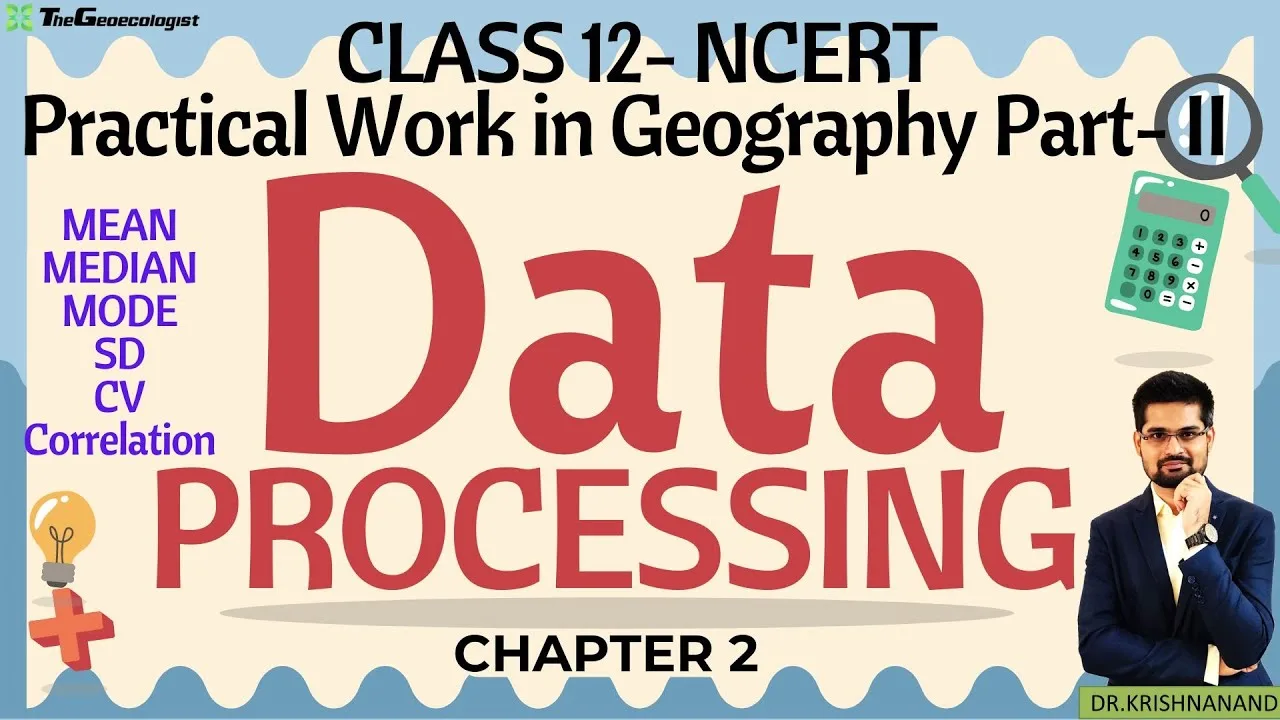
Data Processing- Chapter 2 – Class 12 NCERT -Practical Geography
Mastering Data Processing in Geography: A Comprehensive Guide for Class 12 CBSE & Competitive Exams
Data Processing, covered in Chapter 2 of NCERT Class 12 Practical Geography, is a foundational topic for students aiming to excel in geography as part of their academics or competitive exams like CUET, UGC NET JRF, UPSC, and others. This article breaks down the chapter’s key concepts, aligning with TheGeoecologist’s mixed Hindi-English video tutorial, to help learners grasp practical geography with clarity.
Understanding Data Processing
Data processing involves transforming raw data into meaningful information through systematic methods. In geography, this process is vital for analyzing spatial patterns, demographic trends, environmental changes, and socio-economic dynamics. The NCERT chapter emphasizes:
- Data Collection: Techniques like surveys, questionnaires, remote sensing, and secondary sources (government reports, census data).
- Data Classification: Organizing data into categories (e.g., qualitative vs. quantitative) for easier analysis.
- Tabulation and Graphical Representation: Using tables, graphs (bar, line, pie), and maps to visualize data effectively.
Practical Applications for Class 12 Students
The chapter provides hands-on exercises to help students:
- Create Frequency Distribution Tables for large datasets.
- Interpret Histograms and Scatter Plots to identify correlations (e.g., rainfall patterns vs. crop yield).
- Calculate Central Tendency (mean, median, mode) and dispersion (range, standard deviation).
- Design Thematic Maps (choropleth, dot maps) using software tools or manual plotting techniques.
For example, students may analyze census data to map population density across Indian states, highlighting disparities and their geographical causes.
Why is This Chapter Important for Competitive Exams?
- CUET & UGC NET: Questions on data interpretation, graphical analysis, and map-based problems frequently appear in these exams.
- UPSC: Geography optional paper and General Studies (GS-I) often include case studies requiring data-processing skills.
- Practical Skills: Mastery of tabulation, graph plotting, and statistical tools is critical for fieldwork-based questions.
TheGeoecologist’s Approach
TheGeoecologist’s video bridges language barriers by explaining complex concepts in a mix of Hindi and English. Key highlights include:
- Step-by-Step Demos: How to convert raw data into frequency tables and graphical outputs.
- Real-World Examples: Applications in disaster management (e.g., flood data analysis) and urban planning.
- Exam Tricks: Shortcuts for solving statistical problems quickly.
The video aligns with NCERT’s curriculum, making it a perfect supplement for visual learners.
Pro Tips for Effective Learning
- Practice Regularly: Use NCERT exercises and previous years’ exam questions.
- Leverage Software: Tools like Excel, QGIS, or SPSS for advanced data visualization.
- Focus on Maps: Practice labeling and interpreting thematic maps (e.g., soil types, climate zones).
Final Thoughts
Data Processing equips students with analytical skills crucial for geography enthusiasts and future researchers. Whether preparing for CBSE boards or UPSC, understanding this chapter ensures a strong grasp of spatial data interpretation.
For in-depth explanations, practical demonstrations, and exam-oriented guidance, enroll in TheGeoecologist’s paid courses at https://thegeoecologist.com/.
Stay Connected: Follow @thegeoecologist on Instagram for updates and tips!
practicalgeography #class12practicals #ncertclass12geography #ncertgeography #ncertrevision #ncertclass12geographypractical
This article synthesizes theoretical knowledge from NCERT with practical insights from TheGeoecologist’s video, ensuring holistic preparation for both academic and competitive success.
To Download E-Books & Study Material Visit The Shop Page