Hydrological Cycle-Components and Processes-TheGeoecologist
Understanding the Hydrological Cycle: Components, Processes, and Relevance for UPSC and Beyond
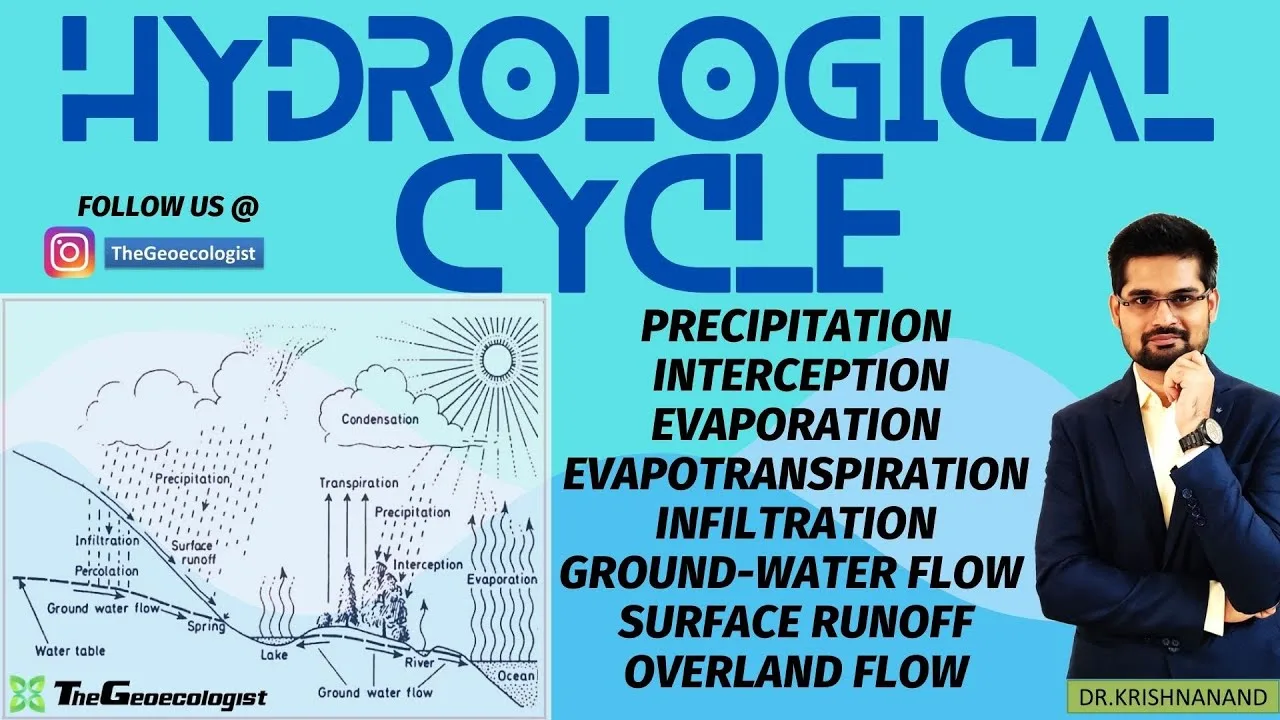
The hydrological cycle, a fundamental concept in physical geography, governs the continuous movement of water between the Earth’s surface and the atmosphere. Dr. Krishnanand, founder of TheGeoecologist, simplifies this intricate system in his lecture, making it accessible for students and UPSC aspirants. This article breaks down the hydrological cycle’s components, processes, and applications, serving as a guide for geography, geology, disaster management students, and competitive exam candidates.
Components of the Hydrological Cycle
The cycle comprises six key components that work in harmony:
- Evaporation: Conversion of water from oceans, rivers, and soil into vapor due to solar energy.
- Transpiration: Release of water vapor from plants into the atmosphere.
- Condensation: Cooling of water vapor into clouds.
- Precipitation: Return of water to Earth as rain, snow, or hail.
- Infiltration: Absorption of water into the soil, recharging groundwater.
- Runoff: Flow of surface water into rivers, lakes, and oceans, completing the cycle.
Key Processes in the Hydrological Cycle
- Storage and Flux: Water is stored in reservoirs (e.g., oceans, glaciers) and moves through fluxes like evaporation and precipitation.
- Sublimation: Direct conversion of ice to vapor, common in polar regions.
- Advection: Horizontal movement of water vapor by wind, influencing regional weather.
Importance in Geography, Geology, and Disaster Management
- Geography: Explains spatial distribution of water resources, climate patterns, and ecosystems.
- Geology: Highlights groundwater dynamics, erosion, and sediment transport.
- Disaster Management: Understanding cycles aids in predicting floods, droughts, and landslides. For instance, excessive rainfall (high precipitation) or poor infiltration can trigger floods, while prolonged droughts arise from deficits in the cycle.
Relevance for UPSC Aspirants
- Geography Optional (Paper I): Mastery of the hydrological cycle is essential for topics like climatology and geomorphology.
- GS Paper I (UPSC Prelims/Mains): Questions on water resources, climate change, and disasters frequently appear. For example, linking El Niño to monsoon variability involves hydrological processes.
- Case Studies: Analyze recent floods (e.g., Kerala 2018) or water scarcity issues to showcase applied knowledge.
Simplified Learning with TheGeoecologist
Dr. Krishnanand’s lecture demystifies complex concepts through:
- Visual Aids: Diagrams illustrating water movement.
- Real-World Examples: Connecting theory to current environmental challenges.
- Exam-Centric Approach: Highlighting frequently asked UPSC questions.
Recommended Resource: Explore the Simplified Hydrology E-Book (PDF) for a structured guide:
Download Link
Enroll for In-Depth Learning
For comprehensive geography courses tailored for UPSC/IAS, visit:
- Website: TheGeoecologist
- Course Queries: WhatsApp 9311052969
- Instagram Updates: Follow @thegeoecologist
Conclusion
The hydrological cycle is a cornerstone of environmental science, bridging theoretical knowledge with practical applications. For UPSC aspirants, grasping its nuances can enhance answers in both objective and descriptive papers. Leverage Dr. Krishnanand’s expertise and resources to build a strong foundation in hydrology and related disciplines.
#hydrology #hydrologicalcycle #UPSCGeography #DisasterManagement #TheGeoecologist
Visit TheGeoecologist for affordable online courses and stay tuned to our YouTube channel for simplified geography lectures!
To Download E-Books & Study Material Visit The Shop Page