

Blog
Biogeography Notes PDF UPSC: Best Resource for Aspirants in 2025

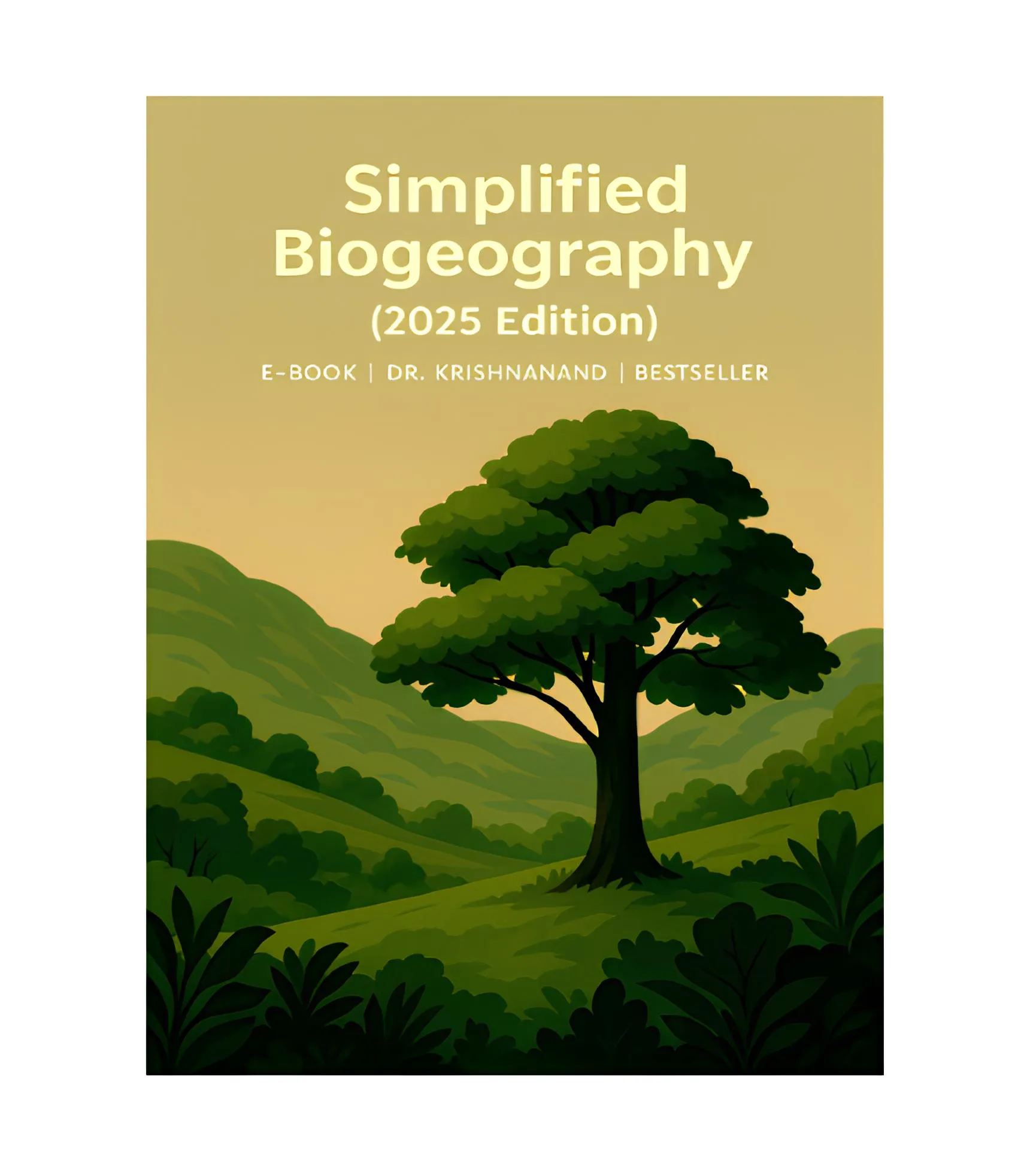
If you are searching for a reliable biogeography notes PDF UPSC resource that covers biomes, ecosystems, soil profiles, and biogeochemical cycles in a single, exam-ready format, you have landed on the right page. Most aspirants waste weeks piecing together scattered PDFs, coaching handouts, and YouTube transcripts only to realise the syllabus gaps show up in the Prelims test series. The real problem is not motivation; it is the absence of one consolidated, syllabus-aligned, and clearly illustrated biogeography study material that matches the latest UPSC CSE expectation.
This guide breaks down exactly what a top-quality biogeography UPSC resource must contain, how to evaluate the options available online, and why an increasing number of rank-holders are turning to structured e-books authored by subject specialists rather than free, outdated blog posts. You will also get practical buying and usage guidance so you can start preparing the right way from day one.
Key Takeaways
- A dependable biogeography notes PDF UPSC aspirants should cover biomes, ecosystem dynamics, soil formation profiles, and biogeochemical cycles in one place.
- Most free PDFs circulating online are either syllabus-incomplete or visually weak, making revision inefficient during the final month before Prelims.
- Look for CBCS-aligned content, point-wise highlights, and labelled diagrams when evaluating any biogeography study material.
- E-books authored by subject experts, such as Dr. Krishnanand’s Simplified Biogeography, are increasingly preferred for self-study because they integrate concepts, maps, and images in a single download.
- For best results, pair a focused biogeography PDF with answer-writing practice and regular map-based questions from previous year UPSC papers.
Why Aspirants Struggle to Find the Right Biogeography Notes PDF for UPSC
Biogeography sits at the intersection of physical geography, environment, and ecology, three high-scoring areas in UPSC General Studies Paper I and the Geography Optional. Yet despite the high weightage, students consistently report the same pain points when sourcing a biogeography notes PDF UPSC search:
- Fragmented content: Most free PDFs cover only one sub-topic, such as tropical biomes or soil profiles, forcing aspirants to stitch together 6 to 8 separate documents.
- Outdated classifications: The IUCN and WWF revise biome classifications regularly, and a 2018-era PDF no longer reflects the current scheme UPSC examiners expect.
- No diagrams or maps: Biogeography is heavily visual. A text-only PDF makes it impossible to revise the difference between a tropical evergreen biome and a monsoon deciduous forest biome quickly.
- Lack of answer-writing cues: Many aspirants have the facts but lack the structured, point-wise highlights that allow them to reproduce the answer under timed conditions.
The end result is that students spend more time organising material than actually learning it. According to data published by the Press Information Bureau of India, UPSC receives over 10 lakh applications for Civil Services annually, and the competition for Geography Optional remains intense, especially at the Mains stage where conceptual clarity in biogeography often differentiates a 120 from a 150 score.
What a High-Quality Biogeography Notes PDF UPSC Must Contain
Before you download or buy any study material, evaluate it against the following checklist. A genuinely useful biogeography notes PDF UPSC resource should tick every box.
1. Syllabus Alignment with CBCS and UPSC Framework
The University Grants Commission’s Choice Based Credit System (CBCS) has standardised biogeography modules across Indian universities, and UPSC draws heavily from this structure. A good PDF should explicitly cover the introduction to biogeography, biome classification, tropical evergreen biome, monsoon deciduous forest biome, savanna biome, desert biome, and temperate forest biome in the order a candidate would revise them.
2. Point-Wise Highlighted Descriptions
Bullet-style highlighted points save roughly 30 percent revision time compared to dense paragraphs, according to published cognitive science research on retrieval practice. Look for resources that bold keywords, italicise species names, and present facts in scannable blocks rather than narrative essays.
3. Diagrams, Maps, and Images
A biogeography study material without labelled biome distribution maps, soil horizon diagrams, and nutrient cycle flow charts is essentially incomplete. Aspirants consistently perform better when they can visualise the tropical rainforest canopy, the savanna grass-fire feedback loop, and the podzol soil profile side by side with the text.
4. Coverage of Soil Profiles and Biogeochemical Cycles
The related query “soil formation profiles and biogeochemical cycles notes” shows that aspirants frequently search for these sub-topics separately. A consolidated PDF should integrate the carbon cycle, nitrogen cycle, phosphorus cycle, and soil horizon development (O, A, B, C, R) in one chapter so you do not have to switch between multiple sources mid-revision.
Comparing the Most Common Sources of Biogeography Notes PDF UPSC Aspirants Use
There are four broad categories of resources students rely on, and each comes with measurable trade-offs.
Free Coaching PDFs and Blog Articles
Websites like ForumIAS, InsightsIAS, and Mrunal publish free biogeography notes that are decent for an introduction but rarely updated to the 2025 edition. They also lack the integrated biome-maps-soil cycles structure that the UPSC 2025 syllabus expects. Use them as a starting point but not as your primary resource.
Standard Reference Textbooks
Works such as Savindra Singh’s “Environmental Geography” and Majid Husain’s “Geography of India” are excellent for in-depth reading, but their 400+ page print format makes them impractical for last-mile revision before Prelims. They are best used as supplementary reading, not as a primary biogeography notes PDF UPSC resource.
YouTube Transcripts and Lecture Notes
Channels like Amit Sengupta and Sudarshan Gurjar offer structured lectures. However, transcripts converted to PDF lose diagrams, and most lecture notes are not mapped to the latest CBCS biogeography syllabus. They work for concept clarity but not for systematic revision.
Authored E-Books by Subject Specialists
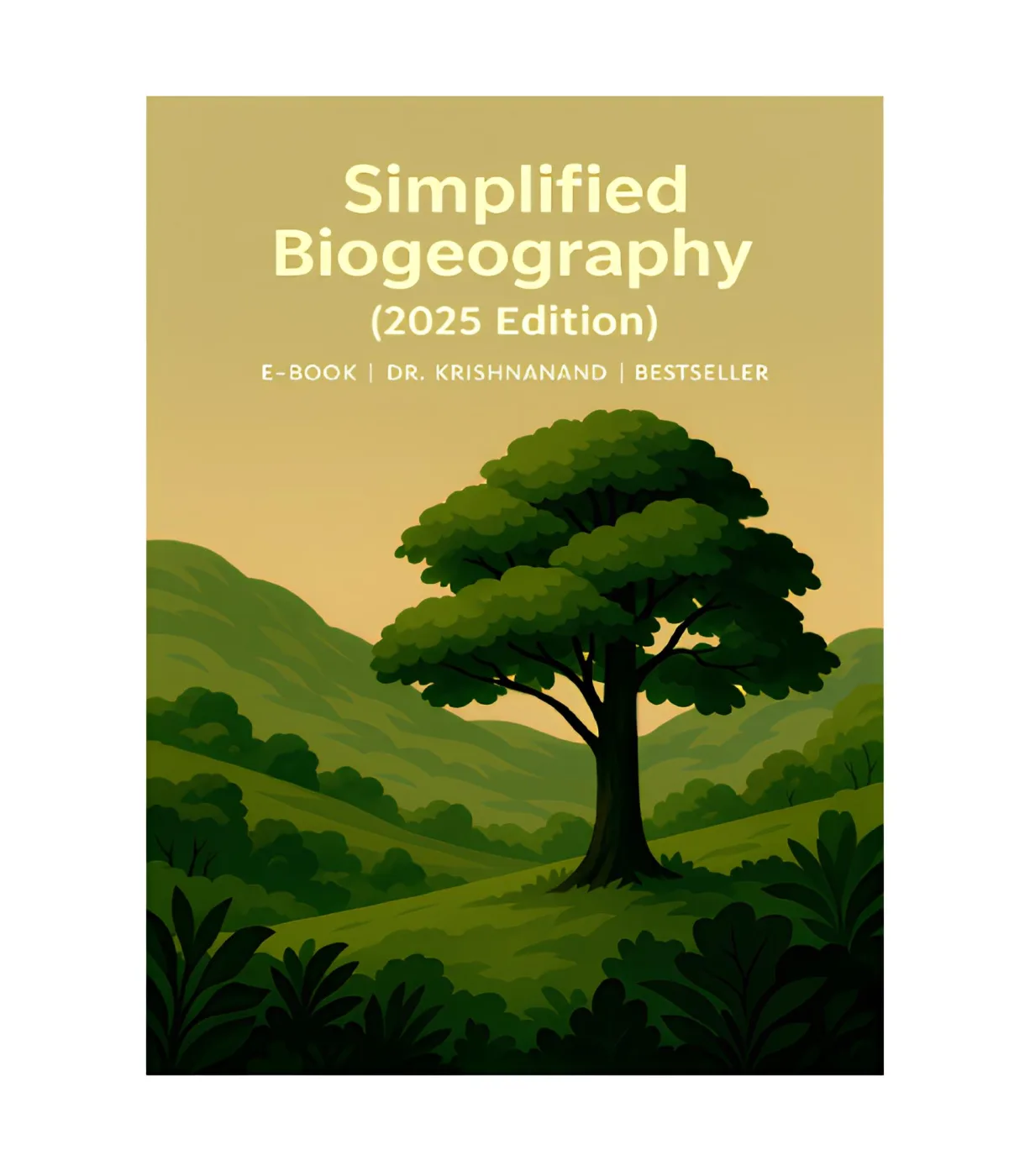
This is the category where carefully curated e-books score the highest. A specialist-authored biogeography notes PDF UPSC aspirants can rely on typically includes point-wise highlights, embedded maps, and syllabus-aligned chapters in a single downloadable file. Among the bestselling options in this category, Dr. Krishnanand’s “Simplified Biogeography (2025 Edition)” has emerged as a preferred choice for serious aspirants because it combines conceptual clarity with exam-oriented presentation.
Why Simplified Biogeography (2025 Edition) by Dr. Krishnanand Fits the UPSC Aspirant’s Needs
The Simplified Biogeography (2025 Edition) | E-Book | Dr. Krishnanand | Bestseller is designed specifically to solve the exact problems outlined above. Here is how it maps to a candidate’s workflow.
Syllabus-Ready Chapter Architecture
The e-book opens with Chapter 1: Introduction to Biogeography, covering the principles and scope of the discipline along with the factors influencing the distribution of life on Earth. Chapter 2 lays out the concept and classification of biomes based on climate, vegetation, and ecological characteristics. Chapters 3, 4, and 5 drill into the Tropical Evergreen Biome, Monsoon Deciduous Forest Biome, and Savanna Biome in that order, mirroring the CBCS sequence followed across Indian university geography departments.
Point-Wise Highlights for Rapid Revision
Every chapter uses point-wise highlighted descriptions rather than long descriptive paragraphs, which is exactly the format that supports fast recall during the final 30 days before Prelims. This addresses the most common complaint about free PDFs, that they read like essays instead of revision material.
Integrated Diagrams, Maps, and Images
The description explicitly mentions that the point-wise highlighted descriptions along with diagrams, maps, and images make it more comprehensive and interesting for readers. For a visual subject like biogeography, this matters. Aspirants revising the difference between a coniferous forest biome and a Mediterranean shrubland biome need labelled biome maps, not just text.
CBCS-Aligned and Geography Optional Friendly
The e-book is aligned with the prescribed CBCS syllabus in geography, which means undergraduates can use it for semester exams while UPSC aspirants use it as a structured biogeography notes PDF UPSC resource simultaneously. This dual usability is a key reason Dr. Krishnanand’s biogeography notes have built a strong following among both college students and competitive exam candidates.
At a price point of just 249, the e-book offers a focused, exam-ready alternative to spending thousands on coaching modules that often leave biogeography as an afterthought.
Practical Buying and Usage Guidance for Aspirants
Once you have decided that you need a structured biogeography notes PDF UPSC aspirants can rely on, here is a simple workflow to maximise the value of any specialist e-book you choose.
Step 1: Download a Free Sample First
Always begin by reading the sample of the e-book before purchasing. The Simplified Biogeography listing offers a downloadable sample that lets you verify the point-wise format, diagram quality, and chapter sequencing before committing.
Step 2: Map the Chapters to the UPSC Syllabus
Cross-reference the e-book’s table of contents with the UPSC Geography Optional and GS Paper I syllabus. Any chapter that does not align with the official UPSC framework should be treated as bonus reading rather than a priority.
Step 3: Use the E-Book for First Reading, Free PDFs for Practice
Read the e-book cover to cover as your first structured pass through biogeography. Then layer free test series and previous year questions from sources like the official UPSC website to reinforce what you have learned. For the official syllabus framework you can refer to the Wikipedia entry on Biogeography as a quick cross-check.
Step 4: Revise Using the Diagrams and Maps
In the final week before Prelims, do not re-read the text. Instead, redraw the biome maps and nutrient cycle diagrams from memory and compare them with the e-book’s visuals. This active recall technique consistently produces measurable improvement in mock test scores.
Frequently Asked Questions About Biogeography Notes PDF UPSC Resources
Below are answers to the most common questions aspirants ask when searching for the right biogeography study material.
Are free biogeography notes enough for UPSC Prelims?
Free biogeography notes are useful for an introductory overview, but they usually lack the integrated biome, soil, and biogeochemical cycle coverage that UPSC expects. For consistent Prelims performance, a structured e-book authored by a subject specialist is a safer primary resource.
Is biogeography important for UPSC Geography Optional?
Yes. Biogeography is a core paper-I topic in the UPSC Geography Optional and frequently appears in GS Paper III under environment and ecology. Candidates who ignore it typically lose marks in both descriptive and map-based questions.
What is the best way to revise biogeography in the last month?
The most effective last-mile revision combines point-wise highlighted notes with self-drawn biome maps and nutrient cycle diagrams. This active recall method outperforms passive re-reading in nearly every published study on retention.
Can undergraduates use the same biogeography notes for college exams?
Absolutely. CBCS-aligned biogeography notes are designed to serve both UPSC aspirants and undergraduate students simultaneously, since the underlying syllabus structure is shared across Indian universities.
Final Verdict: Should You Buy Simplified Biogeography (2025 Edition)?
If you are tired of juggling ten different PDFs and still feeling underprepared for biogeography questions in UPSC Prelims or the Geography Optional, a consolidated, syllabus-aligned e-book is the most efficient upgrade you can make today. The Simplified Biogeography (2025 Edition) by Dr. Krishnanand delivers exactly what the search query “biogeography notes PDF UPSC” is really looking for: point-wise highlighted descriptions, integrated diagrams and maps, biome-wise classification, and CBCS-aligned chapters, all in a single downloadable file at an accessible price point.
Pair it with disciplined answer-writing practice, previous year UPSC questions from the official UPSC portal, and a focused revision plan, and you have a biogeography preparation strategy that is genuinely exam-ready for 2025 and beyond.
Our Recommendation
📖 Part of our complete guide: Evolution of Geographical Thought: A Comprehensive Guide for UPSC Aspirants and Geography Enthusiasts
Frequently Asked Questions
What should a good biogeography notes PDF UPSC aspirants use contain?
A reliable biogeography notes PDF UPSC aspirants should use must cover biome classification, tropical evergreen, savanna, desert and temperate biomes, soil formation profiles, biogeochemical cycles, and labelled maps and diagrams aligned with the CBCS and UPSC Geography Optional syllabus.
Is Simplified Biogeography by Dr. Krishnanand suitable for UPSC preparation?
Yes. Simplified Biogeography (2025 Edition) by Dr. Krishnanand is structured with point-wise highlighted descriptions, diagrams, maps, and images, and follows the CBCS geography syllabus, making it suitable for UPSC aspirants, undergraduates, and geography enthusiasts preparing for Prelims and the Geography Optional.
How can I revise biogeography effectively before UPSC Prelims?
Use point-wise highlighted notes, redraw biome distribution maps and nutrient cycle diagrams from memory, and practice previous year UPSC questions. Active recall combined with visual revision consistently outperforms passive re-reading in published retention studies.
