Blog
Western Ghats: Formation & Characteristics #upsc

Western Ghats: Formation & Characteristics #upsc
Exploring the Western Ghats: A Journey Through Geological Time and Biodiversity
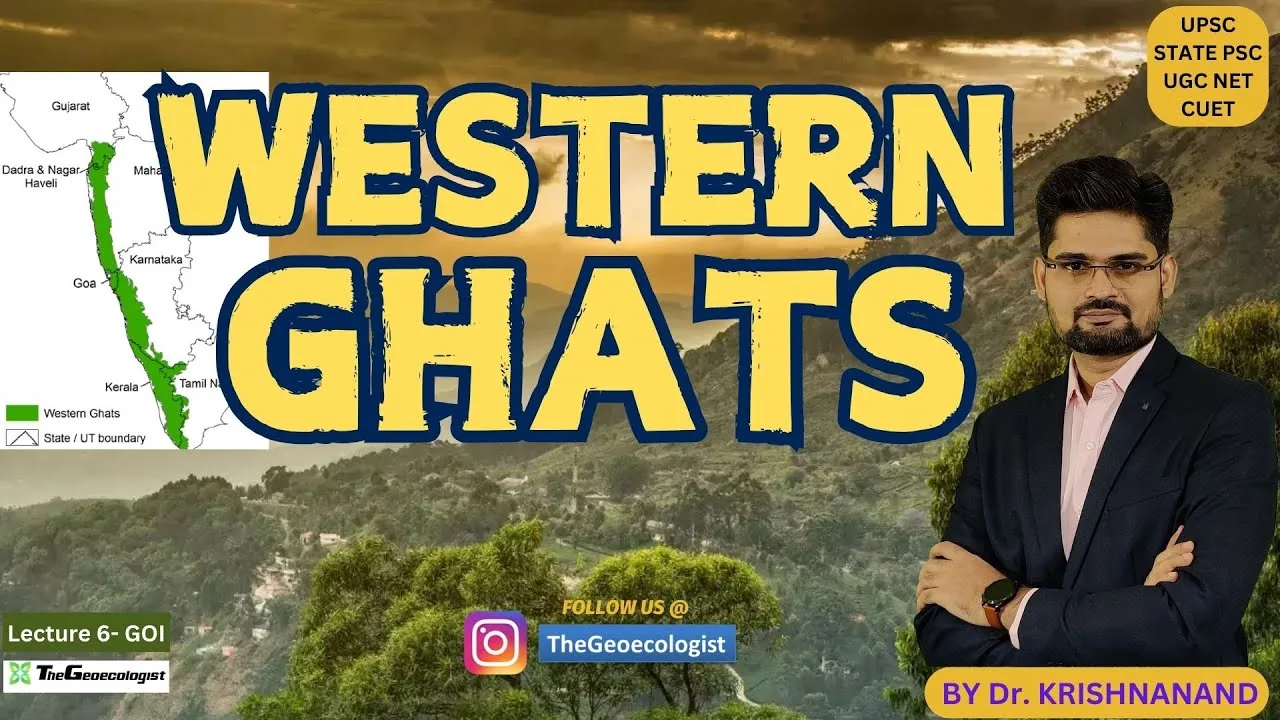
The Western Ghats, a UNESCO World Heritage Site since 2012, stretch majestically along India’s western coast, forming a 1,600-km-long mountain range that traverses six states—Gujarat, Maharashtra, Goa, Karnataka, Tamil Nadu, and Kerala. Revered as one of the world’s eight "hottest hotspots" of biodiversity, this ancient mountain range is a living testament to Earth’s dynamic geological past and a sanctuary for unparalleled ecological wealth. Let’s unravel the gripping geological history and unique characteristics that make the Western Ghats a crown jewel of India’s natural heritage.
Geological Formation: A Tale of Fire and Motion
1. The Breakup of Gondwana
The story of the Western Ghats begins over 150 million years ago, during the fragmentation of the supercontinent Gondwana. As India drifted northeastward, the Tethys Sea receded, and tectonic forces triggered volcanic activity that laid the foundation for the Deccan Plateau.
2. The Réunion Hotspot and Deccan Traps
Around 66 million years ago, the Indian plate traversed the Réunion hotspot, a mantle plume causing catastrophic volcanic eruptions. These eruptions expelled over 500,000 cubic kilometers of lava, forming the Deccan Traps—a vast basalt plateau. This event coincided with the Cretaceous-Paleogene extinction, reshaping global ecosystems.
3. Shaping the Escarpment
Post-eruption, tectonic uplift and differential erosion sculpted the Western Ghats. The range’s distinct escarpment—a steep western face contrasting with the gentle eastern plateau—emerged from millions of years of weathering. Faulting and rifting further created block mountains, adding to the region’s rugged topography.
Physical Characteristics: Nature’s Masterpiece
1. The Great Escarpment and Climatic Influence
The abrupt western escarpment intercepts monsoon winds, causing orographic rainfall. The windward side receives up to 4,000 mm annually, fostering lush tropical rainforests, while the leeward side remains rain-shadowed, sustaining drier deciduous forests.
2. Life-Giving Watershed
The Ghats act as a critical watershed, feeding perennial rivers like the Godavari, Krishna, and Kaveri. These rivers sustain agriculture and biodiversity across peninsular India.
Biodiversity: An Ark of Endemism
| The Western Ghats host over 7,400 species of flowering plants, 1,800 endemic plants, and 500+ animal species, many exclusive to this region. Iconic fauna include: Mammals | Birds | Amphibians |
|---|---|---|
| Nilgiri Tahr | Malabar Grey Hornbill | Purple Frog |
| Lion-tailed Macaque | Great Indian Hornbill | Munnar Bush Frog |
This hotspot also shelters tigers, elephants, and rare flora like the Neelakurinji (blooming once every 12 years).
Ecological Significance and Conservation Challenges
1. Climate Regulator and Carbon Sink
The Ghats influence India’s monsoon dynamics and store vast carbon stocks in their forests, mitigating climate change.
2. Threats to Biodiversity
Deforestation, mining, invasive species, and climate change jeopardize this fragile ecosystem. Over 35% of the original forest cover has been lost, fragmenting habitats.
3. Conservation Initiatives
Protected areas like Silent Valley and Periyar National Park, alongside UNESCO recognition, aim to curb degradation. Community-driven projects and stricter anti-poaching laws are vital for preserving this ecological treasure.
Conclusion: A Legacy to Cherish
The Western Ghats are not merely mountains—they are a chronicle of Earth’s fiery origins, a cradle of evolution, and a lifeline for millions. For UPSC aspirants and environmental enthusiasts, understanding their geological and ecological intricacies is key to advocating sustainable futures. As climate challenges intensify, conserving this UNESCO marvel becomes not just a duty, but a necessity.
Explore the depths of India’s natural wonders with our comprehensive UPSC-focused courses at TheGeoecologist.com.
WesternGhats #Geology #Biodiversity #UPSC #Conservation #DeccanTraps #UNESCO
Join the conversation on preserving our planet’s heritage. 🌍
To Download E-Books & Study Material Visit The Shop Page