


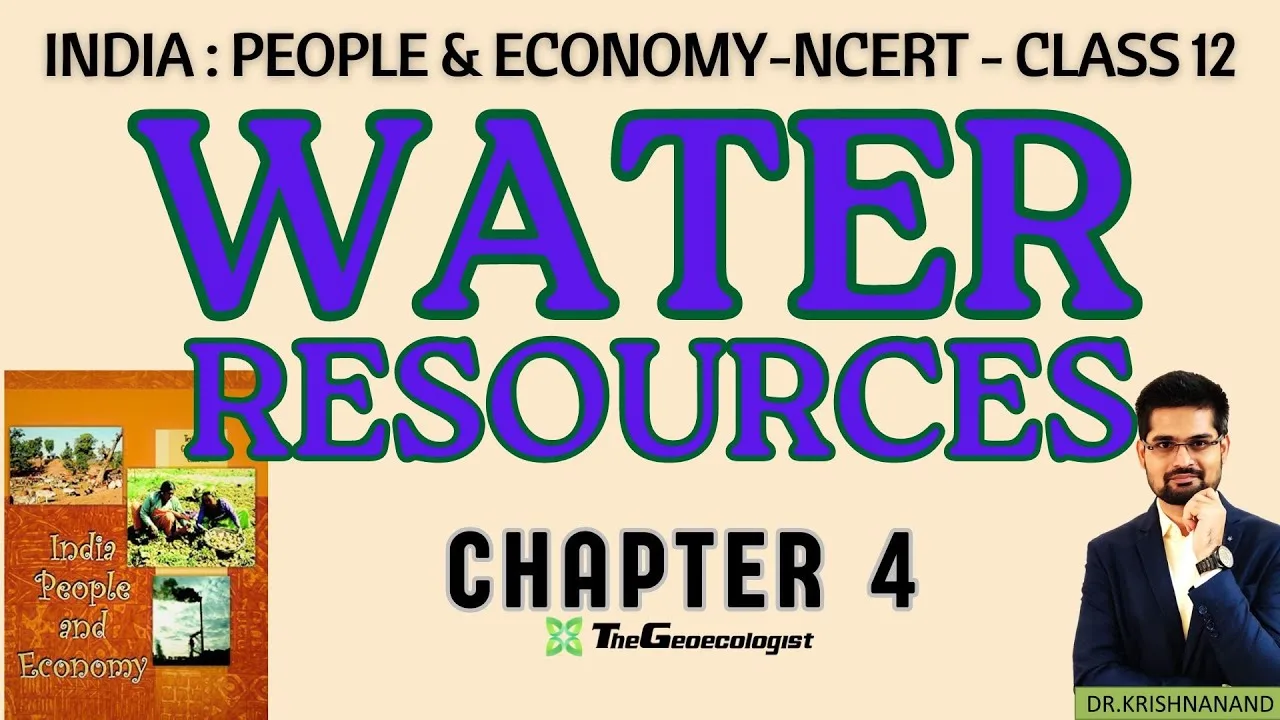
Water Resources-Chapter 4 -Class 12 NCERT Geography
Understanding Water Resources in India: Insights from NCERT and TheGeoecologist’s Expertise
An Essential Guide for CBSE Class 12, CUET, UPSC, and Competitive Exams
Water resources form the backbone of India’s agrarian economy and daily life. Chapter 4 of the NCERT Class 12 Geography textbook, India’s People and Economy, alongside TheGeoecologist’s insightful video (a Hindi-English mix), offers a comprehensive exploration of this critical topic. This article synthesizes both resources to aid students and aspirants in mastering the subject.
1. Water Resources in India: Availability and Distribution
India’s water resources include surface water (rivers, lakes, ponds) and groundwater (aquifers). While the country receives 4% of global precipitation, uneven distribution creates regional disparities. The Himalayan rivers (perennial) contrast with peninsular rivers (rain-fed), affecting water availability. Groundwater, vital for agriculture, faces over-exploitation, notably in Punjab, Haryana, and western Uttar Pradesh, leading to alarming depletion. TheGeoecologist highlights this through India’s groundwater crisis map, stressing the need for sustainable extraction.
2. Water Scarcity: Causes and Implications
Water scarcity arises from both physical factors (variable rainfall, climate change) and human activities (overuse, pollution, inequitable access). The NCERT chapter identifies agricultural demands (84% of water use) and industrial pollution as key culprits. TheGeoecologist’s video adds context: urban sprawl and inefficient irrigation (e.g., flood irrigation) exacerbate scarcity. Case studies, like Tamil Nadu’s tank system decline, illustrate how traditional practices’ neglect worsens crises.
3. Traditional Water Management Systems
India’s ancestors mastered localized water conservation:
- Rajasthan: Khadins (agricultural embankments) and tankas (underground tanks).
- Maharashtra: Bawaris (stepwells) and rooftop harvesting.
- South India: Eris (tanks) and surangams (tunnel wells).
TheGeoecologist emphasizes reviving these systems, showcasing Rajasthan’s Johads (percolation ponds) for groundwater recharge—a model now replicated nationally.
4. Modern Water Management Strategies
Dams and Multipurpose Projects: While providing irrigation and hydroelectricity, large dams like Bhakra Nangal face criticism for ecological and displacement issues (Narmada Bachao Andolan).
Rainwater Harvesting: Mandated in urban areas, techniques like recharge pits and percolation tanks mitigate urban water stress.
Watershed Management: TheGeoecologist cites Sukhomajri (Haryana) and Ralegan Siddhi (Maharashtra) as success stories, where community-led watershed programs boosted agriculture and groundwater levels.
5. Policy Initiatives and Sustainable Practices
India’s National Water Policy (2012) prioritizes equitable access and ecological sustainability. Schemes like Jal Shakti Abhiyan (2019) focus on water conservation and rural supply. TheGeoecologist’s video links these policies to SDGs (Sustainable Development Goals), urging integrated approaches combining traditional wisdom and technology.
Exam-Centric Insights
- CBSE Class 12: Focus on definitions (e.g., watershed, groundwater), case studies (Ralegan Siddhi), and diagram-based questions (rainwater harvesting structures).
- Competitive Exams (UPSC, CUET): Link water issues to current affairs (e.g., Jal Jeevan Mission), and analyze dams’ socio-environmental impacts. TheGeoecologist’s mnemonics, like “3Ps—Population, Pollution, Poor Management” for scarcity causes, aid quick revision.
Conclusion
Sustainable water management demands policy rigor, community participation, and revived traditional practices. As climate change intensifies, understanding these dynamics becomes crucial for India’s future.
For in-depth learning, explore TheGeoecologist’s video on Water Resources and enroll in specialized courses at https://thegeoecologist.com/. Follow @thegeoecologist on Instagram for updates!
ncertgeography #waterresources #watercrisis #indianagriculture #resources #indiapeople #peopleandenvironment #peopleandeconomy #humangeography #ncertclass12geography #populationgeography
Krishna
TheGeoecologist Team
Email: krishna.geography@gmail.com
This article bridges theoretical knowledge and practical insights, equipping learners to tackle academic and competitive challenges effectively.
To Download E-Books & Study Material Visit The Shop Page