Structure & Composition of the Atmosphere- NCERT Geography- Class 11 Chapter 8
Understanding the Structure and Composition of the Atmosphere: NCERT Class 11 Geography (Chapter 8) Simplified
The atmosphere, a vital component of Earth’s system, plays a crucial role in sustaining life and influencing climate. For CBSE Class 11 students and UPSC aspirants, grasping its structure and composition is fundamental. This article distills key concepts from NCERT Class 11 Geography (Chapter 8) and insights from TheGeoecologist’s bilingual (Hindi-English) video, offering a comprehensive yet concise overview.
Composition of the Atmosphere
Earth’s atmosphere is a dynamic mix of gases, water vapor, and aerosols:
Major Gases:
- Nitrogen (78%): Essential for plant growth and a diluent for oxygen.
- Oxygen (21%): Vital for respiration and combustion.
- Argon (0.93%), Carbon Dioxide (0.04%), and trace gases like neon, helium, and methane.
Variable Components:
- Water Vapor: Varies regionally; drives weather processes like cloud formation.
- Aerosols: Tiny particles (dust, pollen, pollutants) influencing climate and air quality.
- Significance:
- CO₂ regulates Earth’s temperature via the greenhouse effect.
- Ozone (O₃) in the stratosphere shields life from harmful UV rays.
Structure of the Atmosphere
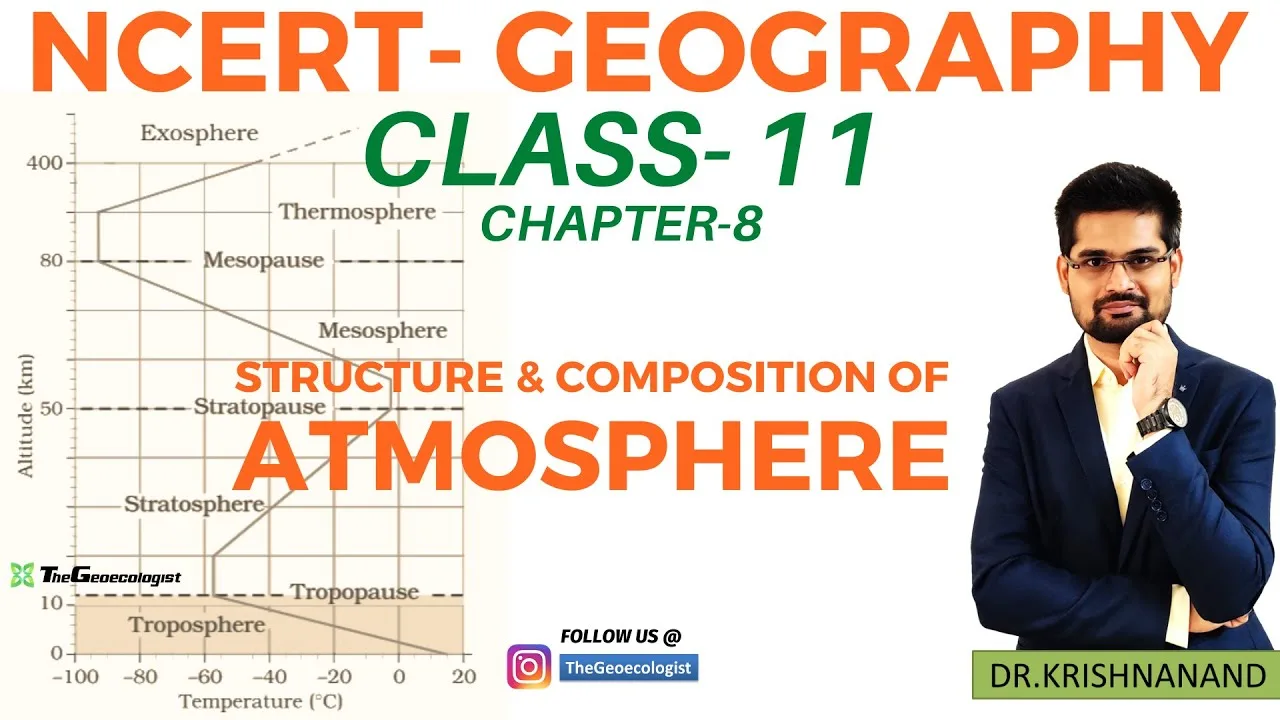
The atmosphere is stratified into five layers based on temperature gradients:
1. Troposphere (0–18 km)
- Features:
- Densest layer; contains 75% of atmospheric mass.
- Temperature decreases with altitude (6.5°C per km).
- Weather phenomena (clouds, rain) occur here.
- Boundary: Tropopause (acts as a lid for weather systems).
2. Stratosphere (18–50 km)
- Features:
- Houses the ozone layer (ओजोन परत) absorbing UV radiation.
- Temperature increases due to ozone absorption.
- Significance: Protects biodiversity; jet streams flow here.
3. Mesosphere (50–80 km)
- Features:
- Coldest layer (temp. dips to -90°C).
- Meteorites burn up, creating "shooting stars."
- Boundary: Mesopause.
4. Thermosphere (80–700 km)
- Features:
- Temperature surges due to solar radiation (up to 2000°C).
- Hosts ionosphere, aiding radio communication.
5. Exosphere (700+ km)
- Features:
- Outermost layer, merging into space.
- Home to satellites; gases like hydrogen and helium dominate.
Environmental and Exam Relevance
- Ozone Depletion: CFCs (human-made chemicals) damage the ozone layer, causing the Antarctic ozone hole.
- Global Warming: Rising CO₂ levels intensify the greenhouse effect, leading to climate change.
- UPSC/CBSE Focus: Expect questions on layer-specific functions, ozone dynamics, and human impacts.
Key Mnemonics
Remember the atmospheric layers (bottom to top) using: "The Sun Makes The Evening Sky" (Troposphere, Stratosphere, Mesosphere, Thermosphere, Exosphere).
Conclusion
Mastering the atmosphere’s structure and composition is pivotal for both academic and competitive exams. TheGeoecologist’s Hinglish video simplifies these concepts with relatable examples and diagrams. For deeper insights, explore their paid courses at https://thegeoecologist.com/. Follow on Instagram for updates.
ncertclass11geography #ncertgeography #ncertrevision
Enrich your Geography prep with strategic resources and ace your exams! 🌍📚
To Download E-Books & Study Material Visit The Shop Page