Blog
Ocean’s Temperature Distribution |Thermocline | Oceanography |Dr. Krishnanand

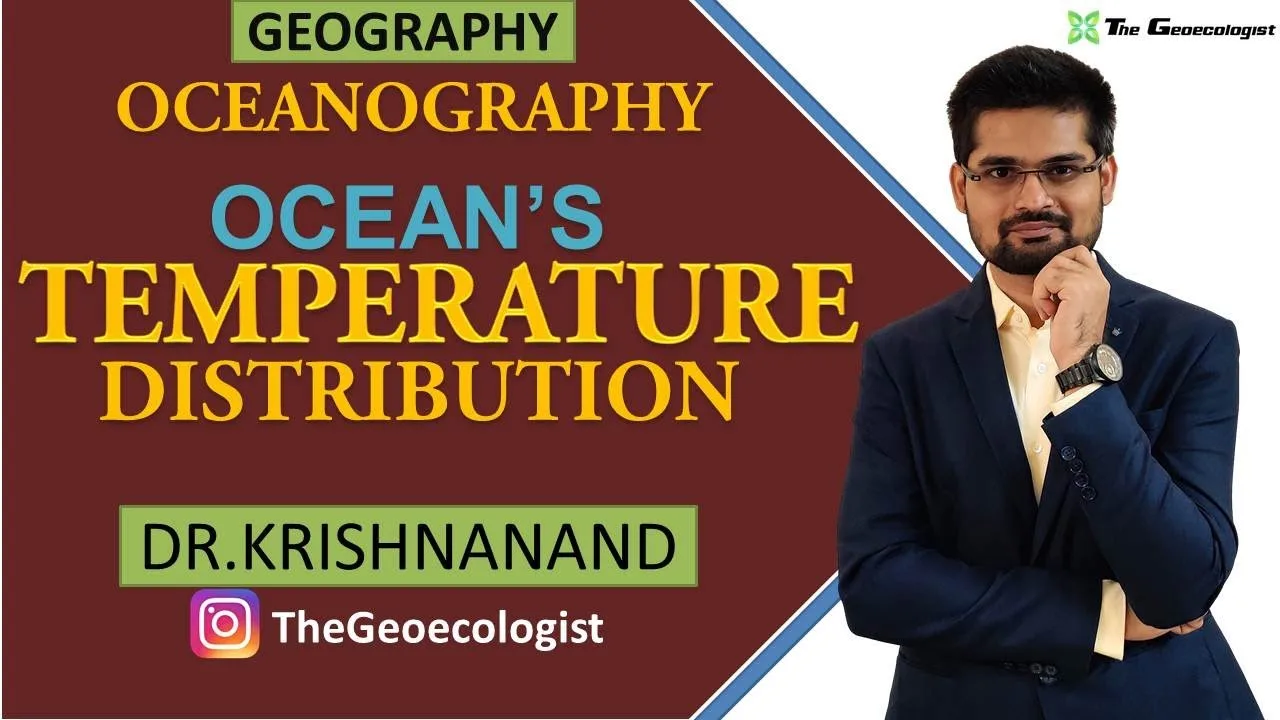
Ocean’s Temperature Distribution |Thermocline | Oceanography |Dr. Krishnanand
Ocean’s Temperature Distribution and the Thermocline – A Simplified Overview
Welcome to the fifth installment of our Oceanography lecture series, specifically designed for undergraduate geography students and UPSC Geography (Optional) aspirants. In this article, we will explore the temperature distribution in the oceans and the concept of the thermocline, as explained by Dr. Krishnanand, the founder of TheGeoecologist.
For in-depth knowledge, don’t forget to check out the Oceanography E-book: https://mithilacraft.com/product/oceanography/.
Understanding Ocean’s Temperature Distribution
The temperature of ocean water varies both horizontally (from the equator to the poles) and vertically (from the surface to the deep ocean). These variations play a crucial role in marine ecosystems, climate regulation, and ocean currents.
1. Horizontal Temperature Distribution
- The equatorial and tropical regions receive more solar radiation, leading to higher surface temperatures (around 25°C–30°C).
- Polar regions have much lower temperatures (below 0°C) due to minimal sunlight.
- Mid-latitudes experience moderate ocean temperatures.
Factors affecting horizontal temperature distribution:
- Latitude (Sun’s angle and intensity)
- Ocean currents (Warm currents raise temperatures, cold currents lower them)
- Prevailing winds (influence heat distribution)
- Distance from the coast (Coastal areas have moderated temperatures)
2. Vertical Temperature Distribution
Ocean temperatures decrease with depth, but not uniformly. The vertical profile can be divided into three main layers:
Surface Layer (Mixed Layer)
- Depth: Up to 100 meters
- Temperature: Relatively uniform due to wind and wave mixing
- Important for photosynthesis and marine life
Thermocline (Transition Layer)
- Depth: 100–1000 meters
- Temperature: Rapid decrease with depth
- Acts as a barrier separating warm surface water from cold deep water
Deep Ocean Layer
- Depth: Below 1000 meters
- Temperature: Cold (~0°C–5°C), highly stable
- Minimal temperature variation due to lack of sunlight and limited mixing
What is a Thermocline?
The thermocline is a steep temperature gradient in the ocean where the temperature drops rapidly with depth. It is crucial for:
- Regulating heat exchange between surface and deep waters
- Influencing marine life distribution (many species avoid crossing it)
- Affecting submarine navigation due to density differences
Types of Thermoclines:
- Seasonal Thermocline – Develops in summer due to surface heating, weakens in winter.
- Permanent Thermocline – Exists year-round in tropical and subtropical regions.
- Shallow Thermocline – Found in polar regions, less pronounced due to uniform cold temperatures.
Why is Ocean Temperature Important for UPSC and Geography?
Understanding ocean temperature distribution helps in:
- Climatology: Oceans regulate global climate via heat absorption and circulation.
- Marine Ecosystems: Temperature zones define habitats for marine biodiversity.
- UPSC Geography (Optional): Frequently asked in oceanography and physical geography sections.
Conclusion
The temperature distribution of oceans and the concept of the thermocline are fundamental in oceanography. Dr. Krishnanand’s simplified explanation makes this topic easy for UPSC aspirants and geography students.
For further reading, refer to the Oceanography E-book: https://mithilacraft.com/product/oceanography/.
Follow Us for More Updates!
- Subscribe to TheGeoecologist YouTube Channel
- Website: https://thegeoecologist.com/
- Instagram: https://www.instagram.com/thegeoecologist/
Oceanography #OceanTemperature #Thermocline #UPSCGeography #TheGeoecologist
By incorporating visual aids like diagrams of ocean layers and temperature-depth graphs, this topic becomes even clearer. Stay tuned for more insightful geography lessons! 🌊🌍
To Download E-Books & Study Material Visit The Shop Page