Blog
Indian School of Geographical Thought-TheGeoecologist

Indian School of Geographical Thought-TheGeoecologist
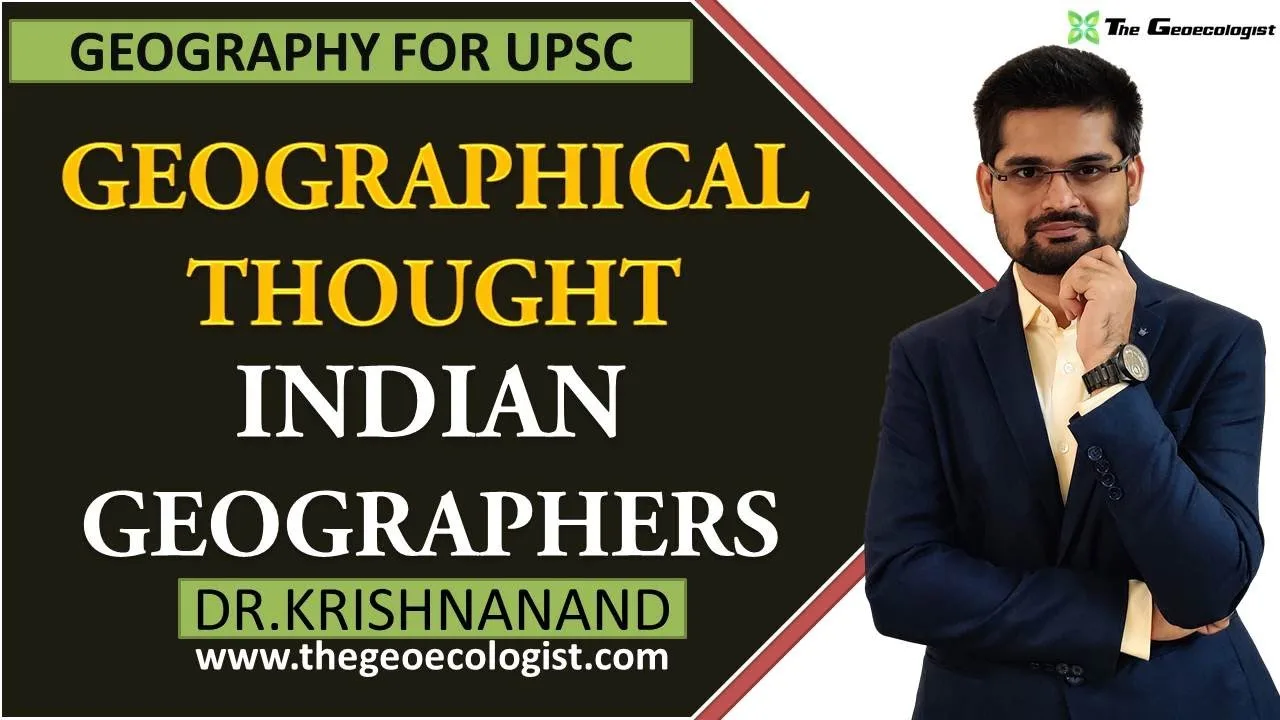
The Indian School of Geographical Thought: A Legacy of Knowledge from Ancient to Modern Times
🌍🇮🇳 Introduction: Rediscovering India’s Geographical Heritage
Geography as a discipline has evolved through various schools of thought worldwide. Among these, the Indian School of Geographical Thought stands out as a unique and profound tradition, deeply rooted in Vedic, Puranic, and classical Indian philosophies. Unlike the Western traditions (German, British, French, or American schools), Indian geography integrates cosmology, ecology, sacred landscapes, and sustainable living—an approach that remains highly relevant in today’s environmentally conscious world.
In this article, we explore India’s geographical wisdom—from ancient texts to modern contributions—highlighting key thinkers, concepts, and their enduring influence on global geographical thought.
📜 Ancient Foundations of Indian Geography
1. Vedic and Puranic Cosmography
Ancient Indian texts like the Vedas, Puranas, and Mahabharata contained advanced geographical concepts:
- Cosmography: The concept of Brahmanda (cosmic egg) and Loka (world systems) depicted a sophisticated understanding of the universe.
- Sacred Rivers and Landforms: The Sapta Sindhu (seven sacred rivers) and descriptions of Mount Meru demonstrate an early form of regional geography.
2. Classical Indian Geographers & Philosophers
Several Indian scholars made pioneering contributions:
- Aryabhata (476–550 CE): Proposed heliocentrism, Earth’s rotation, and calculated latitudes accurately.
- Varahamihira (6th century CE): His Brihat Samhita described climate, hydrology, and planetary influences on Earth.
- Kautilya (Chanakya): In Arthashastra, he discussed urban planning, resource management, and regional statecraft—early economic geography.
3. Sacred Geography & Ecology
India’s Tirtha (pilgrimage) system and Panchabhoota (five elements) philosophy reflect an ecological worldview that integrated nature, spirituality, and human settlements.
📚 Modern Indian Geography: Revival and Global Recognition
1. Founders of Modern Indian Geography
Post-independence, Indian scholars revitalized the discipline by blending Western methods with indigenous insights:
- Prof. R.L. Singh: Known for morphological urban studies and regional planning.
- Prof. S.P. Chatterjee: Advocated harmonizing Indian and Western geographical thought.
- B.H. Farmer: Researched tropical agriculture and rural settlement patterns in India.
2. Key Themes in Modern Indian Thought
- Environmental Determinism vs. Possibilism: Indian geographers emphasized human-nature harmony rather than conquest.
- Regional Planning: Focus on decentralized development and local governance (e.g., watershed management).
- Cultural & Historical Geography: Studies on sacred cities, village settlements, and indigenous knowledge systems.
🎯 Why Indian Geography Matters Today?
✔️ Sustainable Development: Ancient Indian wisdom aligns with modern ecological balance and resilience.
✔️ Decolonizing Knowledge: Indian thought challenges Eurocentric models of geography.
✔️ Relevance in Governance: Insights from Kautilya’s Arthashastra still apply to urbanization and resource planning.
🔍 Conclusion: A Living Tradition
The Indian School of Geographical Thought is not just history but a living tradition—a bridge between ancient wisdom and contemporary science. By studying it, we gain holistic perspectives that can guide global geographical research, environmental policies, and cultural preservation.
🔥 Call to Action:
📺 Subscribe to TheGeoecologist for in-depth geographical lectures!
📖 Visit TheGeoecologist’s Website for UPSC/NET geography courses!
🌏 Let’s celebrate and preserve India’s geographical heritage! 🇮🇳✨
#IndianGeography #GeographicalThought #UPSCGeography #TheGeoecologist
To Download E-Books & Study Material Visit The Shop Page