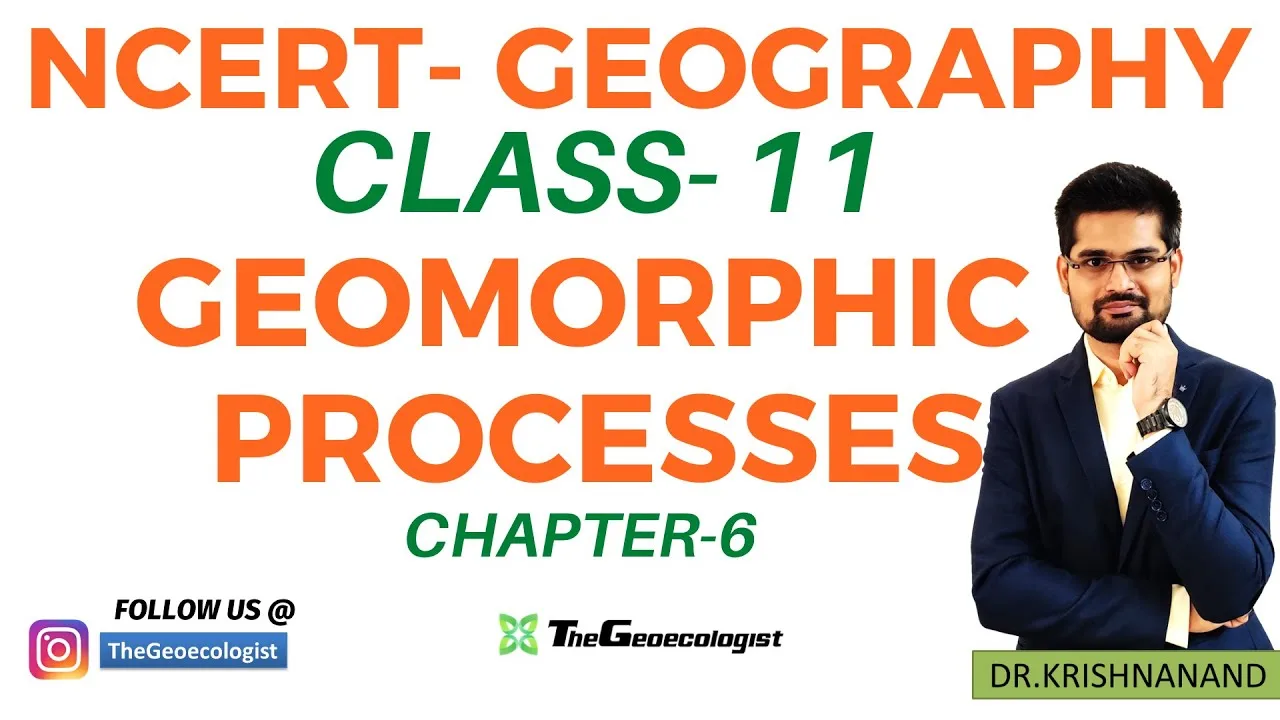
Geomorphic Processes-Endogenic & Exogenic Processes- NCERT Geography Class 11-Chapter 6
Understanding Geomorphic Processes: Endogenic & Exogenic Forces | NCERT Geography Class 11
The Earth’s dynamic landscape is shaped by powerful natural forces known as geomorphic processes, categorized into endogenic (internal) and exogenic (external) processes. These processes are pivotal in creating and transforming landforms, as outlined in NCERT Geography Class 11, Chapter 6. This article simplifies these concepts, aligning with the curriculum and complementing resources like TheGeoecologist’s bilingual video, ideal for CBSE Class 11 students and competitive exam aspirants.
What Are Geomorphic Processes?
Geomorphic processes are natural mechanisms that reshape the Earth’s crust through uplift, weathering, erosion, and deposition. They are driven by energy sources:
- Endogenic Processes: Powered by Earth’s internal heat (e.g., plate tectonics, earthquakes).
- Exogenic Processes: Driven by solar energy and gravity (e.g., river erosion, wind action).
Endogenic Processes: Building the Earth
1. Diastrophism
- Involves large-scale movements of the Earth’s crust, leading to mountain building, folding, and faulting.
- Example: The Himalayas formed due to the collision of the Indian and Eurasian tectonic plates.
2. Volcanism
- Magma from the mantle erupts onto the surface as lava, forming volcanoes and igneous rocks.
- Example: The Deccan Traps in India resulted from massive volcanic activity.
Exogenic Processes: Sculpting the Earth
1. Weathering
- Breakdown of rocks in situ by physical (freeze-thaw), chemical (oxidation), or biological (plant roots) means.
2. Erosion & Deposition
- Agents like rivers, glaciers, and wind transport weathered material (erosion) and deposit it elsewhere (e.g., deltas, sand dunes).
3. Mass Movements
- Downslope movement of material under gravity, including landslides and rockfalls.
Interaction of Endogenic and Exogenic Forces
While endogenic forces uplift landforms, exogenic processes wear them down. For instance, the Himalayas rise due to tectonic activity (endogenic), even as rivers like the Ganga erode them (exogenic). This interplay determines Earth’s ever-changing topography.
Exam Relevance: CBSE & Competitive Exams
- Class 11 Focus: NCERT emphasizes understanding process mechanisms, examples, and diagrams (e.g., rock cycle).
- UPSC/Competitive Exams: Questions often link these processes to current events (e.g., earthquakes, landslides) and landform identification.
How TheGeoecologist’s Video Enhances Learning
TheGeoecologist’s Hindi-English mixed-language video simplifies complex terms, aiding bilingual learners. Visual explanations of concepts like plate boundaries or weathering types make retention easier, bridging NCERT theory with real-world examples.
Conclusion
Mastering geomorphic processes is key to grasping physical geography. Resources like NCERT and TheGeoecologist’s video provide a strong foundation for exams and foster a deeper appreciation of Earth’s dynamic nature.
Explore In-Depth Learning:
Enroll in structured courses on https://thegeoecologist.com/ for comprehensive guidance.
Stay Updated:
Follow on Instagram and email krishna.geography@gmail.com for queries.
#ncertclass11geography #ncertgeography #ncertrevision
Keywords: Geomorphic Processes, Endogenic, Exogenic, NCERT Class 11, UPSC Preparation, TheGeoecologist
To Download E-Books & Study Material Visit The Shop Page