Blog
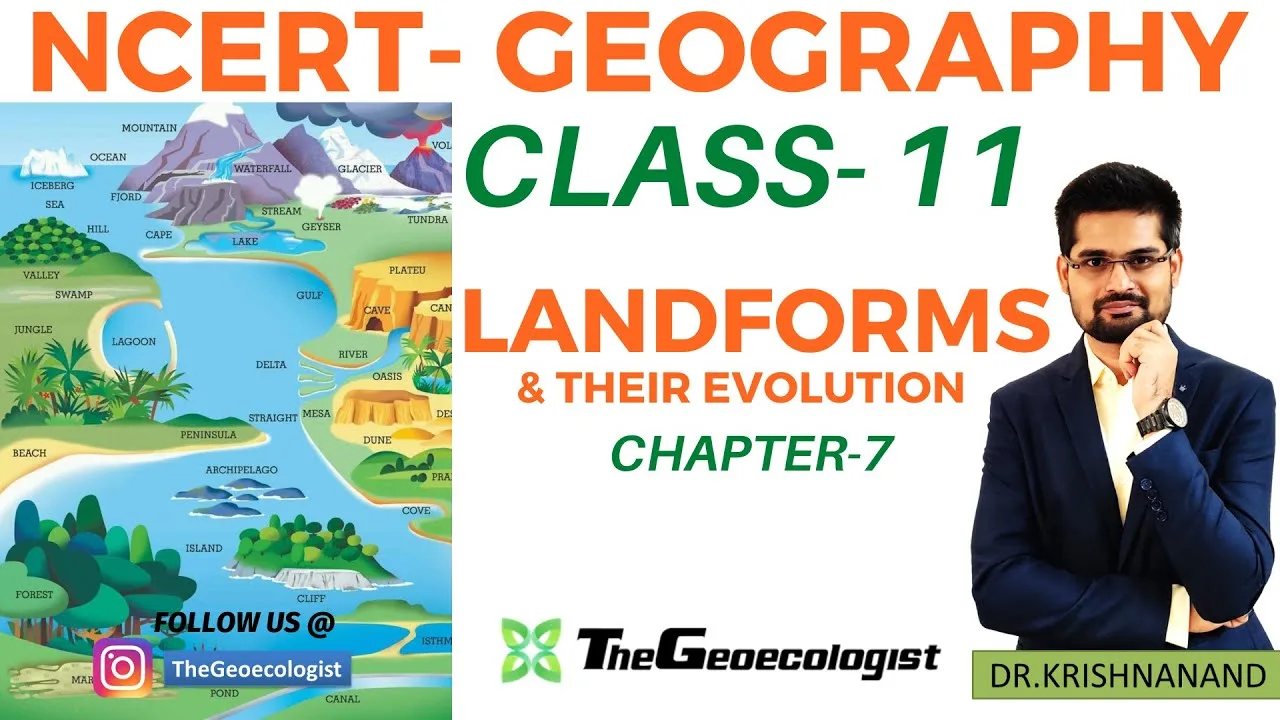
Landforms and their Evolution- NCERT Geography Class 11- Chapter 7

Landforms and their Evolution- NCERT Geography Class 11- Chapter 7
Landforms and Their Evolution: A Comprehensive Guide for CBSE Class 11 and Competitive Exams
Understanding the formation and evolution of landforms is a fundamental aspect of physical geography, essential for CBSE Class 11 students and competitive exam aspirants. NCERT Geography Class 11 Chapter 7, Landforms and Their Evolution, delves into how natural forces like rivers, glaciers, wind, and waves shape Earth’s surface. This article simplifies key concepts from the chapter and the bilingual (Hindi-English) video by TheGeoecologist, making it accessible for diverse learners.
1. Fluvial Landforms: Carved by Rivers
Rivers create distinctive features through erosion and deposition:
- Erosional Features:
- Valleys (V-shaped in mountains, widened in plains).
- Waterfalls (formed over resistant rock layers).
- Potholes (circular depressions from swirling water).
- Depositional Features:
- Floodplains (fertile landforms during river floods).
- Levees (raised banks from sediment deposition).
- Deltas (triangular deposits at river mouths, e.g., Sundarbans).
TheGeoecologist video uses Hindi terms like ‘नदी द्वारा निर्मित स्थलरूप’ (river landforms) to clarify these processes.
2. Glacial Landforms: Sculpted by Ice
Glaciers carve U-shaped valleys and leave behind unique deposits:
- Erosional Features:
- Cirques (armchair-shaped hollows).
- Horns (sharp peaks like the Matterhorn).
- Depositional Features:
- Moraines (debris piles marking glacier limits).
- Drumlins (egg-shaped hills of glacial till).
3. Aeolian Landforms: Shaped by Wind
Dominant in deserts, wind creates:
- Erosional Features:
- Mushroom Rocks (narrow base due to wind erosion).
- Depositional Features:
- Sand Dunes (e.g., Barchans or crescent-shaped dunes).
- Loess (fertile wind-blown silt, e.g., in Bihar).
4. Coastal Landforms: Crafted by Waves
Wave action forms:
- Erosional Features:
- Sea Cliffs (steep rocky coasts).
- Sea Caves/Arches (formed by wave erosion).
- Depositional Features:
- Beaches (sandy/pebbly shores).
- Bars and Spits (elongated sediment deposits).
5. Karst Landforms: Limestone Landscapes
Chemical weathering of limestone creates:
- Sinkholes (collapsed surface layers).
- Caves (e.g., Ajanta-Ellora) with stalactites (hanging) and stalagmites (rising).
Why Study Landforms?
- CBSE Exams: Chapter 7 is critical for theory and map-based questions.
- UPSC/Competitive Exams: Landform processes are integral to Physical Geography for Prelims and Mains.
Enhance Your Learning with TheGeoecologist!
TheGeoecologist’s Hindi-English video on Landforms and Their Evolution simplifies complex processes using diagrams and bilingual explanations. For instance, the term ‘जलोढ़ निक्षेप’ (alluvial deposits) is explained alongside its English counterpart, aiding dual-language comprehension.
FOR IN-DEPTH LEARNING: Explore structured courses on https://thegeoecologist.com/, tailored for school students and competitive exam aspirants.
Follow on Instagram for updates: @thegeoecologist
Email queries: krishna.geography@gmail.com
#ncertclass11geography #ncertgeography #ncertrevision
Mastering landforms empowers you to decode Earth’s dynamic processes—vital for exams and appreciating nature’s marvels! 🌍
To Download E-Books & Study Material Visit The Shop Page