Blog
Geography of Sub-Saharan Africa-African Region-Geoecologist

Geography of Sub-Saharan Africa-African Region-Geoecologist
Understanding the Geography of Sub-Saharan Africa: A Comprehensive Guide for UPSC and Competitive Exams
Sub-Saharan Africa, a region of immense geographical diversity and cultural richness, is a critical area of study for aspirants preparing for competitive examinations like the UPSC, particularly for Geography Optional. In his insightful video lecture, Dr. Krishnanand, founder of TheGeoecologist, breaks down the complexities of this region, offering a structured and simplified overview tailored for exam preparation. This article synthesizes key concepts from the video to help students grasp the geography of Sub-Saharan Africa systematically.
What Defines Sub-Saharan Africa?
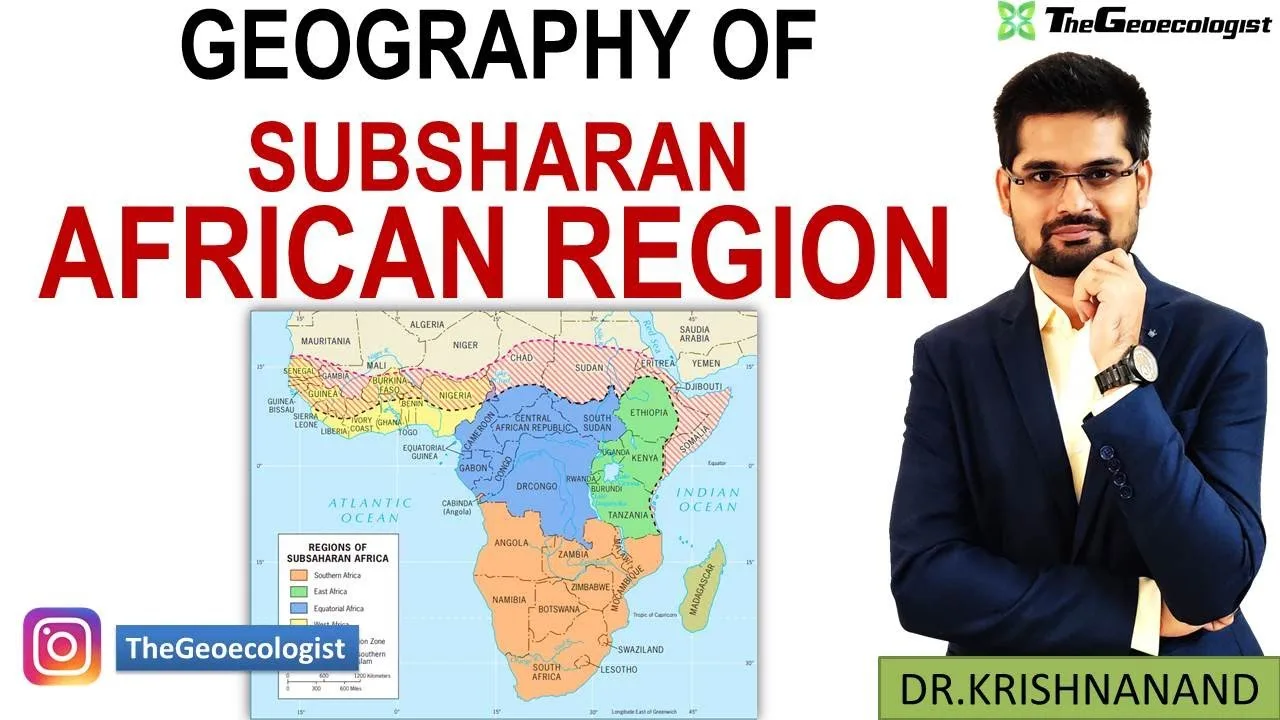
Sub-Saharan Africa refers to the area of the African continent lying south of the Sahara Desert, encompassing 46 countries. Unlike North Africa, which is culturally and geographically linked to the Mediterranean and Arab world, Sub-Saharan Africa is characterized by its tropical climates, diverse ecosystems, and a mosaic of ethnicities and languages. Key sub-regions include:
- West Africa (e.g., Nigeria, Ghana)
- East Africa (e.g., Kenya, Ethiopia)
- Central Africa (e.g., Democratic Republic of Congo)
- Southern Africa (e.g., South Africa, Zimbabwe)
Physical Geography: Landforms and Climates
- The Great Rift Valley: A tectonic wonder stretching from Mozambique to the Red Sea, this region is marked by volcanic activity, lakes (e.g., Lake Victoria), and highlands.
- Major River Systems:
- The Congo River Basin (2nd largest rainforest in the world).
- The Niger River (lifeline for West Africa).
- The Zambezi River (site of Victoria Falls).
- Climate Zones:
- Tropical Rainforests: Central Africa, with high biodiversity.
- Savannas: Dominant in East and Southern Africa, supporting wildlife like the “Big Five.”
- Desert and Semi-Arid Regions: The Sahel, a transitional zone south of the Sahara, faces desertification challenges.
Human and Economic Geography
- Population Distribution:
- Dense populations in fertile highlands (e.g., Ethiopian Highlands) and coastal regions.
- Low density in arid areas (e.g., Namibia’s Namib Desert).
- Economic Activities:
- Agriculture: Subsistence farming dominates; cash crops include cocoa (West Africa) and coffee (East Africa).
- Mining: Rich in minerals like gold (South Africa), diamonds (Botswana), and coltan (DRC).
- Oil Production: Nigeria and Angola are major exporters.
- Urbanization: Rapid growth of megacities like Lagos (Nigeria) and Nairobi (Kenya), often accompanied by infrastructural challenges.
Environmental and Socioeconomic Challenges
- Desertification: The Sahel faces soil degradation due to overgrazing and climate change.
- Deforestation: Congo Basin rainforests are threatened by logging and mining.
- Water Scarcity: Uneven rainfall and poor resource management exacerbate droughts.
- Health Issues: High prevalence of diseases like malaria and HIV/AIDS.
- Political Instability: Post-colonial conflicts and governance issues hinder development.
Geopolitical Significance
- Strategic Locations:
- The Horn of Africa (Somalia, Djibouti) near vital shipping routes.
- The Swahili Coast, historically significant for trade.
- Global Partnerships: China’s Belt and Road Initiative investments vs. traditional ties with Europe.
- Regional Organizations: The African Union (AU) and ECOWAS promote integration and conflict resolution.
Case Study: South Africa
South Africa, a regional powerhouse, exemplifies Sub-Saharan Africa’s contrasts:
- Physical Features: The Drakensberg Mountains, Cape Floristic Region (a biodiversity hotspot), and arid Karoo.
- Economy: Mining (platinum, gold), manufacturing, and tourism (Kruger National Park).
- Social Dynamics: Post-apartheid disparities, urban-rural divides, and efforts toward inclusive growth.
Exam-Centric Tips
- Map-Based Questions: Focus on countries, rivers, and landforms like the Rift Valley.
- Interlinkages: Connect geography with current issues (e.g., climate refugees in the Sahel).
- Case Studies: Use examples like Ethiopia’s Grand Renaissance Dam (transboundary water conflicts) or Kenya’s geothermal energy initiatives.
- Sustainable Development: Highlight Africa’s role in global SDGs, such as renewable energy projects.
Why Sub-Saharan Africa Matters for UPSC
Questions on this region often test knowledge of:
- Physical-Political Correlates: How landforms influence settlement and economy.
- Post-Colonial Transformations: Decolonization’s impact on borders and governance.
- Climate Vulnerabilities: Africa’s disproportionate burden of global warming.
Enhance Your Prep with TheGeoecologist
For visual learners, Dr. Krishnanand’s video lecture simplifies complex themes through maps, diagrams, and real-world examples. Follow TheGeoecologist on Instagram and subscribe to their YouTube channel for updates on geography content.
By mastering the geography of Sub-Saharan Africa, aspirants not only gain exam-ready knowledge but also develop a nuanced understanding of a region shaping global environmental and geopolitical narratives.
#Africa #SubSaharan #SouthAfrica
Stay curious, stay prepared!
To Download E-Books & Study Material Visit The Shop Page