Blog
Geography of Australia- Austral Realm- Geoecologist

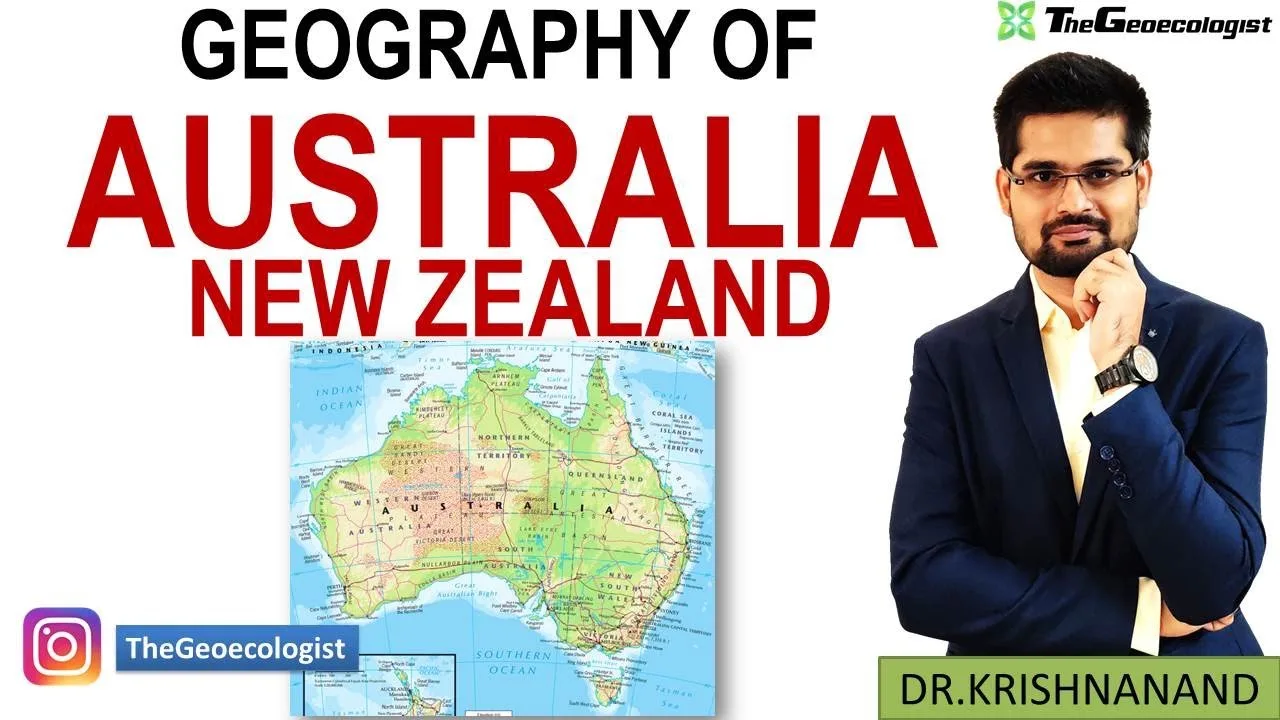
Geography of Australia- Austral Realm- Geoecologist
Exploring the Geography of Australia and New Zealand: The Austral Realm
The Austral Realm, comprising Australia and New Zealand, is a unique geographic region distinguished by its isolation, biodiversity, and distinct cultural landscapes. This article delves into the physical, environmental, and human geography of this realm, tailored for UPSC aspirants, geography students, and competitive exam enthusiasts.
Understanding the Austral Realm
The Austral Realm refers to the southernmost regions of Oceania, dominated by Australia and New Zealand. Its isolation due to the Southern Ocean and Pacific Ocean has shaped its evolutionary history, climate patterns, and cultural identity. This realm is vital for understanding regional geography, ecological uniqueness, and geopolitical dynamics.
Geography of Australia
1. Physical Geography
- Location and Size: Australia is the world’s sixth-largest country, lying between the Indian and Pacific Oceans. Its vast expanse includes diverse landscapes:
- Western Plateau: Ancient shield rocks and deserts like the Great Victoria Desert.
- Central Lowlands: Flat sedimentary basins, including the Great Artesian Basin.
- Eastern Highlands: The Great Dividing Range, influencing rainfall and river systems.
- Unique Features: The Great Barrier Reef, the world’s largest coral reef system, and Uluru, a monumental sandstone formation, highlight its geological diversity.
2. Climate and Biogeography
- Australia’s climate ranges from tropical (north) to arid (interior) and temperate (southeast).
- Biodiversity Hotspot: Home to endemic species like kangaroos, koalas, and eucalyptus forests. Threats like invasive species and climate change pose challenges to its ecosystems.
3. Human Geography
- Urbanization: Over 85% of Australians live in coastal cities like Sydney and Melbourne.
- Economy: Driven by mining (iron ore, coal), agriculture (wool, wheat), and services.
Geography of New Zealand
1. Physical Geography
- Island Archipelago: Two main islands (North and South) and smaller surrounding islands.
- Southern Alps: Glaciated mountain range with Aoraki/Mt. Cook as the highest peak.
- Volcanic Activity: North Island’s Taupo Volcanic Zone and geothermal hotspots.
2. Climate and Ecology
- Oceanic climate with mild temperatures and high rainfall supports lush forests and unique fauna like the flightless kiwi.
- Conservation Efforts: Predator-free initiatives to protect endemic birds.
3. Human Geography
- Cultural Heritage: Strong Maori influence and bicultural governance.
- Economy: Relies on agriculture (dairy, wool), tourism, and renewable energy (geothermal and hydropower).
Australia vs. New Zealand: A Comparative Analysis
- Landmass: Australia’s aridity contrasts with New Zealand’s mountainous, greener landscapes.
- Economy: Australia’s resource-based economy differs from New Zealand’s agro-tourism focus.
- Indigenous Heritage: Both nations grapple with integrating Aboriginal and Maori histories into modern identities.
Relevance for Competitive Exams
- UPSC Geography Optional: Focus on regional geography, biogeography, and geopolitical significance.
- Key Themes: Climate change impacts, resource management, and post-colonial development.
- Case Studies: Great Barrier Reef conservation, trans-Tasman relations, and Maori land rights.
Conclusion
The Austral Realm’s geography offers insights into environmental resilience, cultural diversity, and economic adaptation. For UPSC aspirants, mastering this region enhances understanding of global ecological and geopolitical systems.
Enhance Your Preparation
For detailed lectures, subscribe to TheGeoecologist YouTube channel and follow @thegeoecologist on Instagram. Visit thegeoecologist.com for study resources.
geographyofaustralia #australrealm #newzealand
Authored by Dr. Krishnanand, founder of TheGeoecologist—simplifying geography for aspirants since inception.
Boost your geography skills—Join our YouTube community today! 🌏✨
To Download E-Books & Study Material Visit The Shop Page