Blog
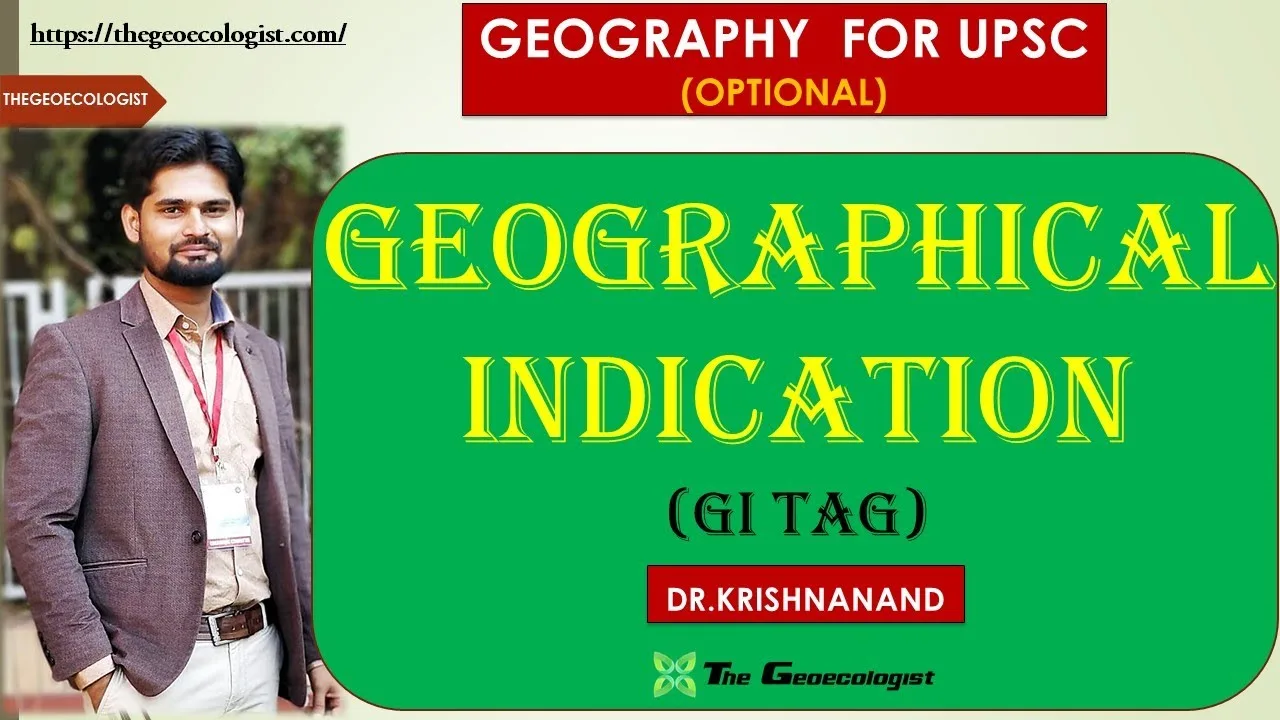
GEOGRAPHICAL INDICATION | GI TAG | FOR GEOGRAPHY OPTIONAL AND GS FOR UPSC | BY Dr. Krishnanand

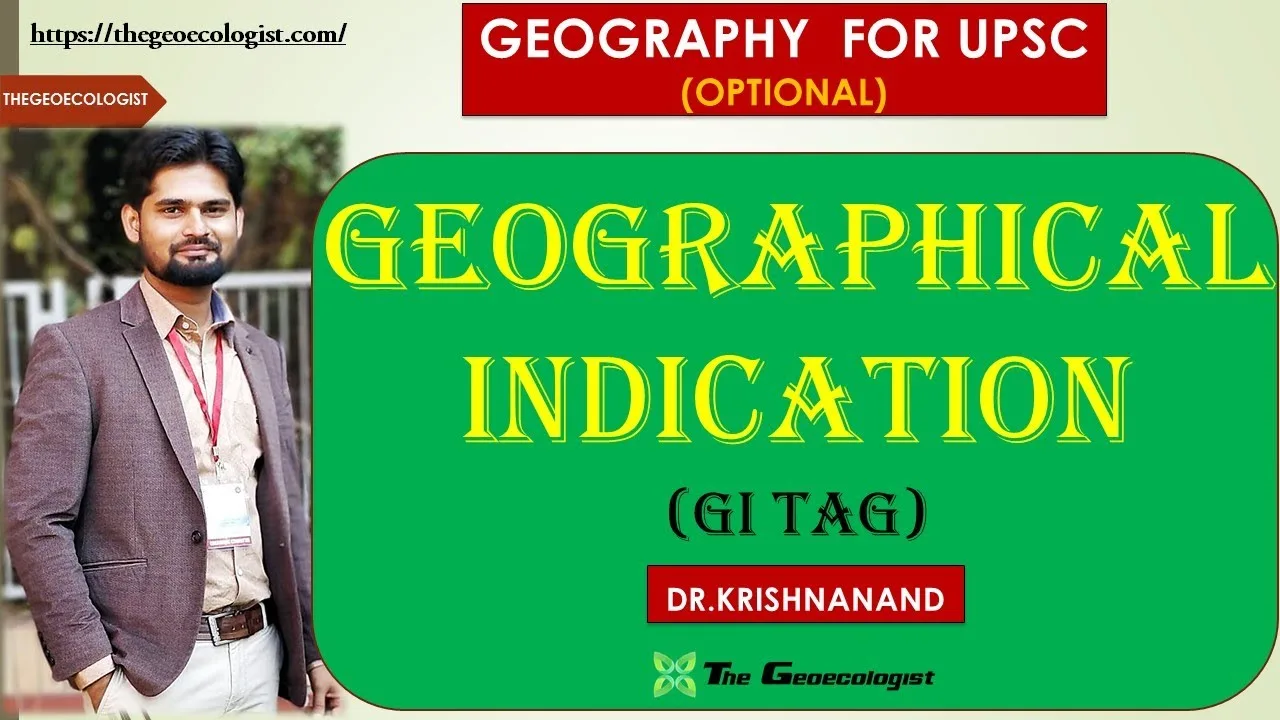
GEOGRAPHICAL INDICATION | GI TAG | FOR GEOGRAPHY OPTIONAL AND GS FOR UPSC | BY Dr. Krishnanand
Geographical Indication (GI Tag): A Comprehensive Guide for UPSC Geography Optional and General Studies
Introduction
Geographical Indication (GI Tag) is an essential topic in UPSC’s Geography Optional and General Studies (GS) syllabus, especially under Indian Economy, Agriculture, and Intellectual Property Rights (IPR). Dr. Krishnanand, founder of TheGeoecologist, explains this concept effectively, making it easier for UPSC/IAS aspirants to understand its importance. This article explores the meaning, significance, and examples of GI Tags in India, along with their relevance for UPSC preparation.
What is a Geographical Indication (GI) Tag?
A Geographical Indication (GI) Tag is a legal certification granted to products that originate from a specific geographical region and possess unique qualities or reputation due to that origin. It ensures that only authorized producers from that region can use the registered name, preventing misuse and imitation.
Key Features of GI Tags:
- Region-Specific Identity : The product must have a strong link to its place of origin.
- Quality & Reputation : It signifies superior quality derived from natural or human factors (e.g., Darjeeling Tea, Banarasi Saree).
- Legal Protection : Prevents unauthorized use of the name by others.
- Economic Benefits : Helps farmers and artisans get better market value for their products.
Importance of GI Tags for UPSC Aspirants
1. Relevance in Geography Optional
- Regional Geography : GI Tags highlight geographical uniqueness (e.g., Kashmir Pashmina, Nagpur Orange).
- Economic Geography : Showcases agro-based and handicraft economies linked to specific regions.
- Human-Environment Interaction : Reflects indigenous knowledge and sustainable practices (e.g., Muga Silk of Assam).
2. General Studies (GS-3: Economy and Agriculture)
- Intellectual Property Rights (IPR): GI is a key component of WTO’s TRIPS Agreement (Trade-Related Aspects of Intellectual Property Rights).
- Rural Economy & Agri-Exports : Boosts exports (e.g., Alphonso Mango, Basmati Rice).
- Government Schemes : Initiatives like One District One Product (ODOP) promote GI-tagged goods.
Famous GI Tags in India
India has 500+ GI-registered products, some of which are crucial for UPSC preparation. A full list is available on the IP India website: http://www.ipindia.nic.in/registered-gls.htm.
Some Important GI Tags for UPSC:
| Product | State/Region | Significance |
|---|---|---|
| Darjeeling Tea | West Bengal | First GI of India (2004) |
| Basmati Rice | Punjab, Haryana, etc. | High export demand |
| Banarasi Saree | Uttar Pradesh | Handwoven silk tradition |
| Kanchipuram Silk | Tamil Nadu | Rich cultural heritage |
| Alphonso Mango | Maharashtra | “King of Mangoes” |
| Pochampally Ikat | Telangana | UNESCO-recognized textile art |
| Nagpur Orange | Maharashtra | Unique taste due to soil |
Conclusion
Understanding Geographical Indications (GI Tags) is crucial for UPSC aspirants, as it integrates Geography, Economy, and Current Affairs. Dr. Krishnanand’s detailed explanation helps simplify this topic for both beginners and advanced learners.
🔔 Subscribe to THEGEOECOLOGIST for more insightful videos on Geography Optional and General Studies.
📌 Follow for Updates:
- Website: https://thegeoecologist.com/
- Instagram: https://www.instagram.com/thegeoecologist
GITAG #GEOGRAPHICALINDICATION #GeographyforUPSC #UPSC #IAS #DrKrishnanand
🎵 Background Music: “Scott Buckley – Growing Up [Piano]” (CC-BY)
ALL RIGHTS RESERVED.
This article provides a concise yet comprehensive overview of GI Tags, making it ideal for quick revisions and long-term UPSC preparation. Keep exploring more such topics with TheGeoecologist for a structured approach to UPSC success! 🚀
To Download E-Books & Study Material Visit The Shop Page