



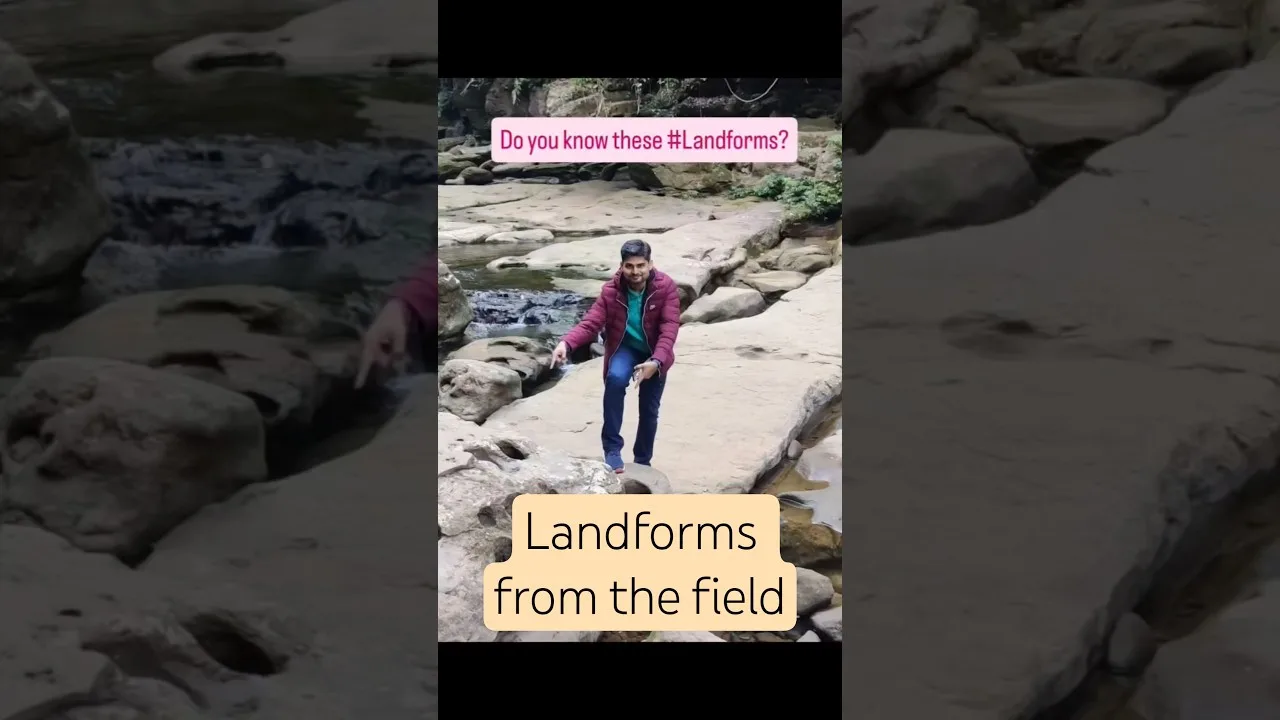
Fluvial Landforms #geomorphology #thegeoecologist #shorts
Carved by Water: The Mesmerizing World of Fluvial Landforms
🌍 Ever stood beside a powerful river and marveled at its sheer force? For millions of years, these flowing giants have been Earth’s master sculptors, tirelessly carving landscapes with the persistence of time. Welcome to the captivating realm of Fluvial Landforms, a core branch of Geomorphology where water writes the planet’s story. Join #TheGeoecologist on a quick journey through the dynamic world shaped by rivers!
#FluvialLandforms are landforms created and modified by the work of rivers – the relentless movement of water sediment, ice, and gravity. From towering valleys to vast deltas, these features reveal the immense power and intricate dance of erosion and deposition. Here’s a glimpse into some iconic examples:
Valleys: Rivers cut their path through the landscape. The V-shaped valley is the signature of a youthful, fast-flowing river actively downcutting through resistant rock. As rivers mature and meander, broader U-shaped valleys (often carved by glaciers, but widened by rivers) or wide, flat-bottomed valley floors emerge, forming the stage for other landforms.
Meanders: Rivers rarely flow straight. The combination of eroding force on the outer bend (where water moves fastest) and slower deposition on the inner bend creates elegant, sinuous curves called meanders. This constant dance widens the valley floor significantly.
Floodplains: Over millennia, rivers repeatedly spill their banks during floods. The fine sediment they carry – silt, clay, and sand – is deposited across the surrounding flat land, creating the incredibly fertile floodplain. This vital area supports vast biodiversity and agriculture.
Oxbow Lakes: An oxbow lake is the final, beautiful chapter in a meander’s life. As a meander becomes increasingly sharp, the river finds a shorter path during a flood, cutting off the loop. The abandoned curve, now isolated from the main channel, fills with water to form a crescent-shaped oxbow lake, a serene remnant of the river’s past.
Deltas: Where rivers meet the calmer waters of a lake or ocean, they slow down dramatically, dropping their sediment load. This accumulation fans out across the water’s surface, creating the intricate, often fan-shaped delta – think of the Nile or the Mississippi. Deltas are constantly evolving landscapes teeming with life and critical for ecosystems.
Why are Fluvial Landforms so fascinating? They are visible, dynamic evidence of the powerful forces shaping our planet. Understanding them is fundamental to:
- Geography & Geology: Grasping landscape evolution, river systems, and Earth surface processes.
- Environmental Science: Managing water resources, mitigating floods, conserving habitats, and predicting erosion risks.
- Infrastructure & Urban Planning: Designing bridges, roads, and settlements safely on or near rivers and floodplains.
- Competitive Exams (like UPSC): A core topic in #UPSCGeography and #PhysicalGeography, essential for aspirants.
TheGeoecologist brings these complex processes to life in their engaging #GeographyShorts, making even intricate concepts accessible and exciting. Whether you’re a student cramming for exams, a geography enthusiast, or simply someone awed by nature’s power, exploring #Geomorphology through #RiverLandforms offers a profound appreciation for the dynamic, ever-changing face of our planet.
Next time you cross a river, don’t just see water – see an artist at work, a force that has been shaping our world for eons. Let’s celebrate the incredible power of flow! 🌊⛰️
#FluvialLandforms #Geomorphology #TheGeoecologist #GeographyShorts #RiverLandforms #PhysicalGeography #EarthScience #UPSCGeography #GeomorphologyShorts #Geography #NatureLovers #ScienceCommunication
To Download E-Books & Study Material Visit The Shop Page