



Mass Extinctions Explained #earthscience #upsc #shorts #thegeoecologist
Earth’s Deadliest Chapters: Mass Extinctions #EarthScience #UPSC #Shorts
Life on Earth is a dynamic story of adaptation and survival, punctuated by catastrophic events that wiped out vast swathes of species. These are the Mass Extinctions – five (or six) planet-wide biological crises that fundamentally reshaped the course of evolution. They are not mere footnotes in Earth’s history; they are reset buttons, clearing the stage for new life forms to emerge.
The Five (and a Half) Great Dying Events
- End-Ordovician (~443 million years ago): Triggered by intense glaciation and subsequent sea-level changes. This extinction primarily devastated marine life, especially brachiopods, trilobites, and reef-building organisms. Estimated loss: ~85% of marine species.
- Late Devonian (~372 million years ago): A prolonged crisis driven by widespread anoxia (oxygen depletion) in oceans, likely fueled by massive volcanic activity, climate shifts, and plant evolution altering landscapes. Hit marine ecosystems and early fish groups incredibly hard. Estimated loss: ~75% of species.
- Permian-Triassic (~252 million years ago) – “The Great Dying”: Earth’s largest mass extinction. A cataclysm driven by the Siberian Traps – colossal volcanic eruptions lasting hundreds of thousands of years. This unleashed massive greenhouse gases (CO2, methane), causing catastrophic global warming, ocean acidification, anoxia, and extreme climate instability. Estimated loss: ~96% of marine species and ~70% of terrestrial vertebrate species. This event paved the way for the rise of dinosaurs.
- Triassic-Jurassic (~201 million years ago): Linked again to massive volcanism (Central Atlantic Magmatic Province). Release of CO2 caused rapid global warming and climate whiplash. This extinction eliminated large amphibians, most reptile groups, and many therapsids, allowing dinosaurs to dominate the Mesozoic Era. Estimated loss: ~80% of species.
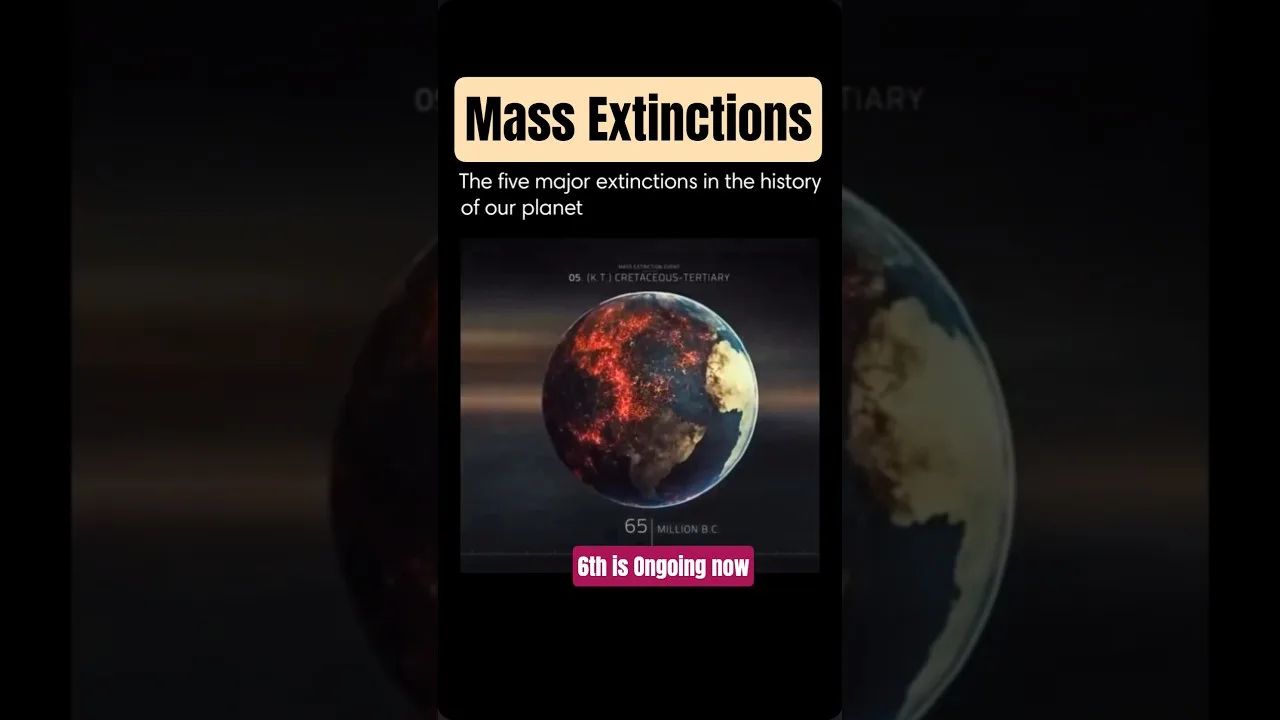
- Cretaceous-Paleogene (K-T) (~66 million years ago): The dinosaur killer. While the Chicxulub asteroid impact (now confirmed) is the famous trigger, evidence suggests intense volcanic activity in the Deccan Traps (India) played a significant role. The impact caused “impact winter,” followed by greenhouse warming, wildfires, and acid rain. This event wiped out non-avian dinosaurs, pterosaurs, marine reptiles, and ammonites, clearing the path for mammals to rise. Estimated loss: ~76% of all species.
(Some scientists include the Capitanian (~260 Ma) extinction within the Permian as a separate, severe event).
What Causes Such Catastrophes? The Killers Identified
The drivers of mass extinctions share common themes, often interacting:
- Rapid Climate Change: The primary killer. Whether through intense global warming (volcanism releasing CO2/methane) or global cooling (volcanic blocking sunlight or orbital shifts), rapid climate shifts outpace species’ ability to adapt. Ocean acidification (from CO2 dissolving in seawater) is a major marine killer.
- Massive Volcanism: Flood basalt eruptions (like the Siberian Traps or Deccan Traps) release staggering amounts of gases, causing profound, long-term climate disruption and toxic conditions.
- Asteroid/Comet Impacts: A sudden, catastrophic event like Chicxulub. The impact winters, thermal radiation, earthquakes, tsunamis, and subsequent climate chaos deliver a devastating blow.
- Ocean Changes: Anoxia (lack of oxygen) and euxinia (anoxia + hydrogen sulfide poisoning) in oceans, driven by warming disrupting circulation or nutrient runoff from land changes, are recurring marine extinction drivers.
- Other Factors: Sea-level fluctuations, methane hydrate release, and potentially supervolcanoes can contribute to these cascading crises.
Lessons for Today & Why It Matters for #UPSC & #EarthScience
Understanding mass extinctions is crucial beyond paleontology:
- Biodiversity Vulnerability: They demonstrate how drastically Earth’s systems can shift and how quickly established life can perish.
- Climate Change Thresholds: They provide stark evidence of the devastating impacts of rapid, severe climate change (both warming and cooling) on global ecosystems.
- Evolutionary Catalysts: By removing dominant groups, they create ecological opportunities, driving explosive diversification and the rise of new life (like mammals after K-T).
- Anthropocene Comparison: Current human-induced climate change, habitat loss, and ocean pollution are causing a Sixth Mass Extinction. The rate of species loss is alarming. Studying past events helps us predict potential future scenarios and underscores the urgency of conservation.
#MassExtinction events are Earth’s history lessons on planetary instability, climate sensitivity, and the resilience (and fragility) of life. For #UPSC aspirants, they are vital in understanding #Geology, #Paleontology, #ClimateChange dynamics, and the deep-time context for environmental challenges. For #EarthScience enthusiasts, they reveal the dramatic interplay between geological forces and biological evolution.
Mass extinctions are not just past disasters; they are the crucibles in which the future of life was forged. Their story reminds us of the delicate balance on our planet and the profound impact we, as a species, now wield. #TheGeoecologist #Shorts
To Download E-Books & Study Material Visit The Shop Page