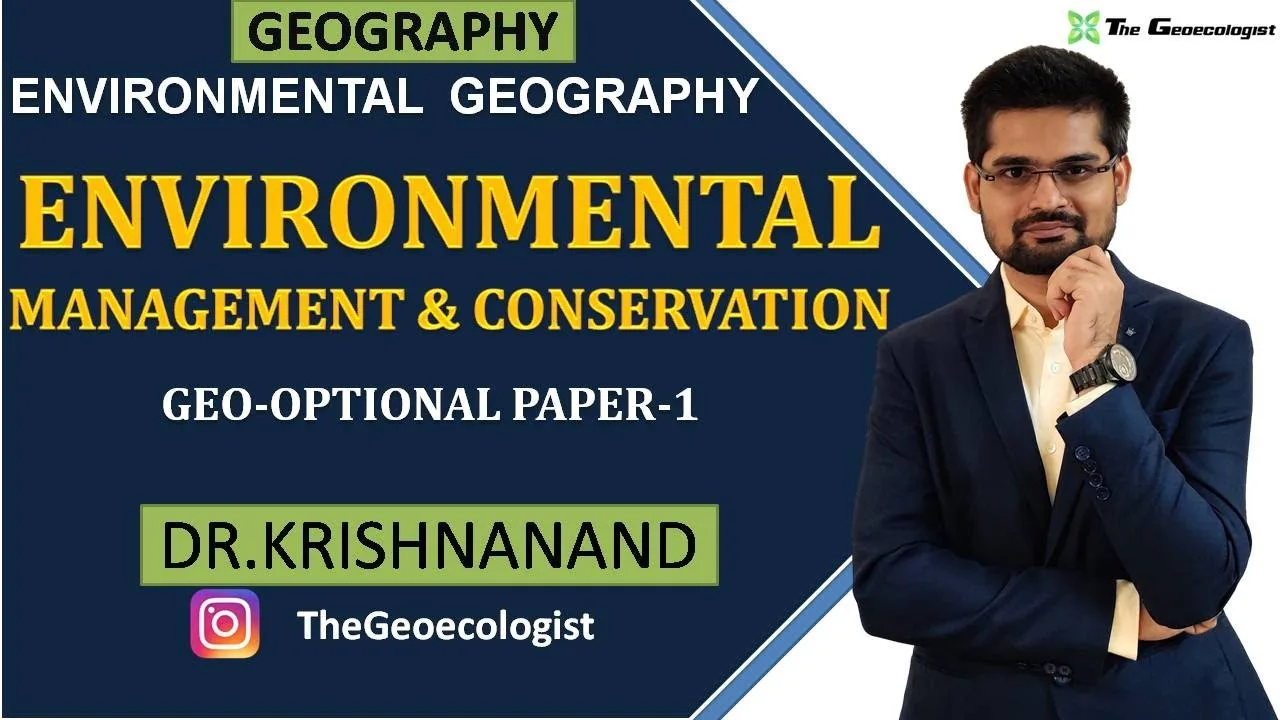
Environmental Management and Conservation| Environmental Geography | Dr. Krishnanand
Environmental Management and Conservation: A Simplified Guide for UPSC Aspirants
Introduction
Environmental Management and Conservation is a crucial subject in both academic geography and competitive examinations like the UPSC. In the 13th lecture of his series, Dr. Krishnanand, founder of TheGeoecologist, provides a simplified yet comprehensive explanation of the topic, helping undergraduate geography students and UPSC aspirants grasp key concepts effectively.
This article summarizes the key takeaways from Dr. Krishnanand’s lecture on Environmental Management and Conservation, ensuring clarity for beginners and advanced learners alike.
What is Environmental Management?
Environmental Management refers to the systematic approach to regulating human impact on the environment while ensuring sustainable development. It involves:
- Pollution control (air, water, soil)
- Natural resource management (forests, water, minerals)
- Sustainable development policies
- Wildlife and habitat protection
- Climate change mitigation
An effective environmental management system (EMS) integrates scientific, economic, and social perspectives to balance ecological health and human needs.
Key Objectives of Environmental Management
- Preserving biodiversity – Protecting ecosystems and endangered species.
- Sustainable resource use – Ensuring resources like water, forests, and minerals are used responsibly.
- Pollution minimization – Implementing policies to reduce industrial and urban pollution.
- Climate resilience – Mitigating and adapting to climate change impacts.
- Public awareness and education – Encouraging community participation in environmental protection.
Conservation: Protecting Earth’s Natural Wealth
Conservation focuses on preserving natural resources for future generations. Major approaches include:
1. In-situ Conservation (Protecting species in their natural habitats)
- National parks, wildlife sanctuaries, biosphere reserves
- Example: Kaziranga National Park (Assam) protects one-horned rhinos.
2. Ex-situ Conservation (Protecting species outside their habitats)
- Zoological gardens, botanical gardens, seed banks
- Example: Svalbard Global Seed Vault (Norway) preserves crop diversity.
3. Community-Based Conservation
- Involves local communities in protecting biodiversity.
- Example: Joint Forest Management (JFM) in India encourages village participation in forest conservation.
Role of Environmental Geography in Management & Conservation
Environmental Geography bridges physical and human geography to address environmental challenges. It examines:
- Human-environment interactions (how societies impact nature)
- Geospatial technologies (GIS, remote sensing) for environmental monitoring
- Policy-making for sustainable land use
UPSC-Relevance of Environmental Management & Conservation
- Questions on conservation strategies, policies (National Action Plan on Climate Change), and international treaties (Paris Agreement, CBD) are common in UPSC exams.
- Case studies like Chipko Movement, Namami Gange Programme are frequently asked.
Dr. Krishnanand’s Contribution to Environmental Geography
Dr. Krishnanand, through his platform TheGeoecologist, simplifies complex environmental concepts for UPSC aspirants and geography students. His lectures, including this 13th session on Environmental Management and Conservation, provide concise explanations with real-world applications.
Key Features of His Teaching:
✔ Simplified, exam-oriented content
✔ Integration of case studies and current affairs
✔ Free YouTube lectures for accessible learning
Resources by Dr. Krishnanand:
- E-books on environmental studies – Available at MithilaCraft
- YouTube Channel (THEGEOECOLOGIST) – Subscribe for latest lectures.
- Instagram Updates – Follow @thegeoecologist
Conclusion
Environmental Management and Conservation are critical for sustainable development and ecological balance. Dr. Krishnanand’s simplified approach helps students understand, retain, and apply these concepts effectively—especially for exams like UPSC.
For more detailed insights, watch the 13th lecture in Dr. Krishnanand’s series and explore other resources on TheGeoecologist platform.
#environmentalmanagement #conservation #environment
Subscribe to THEGEOECOLOGIST on YouTube for more updates! 🎓🌍
Follow:
📧 Email: krishna.geography@gmail.com
🌐 Website: TheGeoecologist
📷 Instagram: @thegeoecologist
To Download E-Books & Study Material Visit The Shop Page