
Blog
COP31 Climate Summit: Key Outcomes and Failures in Antalya 2026

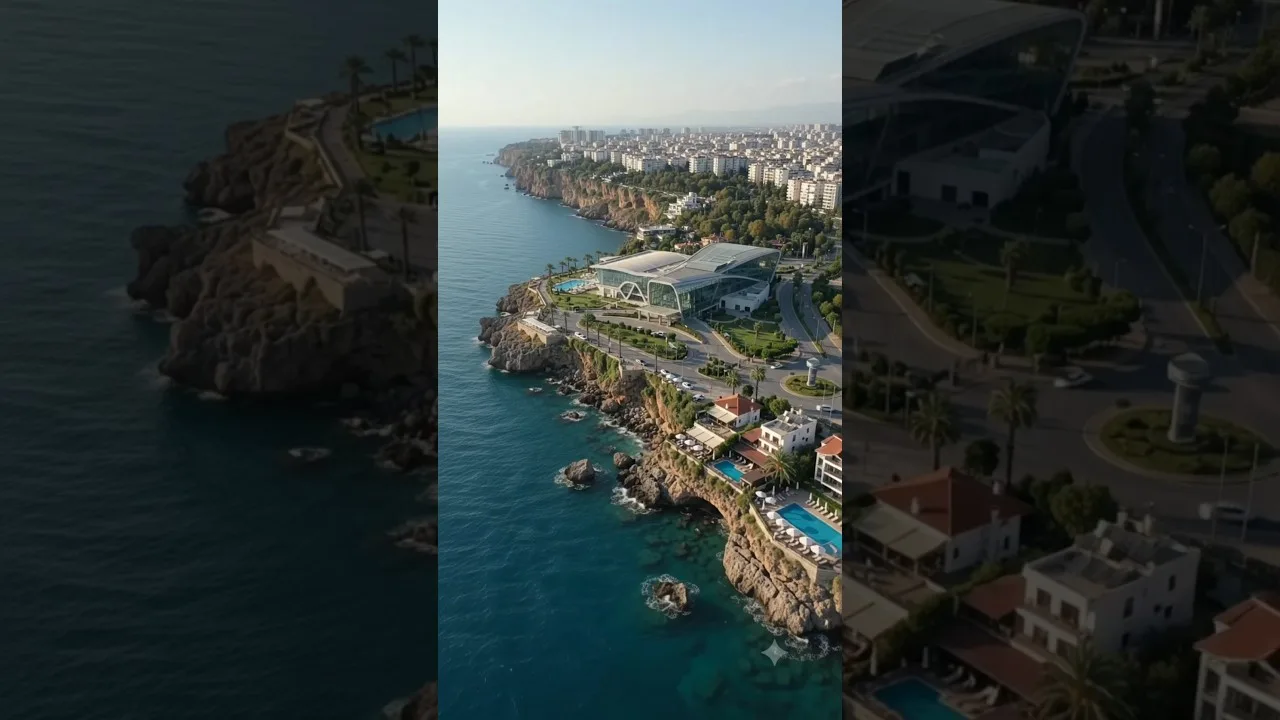
Table of Contents
- Background: The Road to the COP31 Climate Summit
- Procedural Deadlocks Consume Critical Days
- Fossil Fuel Phase-Out: The Core Impasse
- Divergent Proposals on the Table
- The Energy Security Argument
- Climate Adaptation Finance: The $300 Billion Gap
- Adaptation vs. Mitigation Imbalance
- Quality Concerns: Grants vs. Loans
- Loss and Damage: Operationalization Stalls
- Board Composition Deadlock
- Geopolitical Undercurrents Shaping Outcomes
- U.S.-China Climate Dialogue Freeze
- EU Internal Divisions
- Global South Fragmentation
- What Was Achieved: Incremental Progress Amid Failure
- Global Goal on Adaptation (GGA) Indicators Adopted
- Article 6.4 Mechanism Rules Finalized
- Just Transition Work Programme Extended
- Implications for COP32 in Belém and Beyond
- Trust Deficit Deepens
- Litigation and Domestic Action Rise
- Expert Assessment: Can the Paris Agreement Survive Implementation Gaps?
- Frequently Asked Questions
- Why did the COP31 Climate Summit fail to reach an agreement?
- What were the key finance demands at the COP31 Climate Summit?
- What happens next after the COP31 Climate Summit failure?
- Conclusion: A Missed Moment in Antalya
The COP31 Climate Summit convened in Antalya, Türkiye, with high expectations for decisive action on the planet’s most pressing environmental challenges. After more than 44 hours of overtime negotiations, the conference concluded without an overarching agreement, marking a significant setback in global climate diplomacy. The COP31 Climate Summit exposed deep fractures between developed and developing nations over fossil fuel phase-out timelines, adaptation finance, and the operationalization of loss and damage mechanisms.
- No overarching agreement reached after 44+ hours of extended negotiations in Antalya.
- Fossil fuel phase-out timelines remained the primary sticking point between major economies.
- Climate adaptation finance commitments fell short of the $300 billion annual target sought by developing nations.
- Loss and damage fund operationalization stalled over governance and contributor base disagreements.
- Geopolitical tensions undermined consensus-building, highlighting the fragility of multilateral climate action.
Background: The Road to the COP31 Climate Summit
The COP31 Climate Summit represented the 31st session of the Conference of the Parties to the United Nations Framework Convention on Climate Change (UNFCCC). Held in Antalya from November 9–21, 2026, the summit carried the weight of the Global Stocktake’s findings from COP28 in Dubai, which confirmed the world is drastically off track to limit warming to 1.5°C. According to the UNFCCC official conference portal, parties arrived in Türkiye with a mandate to translate the UAE Consensus into concrete implementation roadmaps.
Antalya’s selection as host city was symbolic—Türkiye, straddling Europe and Asia, embodies the energy transition tensions between fossil fuel dependence and renewable ambition. The Turkish presidency, led by Minister of Environment, Urbanisation and Climate Change Mehmet Özhaseki, framed the summit as the “Implementation COP,” emphasizing action over pledges. Yet the COP31 Climate Summit quickly devolved into procedural battles that consumed precious negotiating time.
Procedural Deadlocks Consume Critical Days
The first week saw agonizing delays over agenda adoption. The Like-Minded Developing Countries (LMDCs) bloc, led by China and India, insisted on adding “equitable access to sustainable development” as a standalone agenda item. The European Union and Alliance of Small Island States (AOSIS) countered that this would reopen settled differentiation debates. The COP31 Climate Summit presidency spent six days mediating before a compromise allowed substantive work to begin—leaving merely five days for technical negotiations before ministerial arrival.
Fossil Fuel Phase-Out: The Core Impasse
The most contentious issue at the COP31 Climate Summit centered on fossil fuel phase-out language. The UAE Consensus at COP28 had called for “transitioning away from fossil fuels in energy systems, in a just, orderly and equitable manner.” At Antalya, parties were tasked with defining timelines, benchmarks, and differentiation.
Divergent Proposals on the Table
Three distinct camps emerged with irreconcilable positions:
- EU, AOSIS, and Latin American allies pushed for a 2035 peak emissions deadline for all major economies, with OECD nations phasing out unabated coal by 2030 and gas by 2035.
- LMDCs and Arab Group rejected any uniform timeline, arguing Article 2.2 of the Paris Agreement protects “response measures” from disadvantaging developing countries. They proposed “nationally determined phase-down pathways” without international review.
- United States and Japan advocated a middle ground: collective 2035 peaking with “differentiated responsibility” based on GDP per capita and historical emissions, but opposed binding gas phase-out dates.
Draft texts circulated through five iterations. The penultimate version, released Friday morning, contained bracketed options for “phase-out by 2040,” “phase-down by 2050,” and “no collective timeline.” None attracted consensus. As one senior negotiator from a vulnerable island nation told Reuters Environment, “We came to Antalya for a roadmap. We leave with a roundabout.”
The Energy Security Argument
Fossil fuel producers—Saudi Arabia, Russia, Iran, and notably the host Türkiye—leveraged energy security concerns amplified by the 2025–2026 European gas crunch. Ankara argued that its transition timeline must account for 32% coal dependence in power generation and recent discovery of the Sakarya gas field. The COP31 Climate Summit presidency’s draft decision text included a preamble paragraph recognizing “the right to sustainable development and energy access,” which critics called a loophole for indefinite fossil expansion.
Climate Adaptation Finance: The $300 Billion Gap
Finance negotiations at the COP31 Climate Summit focused on the New Collective Quantified Goal (NCQG) to replace the $100 billion annual pledge. Developing countries, coordinated through the G77+China, demanded $1.3 trillion annually by 2030, with at least $300 billion dedicated to adaptation. Developed countries countered with a “mobilization” target of $300–400 billion from “all sources,” including private finance and multilateral development bank leverage.
Adaptation vs. Mitigation Imbalance
Current flows remain heavily skewed: OECD data shows only 27% of 2024 climate finance targeted adaptation. At the COP31 Climate Summit, African negotiators presented a unified position paper demanding grant-based, predictable adaptation funding with direct access modalities. The African Group’s lead negotiator, Ephraim Shitima, stated: “We cannot adapt to catastrophe with loans. Every dollar of adaptation debt is a dollar stolen from health, education, and food security.”
A breakthrough appeared possible when the COP31 presidency proposed a “dual-track” approach: a core public finance floor of $200 billion annually by 2030, supplemented by a “mobilization multiplier” target of $600 billion through MDB reform and private sector de-risking. The EU signaled flexibility, but the U.S. delegation—constrained by Congressional appropriations uncertainty—refused to endorse any specific public finance number.
Quality Concerns: Grants vs. Loans
Beyond quantity, the COP31 Climate Summit exposed deep disagreements on finance quality. Analysis by the Intergovernmental Panel on Climate Change (IPCC) Working Group III, released weeks before Antalya, warned that loan-dominated climate finance exacerbates debt distress in climate-vulnerable nations. The summit’s draft finance text included weak language on “grant-equivalent” accounting, which developing countries rejected as “creative accounting” that masks concessionality erosion.
Loss and Damage: Operationalization Stalls
The Loss and Damage Fund, established at COP27 and operationalized at COP28, faced its first replenishment test at the COP31 Climate Summit. Pledges totaled merely $1.2 billion by the summit’s midpoint—far below the estimated $400 billion annual need by 2030. Governance disputes further paralyzed progress.
Board Composition Deadlock
The Fund’s 26-member Board composition remained unresolved. Developing countries demanded majority representation; developed countries insisted on contributor-weighted voting. The World Bank’s interim trusteeship—controversial from inception—faced renewal opposition from the LMDCs, who cited the Bank’s fossil fuel lending track record. No decision was adopted, leaving the Fund in legal limbo.
Geopolitical Undercurrents Shaping Outcomes
The COP31 Climate Summit did not occur in a vacuum. Several geopolitical dynamics constrained ambition:
U.S.-China Climate Dialogue Freeze
Bilateral climate cooperation between the world’s two largest emitters remained suspended following the 2025 Taiwan Strait tensions. Without the “Sunnylands Spirit” that enabled the 2023 methane agreement and 2024 COP28 consensus, the COP31 Climate Summit lacked the great-power anchor that historically unlocked multilateral breakthroughs. Chinese negotiators maintained rigid differentiation positions; U.S. envoys focused on domestic legislative constraints.
EU Internal Divisions
The European Union, traditionally the climate ambition champion, arrived fragmented. Poland and Hungary blocked the EU’s internal 2035 fossil phase-out mandate, weakening the bloc’s external credibility. The European Commission’s “Green Deal Industrial Plan” faced WTO challenges from China and the U.S., diverting political capital from Antalya.
Global South Fragmentation
The G77+China coalition showed unprecedented cracks. Brazil, as incoming COP32 president, pursued a “Belém Roadmap” prioritizing forest finance and nature-based solutions. India championed the International Solar Alliance and LiFE (Lifestyle for Environment) initiative. Small island states felt abandoned by larger developing economies. The COP31 Climate Summit revealed that “Global South” unity is increasingly tactical, not strategic.
What Was Achieved: Incremental Progress Amid Failure
Despite the headline failure, the COP31 Climate Summit produced several technical outcomes:
Global Goal on Adaptation (GGA) Indicators Adopted
Parties agreed on 127 quantitative and qualitative indicators for the UAE-Belém Work Programme on the Global Goal on Adaptation. This framework, while voluntary, establishes common metrics for tracking adaptation progress across water, food, health, ecosystems, and infrastructure systems. The COP31 Climate Summit decision requests the IPCC to assess indicator adequacy in its Seventh Assessment Report cycle.
Article 6.4 Mechanism Rules Finalized
After three years of deadlock, the Supervisory Body’s recommendations on removal activities, methodological tools, and grievance processes were adopted. This unlocks the Paris Agreement’s central carbon market mechanism, potentially mobilizing private finance for mitigation. However, environmental integrity concerns persist regarding avoidance vs. removal definitions.
Just Transition Work Programme Extended
The Sharm el-Sheikh Just Transition Work Programme received a two-year extension with a mandate to develop “just transition principles” for national application. Labour unions and Indigenous peoples’ organizations welcomed the inclusion of social dialogue requirements, though enforcement mechanisms remain absent.
Implications for COP32 in Belém and Beyond
The COP31 Climate Summit outcome casts a long shadow over COP32 in Belém, Brazil (November 2027). The Amazon summit was already burdened with delivering the NCQG, finalizing the Global Stocktake’s second cycle, and operationalizing loss and damage. Antalya’s failure means Belém must resolve accumulated debts while navigating Brazil’s domestic political calendar—municipal elections in October 2027 and presidential elections in 2028.
Trust Deficit Deepens
Perhaps the most damaging outcome of the COP31 Climate Summit is the erosion of trust. Developing country negotiators repeatedly invoked “broken promises”—the unmet $100 billion goal, the adaptation finance doubling pledge from Glasgow, the loss and damage fund capitalization. As one African diplomat summarized: “Antalya didn’t fail because of complexity. It failed because wealthy nations chose not to pay.”
Litigation and Domestic Action Rise
With multilateralism faltering, climate action increasingly shifts to courts and national legislatures. The 2026 KlimaSeniorinnen v. Switzerland ECHR ruling, the 2025 Urgenda enforcement in the Netherlands, and youth-led constitutional cases in Germany, South Korea, and Colombia demonstrate an emerging “judicialization” of climate governance. The COP31 Climate Summit may accelerate this trend as civil society loses faith in COP deliverables.
Expert Assessment: Can the Paris Agreement Survive Implementation Gaps?
Legal scholars and political scientists offer divergent views on the COP31 Climate Summit‘s systemic implications. Professor Lavanya Rajamani (Oxford) argues the Paris Agreement’s “pledge-and-review” architecture inherently produces ambition gaps, and Antalya merely reveals the design limit. Professor David Victor (UC San Diego) contends that “club-based” approaches—like the Global Methane Pledge, Powering Past Coal Alliance, and new Critical Minerals Security Partnership—will deliver more than consensus-bound COPs.
The IPCC’s Sixth Assessment Report synthesis, released March 2023, warned that “the choices and actions implemented in this decade will have impacts now and for thousands of years.” The COP31 Climate Summit suggests the world’s governments have not yet internalized this temporal urgency. As the Antalya sun set on the final plenary, the gavel fell not on a decision, but on a procedural closure—leaving the planet’s carbon budget to shrink another year without a collective roadmap.
Frequently Asked Questions
Why did the COP31 Climate Summit fail to reach an agreement?
The COP31 Climate Summit collapsed due to irreconcilable differences on fossil fuel phase-out timelines, insufficient climate adaptation finance commitments from developed nations, and governance disputes over the Loss and Damage Fund. Geopolitical tensions, particularly the U.S.-China dialogue freeze and EU internal divisions, prevented the great-power consensus needed for breakthrough.
What were the key finance demands at the COP31 Climate Summit?
Developing countries demanded $1.3 trillion annually by 2030 for the New Collective Quantified Goal (NCQG), with at least $300 billion in grant-based adaptation finance. Developed countries offered a “mobilization” target of $300–400 billion from all sources including private finance, but refused a specific public finance floor.
What happens next after the COP31 Climate Summit failure?
All unresolved issues—fossil fuel phase-out, NCQG, loss and damage operationalization—roll over to COP32 in Belém, Brazil (November 2027). Meanwhile, climate action increasingly shifts to domestic courts, national legislation, and minilateral “climate clubs.” The Bonn intersessional meetings in June 2027 will attempt to rebuild technical convergence.
Conclusion: A Missed Moment in Antalya
The COP31 Climate Summit will be recorded as a conference where process overwhelmed substance. In the Mediterranean conference halls of Antalya, negotiators debated brackets while the planet’s vital signs—record ocean heat, collapsing ice sheets, intensifying extremes—worsened outside. The summit’s failure is not merely diplomatic; it is a measurable delay in the emissions curve bend that physics demands.
Yet the COP31 Climate Summit also revealed where energy exists. The GGA indicator adoption, Article 6.4 finalization, and just transition extension prove technical progress continues even when political will falters. The question for Belém is whether Brazil’s presidency can convert technical momentum into the political breakthrough Antalya could not. The carbon budget does not negotiate. It only depletes.
Frequently Asked Questions
The COP31 Climate Summit collapsed due to irreconcilable differences on fossil fuel phase-out timelines, insufficient climate adaptation finance commitments from developed nations, and governance disputes over the Loss and Damage Fund. Geopolitical tensions, particularly the U.S.-China dialogue freeze and EU internal divisions, prevented the great-power consensus needed for breakthrough.
Developing countries demanded $1.3 trillion annually by 2030 for the New Collective Quantified Goal (NCQG), with at least $300 billion in grant-based adaptation finance. Developed countries offered a "mobilization" target of $300–400 billion from all sources including private finance, but refused a specific public finance floor.
All unresolved issues—fossil fuel phase-out, NCQG, loss and damage operationalization—roll over to COP32 in Belém, Brazil (November 2027). Meanwhile, climate action increasingly shifts to domestic courts, national legislation, and minilateral "climate clubs." The Bonn intersessional meetings in June 2027 will attempt to rebuild technical convergence.