Atmospheric Circulation & Weather Systems- NCERT Geography-Class 11 Chapter 10
Understanding Atmospheric Circulation & Weather Systems: NCERT Class 11 Geography (Chapter 10)
Essential for CBSE, UPSC, and Competitive Exam Aspirants
The Earth’s atmospheric circulation and weather systems are fundamental to understanding global climate patterns, regional weather phenomena, and their socio-economic impacts. NCERT Class 11 Geography (Chapter 10) provides a comprehensive overview of these concepts, which are further simplified and visualized in TheGeoecologist’s mixed Hindi-English video tutorial. This article distills key insights from both resources to help students grasp the topic effectively.
1. Atmospheric Circulation: The Engine of Weather
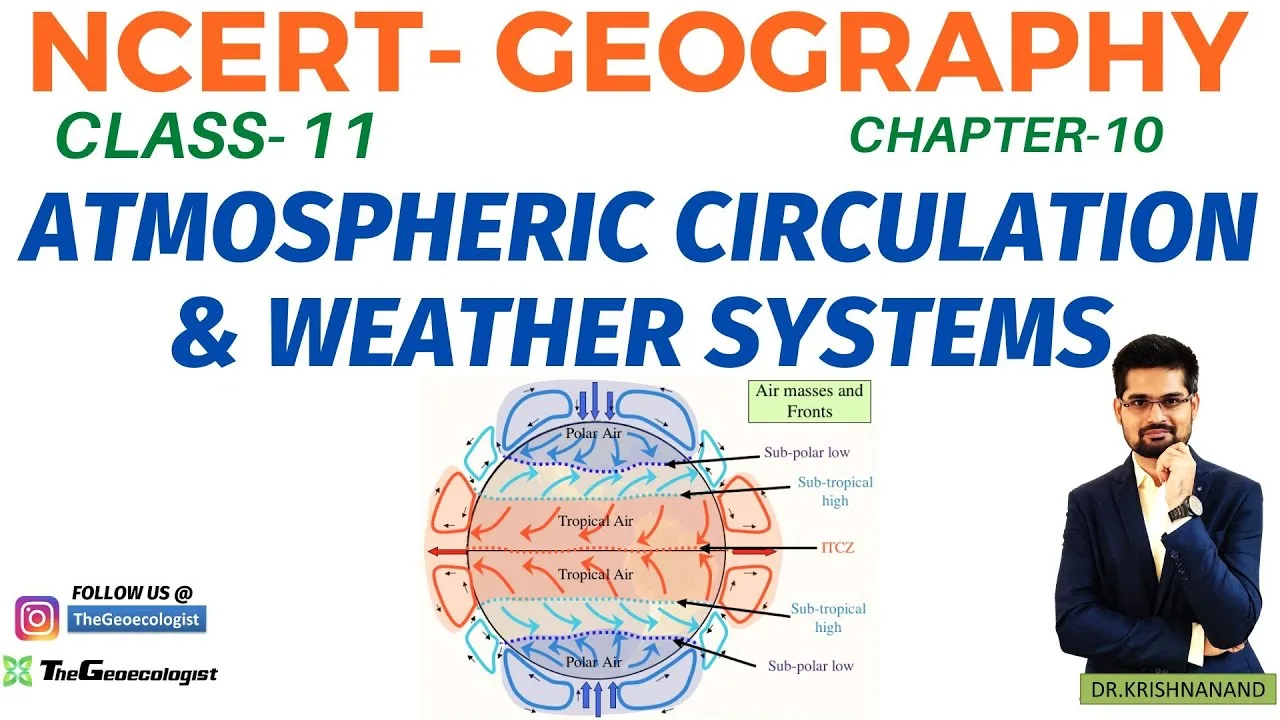
Atmospheric circulation arises from the uneven heating of Earth’s surface by the Sun and the planet’s rotation. Key concepts include:
- Pressure Belts: Equatorial low, subtropical highs, subpolar lows, and polar highs.
- Wind Systems: Trade winds (easterlies), westerlies, and polar easterlies, driven by pressure gradient force and influenced by the Coriolis effect.
- Three-Cell Model:
- Hadley Cell: Between the equator and 30° latitude (drives trade winds).
- Ferrel Cell: Mid-latitude cell (30°–60°, associated with westerlies).
- Polar Cell: Between 60° and poles.
TheGeoecologist’s video uses animated diagrams to explain how these cells redistribute heat, ensuring global energy balance.
2. Weather Systems: Dynamics of the Atmosphere
Inter-Tropical Convergence Zone (ITCZ)
- A low-pressure belt near the equator where trade winds converge, causing heavy rainfall.
- Shifts seasonally, influencing monsoons in India (a critical point for UPSC).
Jet Streams
- Fast-flowing air currents in the upper troposphere.
- The sub-tropical jet stream and polar jet stream guide weather systems like western disturbances (crucial for Indian winters).
Cyclones and Anticyclones
- Tropical Cyclones: Form over warm oceans (e.g., Bay of Bengal); require high humidity, Coriolis force, and unstable air.
- Temperate Cyclones: Form in mid-latitudes due to frontal systems; common in Europe and North America.
- The video highlights the “eye” of cyclones and the wind speed-pressure relationship with relatable Hindi terms like chaandi (केन्द्र).
3. Monsoons and Regional Winds
- Indian Monsoon: Driven by differential heating of land and sea, ITCZ shifts, and jet streams. TheGeoecologist links this to NCERT’s explanation of seasonal wind reversal.
- Local Winds: Loo (hot winds in North India), Kal Baisakhi (Nor’westers in West Bengal).
4. Why This Chapter Matters
- CBSE Exams: Direct questions on pressure belts, cyclones, and monsoons. Diagrams like the three-cell model are frequently asked.
- UPSC/Competitive Exams: Applications in climatology, disaster management (cyclones), and agricultural patterns (monsoons).
Study Tips from TheGeoecologist’s Video
- Visual Learning: Use flowcharts to remember pressure belts and wind directions.
- Mnemonics: E.g., “Horse Latitudes” for subtropical highs.
- Case Studies: Relate cyclones like Amphan or Fani (discussed in the video) to theoretical concepts.
Boost Your Preparation!
For in-depth lectures, notes, and MCQ practice, visit TheGeoecologist’s paid course at https://thegeoecologist.com/.
Stay Connected:
- 📸 Instagram: @thegeoecologist
- 📧 Email: krishna.geography@gmail.com
#ncertclass11geography #ncertgeography #ncertrevision
Master atmospheric circulation to decode weather mysteries and ace your exams! 🌍🌀
To Download E-Books & Study Material Visit The Shop Page