Blog
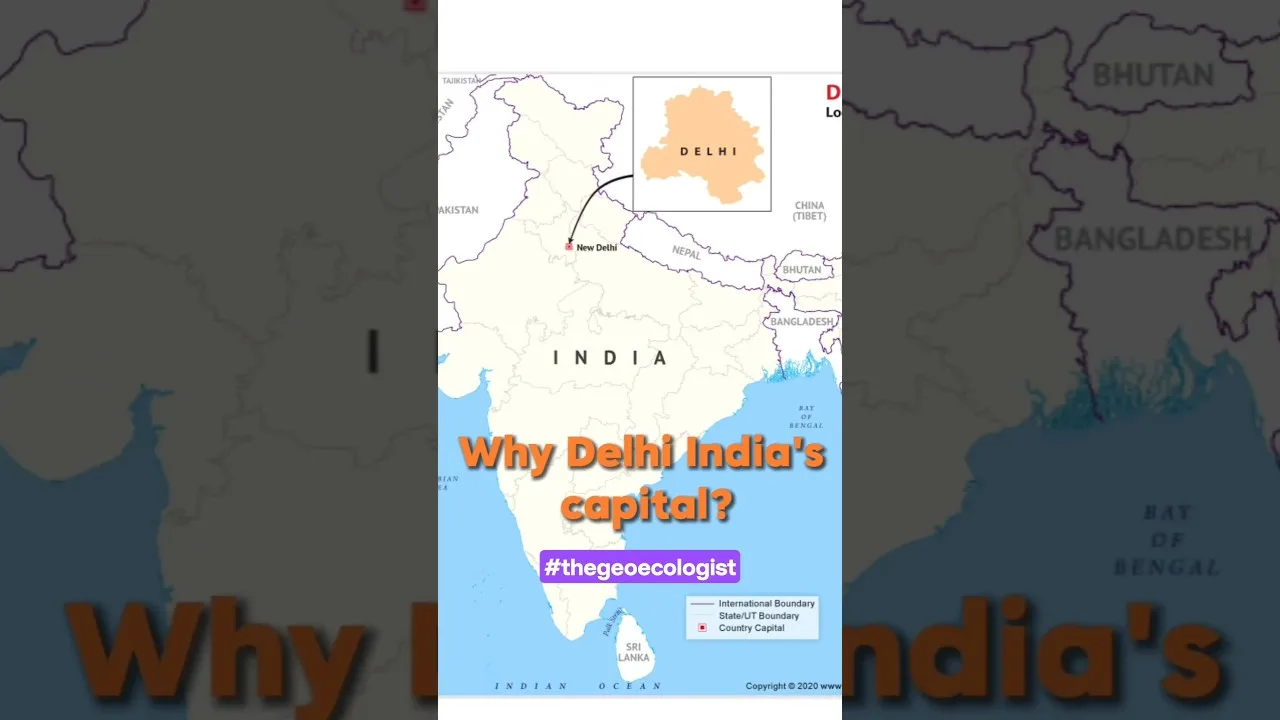
Why Delhi became India’s Capital? #thegeoecologist #shorts

Why Delhi became India’s Capital? #thegeoecologist #shorts
Why Delhi Became India’s Capital: A Strategic Crossroads of History
When India gained independence in 1947, New Delhi stood tall as its undisputed capital. But why Delhi? Why not Kolkata, Mumbai, or Chennai? The answer lies in a powerful fusion of history, geography, politics, and strategic vision—a legacy that makes Delhi the beating heart of the nation.
📍 Historical Gravity: A Seat of Power Since Time Immemorial
Delhi isn’t just a city; it’s a layered tapestry of empires. From the legendary Pandavas’ Indraprastha (ancient Mahabharata) to the Delhi Sultanate, Mughal Empire, and British India, Delhi has been the epicenter of power for over 1,000 years. Each dynasty—Tomaras, Chauhans, Lodis, Mughals—left a mark, embedding Delhi in India’s psyche as the symbolic center of authority. This historical continuity made it a natural choice for a free India seeking continuity after colonial rule.
🌍 Geographic Imperatives: The “Heart of India”
Delhi’s geographic location is a masterstroke:
- Central Hub: Nestled in North India, it connects the agriculturally fertile Gangetic Plains, resource-rich Himalayan regions, and peninsular India.
- Accessibility: Proximity to major trade routes (historical and modern) and transport links.
- Climate: While extreme, it offered a more balanced environment than Kolkata’s humidity or Mumbai’s coastal vulnerability.
This position historically enabled rulers to control diverse kingdoms—a blueprint for modern administrative efficiency.
🏛️ British Colonial Vision: Delhi’s Rebirth (1911)
When the British shifted India’s capital from Kolkata to Delhi in 1911, their motives were twofold:
- Strategic Symbolism: Moving away from Kolkata’s “imperial overreach” toward Delhi’s historical aura signaled a new era.
- Geopolitical Sense: Delhi’s location neutralized regional rivalries—Kolkata represented British trade dominance, while Mumbai focused on western commerce. Delhi, however, sat in the political center.
Architect Edwin Lutyens designed New Delhi as an imperial statement, blending grandeur with functionality. The massive infrastructure—wide boulevards, landmarks like Rashtrapati Bhavan—made it the ready-made capital post-1947.
⚖️ Post-Independence Logic: Unity and Administration
In 1947, India’s founding fathers saw Delhi’s unmatched advantages:
- Neutral Ground:远离海岸和殖民象征(加尔各答和孟买),避免了地域对立。
- Administrative Cohesion: North India’s demographic density and historical bureaucracy streamlined governance.
- Geopolitical Gravity: Proximity to sensitive borders (Kashmir, Pakistan) reinforced its strategic role.
📚 Why It Matters Today
Delhi remains India’s capital not by accident, but by design:
- Historical Legacy: Embodies India’s resilience from ancient to modern times.
- Strategic Nerve Center: Balances power, accessibility, and security.
- Symbol of Unity: Bridges India’s diverse regions under one administrative roof.
As students of 🌍 #GeographyShorts and 📜 #HistoryShorts, understanding Delhi’s journey reveals how geography shapes nations. For aspirants preparing for 🎓 #UPSCPreparation and 📚 #UGCNET, this blend of history, politics, and spatial logic is a cornerstone of Indian studies.
#WhyDelhiCapital | #DelhiCapital | #IndianHistory | #UPSCPreparation | #UGCNET
This 60-second history dive explains why Delhi isn’t India’s capital just by chance—but by choice. 🇮🇳
To Download E-Books & Study Material Visit The Shop Page