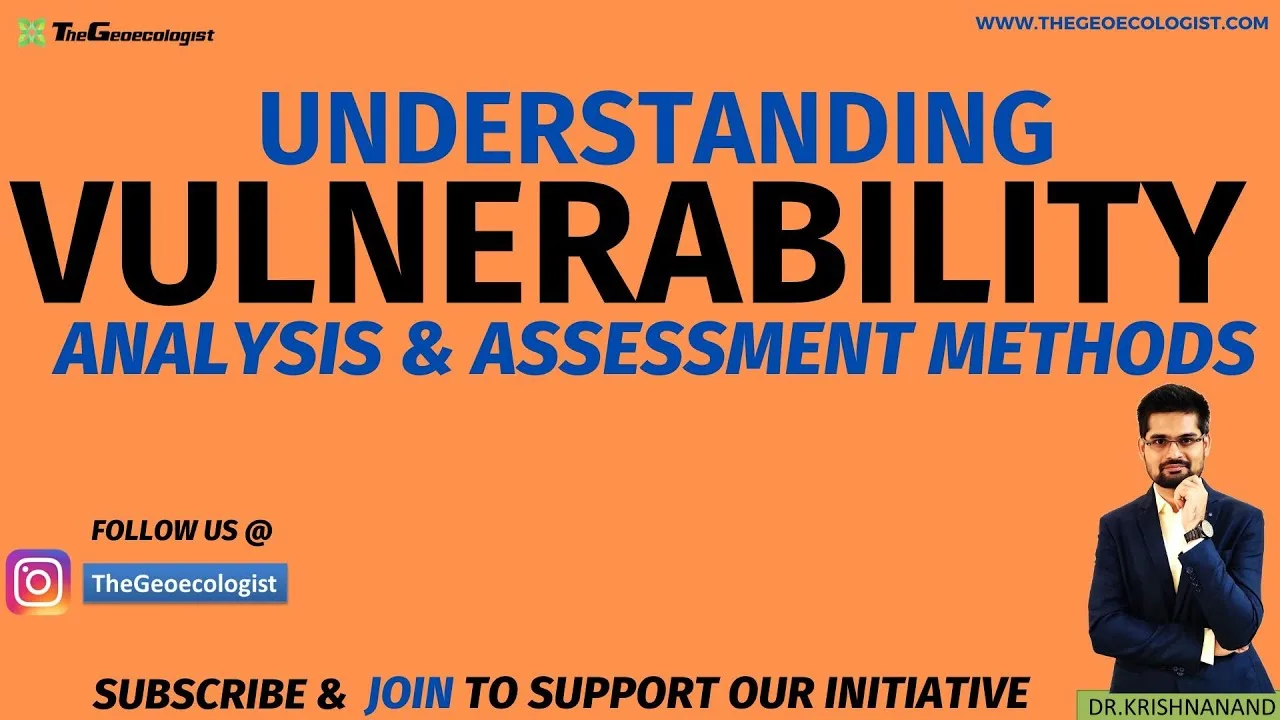
Understanding Vulnerability- Vulnerability Analysis & Assessment -TheGeoecologist
Understanding Vulnerability: Key Models and Techniques for Disaster Management and UPSC Preparation
In an increasingly interconnected world marked by climate change, urbanization, and socio-economic disparities, understanding vulnerability has become critical for effective disaster management and sustainable development. Dr. Krishnanand, founder of TheGeoecologist, demystifies the core concepts of Vulnerability Analysis & Assessment in his latest educational video, offering invaluable insights for Disaster Management students, geography enthusiasts, and UPSC/IAS aspirants. This lecture simplifies complex theories and models, making them accessible to learners globally.
What is Vulnerability?
Vulnerability refers to the susceptibility of individuals, communities, or systems to harm due to external stressors, such as natural disasters, economic shocks, or social inequities. Assessing vulnerability involves identifying who is at risk, why they are at risk, and how their resilience can be strengthened.
Vulnerability Analysis & Assessment: Models & Techniques
Dr. Krishnanand breaks down established frameworks and methodologies used to analyze vulnerability:
Pressure and Release (PAR) Model
- This model views disasters as the intersection of hazard events (e.g., floods, earthquakes) and vulnerable conditions (e.g., poverty, poor infrastructure).
- It emphasizes root causes (e.g., governance, economic policies), dynamic pressures (e.g., urbanization, environmental degradation), and unsafe conditions (e.g., lack of healthcare).
Access to Resources Framework
- Vulnerability is assessed based on access to economic, social, and political resources. Limited access exacerbates risks during crises.
Social Vulnerability Index (SoVI)
- Quantifies social vulnerability using indicators like income, education, age, and gender to map at-risk populations.
Geospatial Techniques (GIS and Remote Sensing)
- Spatial tools help visualize vulnerability hotspots by overlaying hazard maps with socio-economic data.
- Participatory Approaches
- Engages communities in identifying vulnerabilities through workshops, surveys, and local knowledge integration.
Relevance for Disaster Management and UPSC Geography Optional
- Disaster Management Students: These models provide a foundation for designing risk reduction strategies, emergency response plans, and policy interventions.
- UPSC Aspirants: The Geography Optional syllabus includes modules on disaster vulnerability. Mastery of these concepts aids in answering technical questions and case study analyses in exams.
- Global Applications: Techniques like GIS mapping and SoVI are universally applicable, making the lecture beneficial for learners worldwide.
Why Choose TheGeoecologist?
Dr. Krishnanand’s simplified explanations and structured pedagogy make complex topics approachable. TheGeoecologist offers affordable online courses tailored for UPSC geography optional, disaster management, and competitive exams.
Enroll Now:
- 🌐 Visit: https://thegeoecologist.com/
- 📱 WhatsApp Course Query: 9311052969
Stay Connected!
- YouTube: Subscribe to THEGEOECOLOGIST for updates on geography lectures.
- Instagram: Follow @thegeoecologist for study tips and resources.
- Email: krishna.geography@gmail.com
riskmanagement #riskassessment #disastermanagement #upsc #geographyoptional
Mastering vulnerability analysis empowers future leaders to build resilient communities. Whether you’re a student, professional, or UPSC aspirant, TheGeoecologist’s resources can guide your journey toward expertise in disaster management and geography. Enroll today and transform your understanding of vulnerability! 🌍📚
To Download E-Books & Study Material Visit The Shop Page