Blog
Structuralism In Geographical Thought | Human Geography | Dr. Krishnanand

Structuralism In Geographical Thought | Human Geography | Dr. Krishnanand
Decoding Structures: A Guide to Structuralism in Geographical Thought
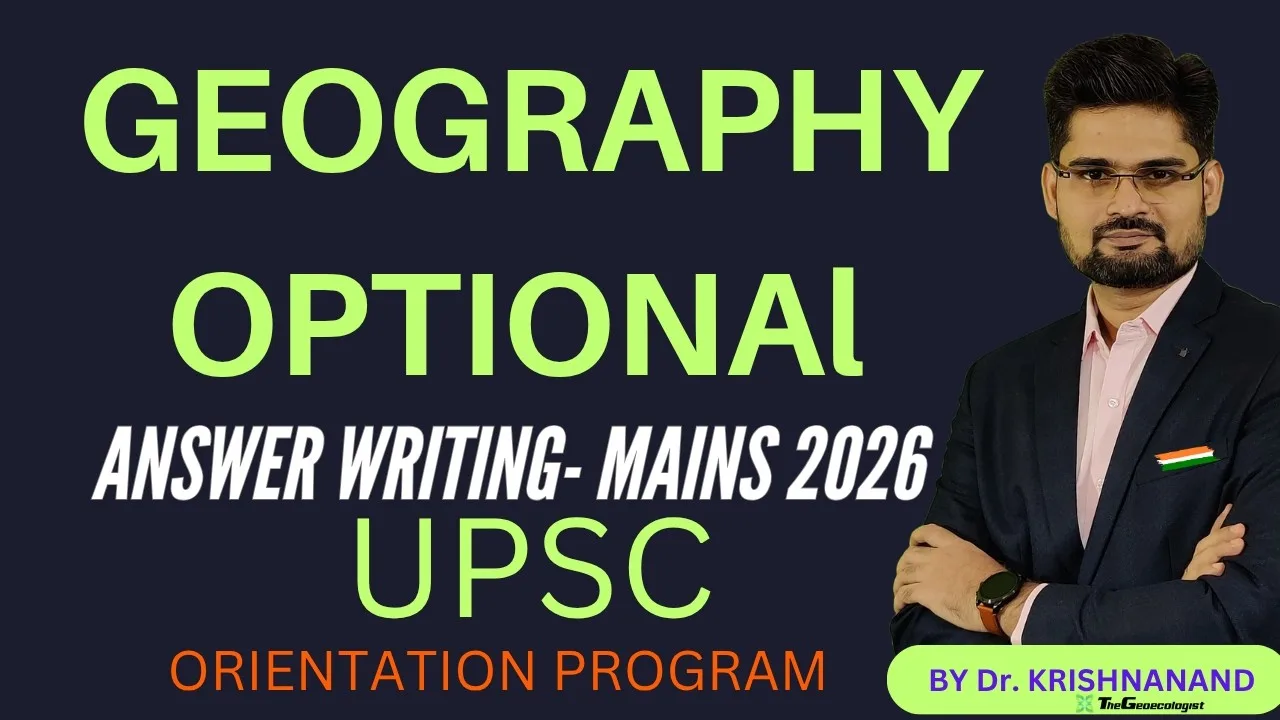
For students of geography and UPSC aspirants grappling with complex theoretical frameworks, Dr. Krishnanand’s lecture on Structuralism In Geographical Thought offers a vital compass. Part of his renowned series on the evolution of geographical thought, this session—released by TheGeoecologist—demystifies structuralism, a pivotal approach reshaping human geography. Designed for clarity, it bridges academic rigor with accessibility, making it indispensable for undergraduates and candidates preparing for Geography Optional in competitive exams.
What is Structuralism? A Primer
Structuralism emerged in the mid-20th century, challenging geography’s earlier focus on descriptive landscapes and environmental determinism. It shifted the lens to systemic relationships and underlying structures shaping human behavior, space, and society. Rooted in linguistics (Lévi-Strauss), anthropology (Claude Lévi-Strauss), and Marxist thought (Althusser), structuralism argues that:
- Meaning is constructed, not innate. Geographical phenomena (e.g., settlements, economic networks) derive significance from their position within larger systems.
- Deep structures—like class hierarchies, cultural norms, or power relations—govern surface-level realities (e.g., rural-urban divides, spatial inequality).
- Oppositions (e.g., center/periphery, nature/culture) define spatial logic, as seen in Wallerstein’s World Systems Theory.
Why Structuralism Matters in Geography
Critique of Idealism:
Unlike phenomenology, which centers human perception, structuralism prioritizes objective systems over individual experience. For example, it explains uneven development through global capitalist structures, not just local decisions.Focus on Patterns and Systems:
Regional geography’s emphasis on uniqueness gives way to analyzing repeatable models. Consider central place theory (Christaller)—hexagonal patterns emerge from logistical structures, not arbitrary history.Power and Ideology:
Structuralism exposes how ideological frameworks (e.g., colonialism, capitalism) spatially segregate communities. Cities become “structured” by socio-economic forces, shaping segregation zones ( Burgess Concentric Model).Cross-Disciplinary Synergy:
It integrates geography with sociology, economics, and political science, offering tools to study:- Spatial division of labor (Friedmann’s Core-Periphery Model).
- Urban morphology as a reflection of class conflicts.
Dr. Krishnanand’s Simplified Approach
In this 27th lecture, Dr. Krishnanand achieves the remarkable feat of simplifying structuralism without diluting depth:
- Case Studies: Examples like colonial plantation economies or gendered spaces illustrate how structure dictates purpose.
- Visual Aids: Diagrams contrast “traditional” (descriptive) geography with structuralist analysis.
- UPSC Relevance: Connects theories to syllabus topics (e.g., Regional Planning, Settlement Geography), aiding answer structuring.
The lecture complements his e-book, Evolution of Geographical Thought (available at geographyebooks.com), which contextualizes structuralism within broader theoretical shifts—from environmental determinism to postmodernism.
Structuralism’s Critics and Legacy
While powerful, structuralism faces critiques:
- Rigidity: Oversimplifies human agency within structures (e.g., resistance to capitalism).
- Neutrality: Ignores power imbalances in defining “structures” themselves.
Yet, its legacy endures in: - Critical Geography: Which uses structuralist frameworks to challenge neoliberal spatial policies.
- GIS Spatial Analysis: Modeling structures like transport networks or market hierarchies.
For Aspirants: Learning Pathways
- Start Here: Watch Dr. Krishnanand’s video (linked below) for foundational clarity.
- Dive Deep: Read Chapter 3 of his e-book on “Structuralism and Marxism in Geography.”
- Apply Practice: Relate structuralism to UPSC case studies (e.g., NITI Aayog’s regional planning flaws).
“Geography is not just about maps; it’s about decoding the hidden structures that move people, resources, and power.” — Dr. Krishnanand
Stay Connected:
- Subscribe to THEGEOECOLOGIST YouTube for more lectures.
- Email: krishna.geography@gmail.com
- Website: thegeoecologist.com
- Instagram: @thegeoecologist
ALL RIGHTS RESERVED. This content is protected under intellectual property rights. For educational purposes only.
#geographicalthought #structuralism #humangeography #upsc GeographyOptional #geographytheories #drkrishnanand
To Download E-Books & Study Material Visit The Shop Page