
Blog
SPITI VALLEY:TETHYS SEA EXPOSED | TRAVELING AND EXPLORING THE TRANS-HIMALAYA| LAHAUL AND SPITI INDIA

SPITI VALLEY:TETHYS SEA EXPOSED | TRAVELING AND EXPLORING THE TRANS-HIMALAYA| LAHAUL AND SPITI INDIA
Spiti Valley: Tethys Sea Exposed | Exploring the Trans-Himalaya | Lahaul and Spiti, India
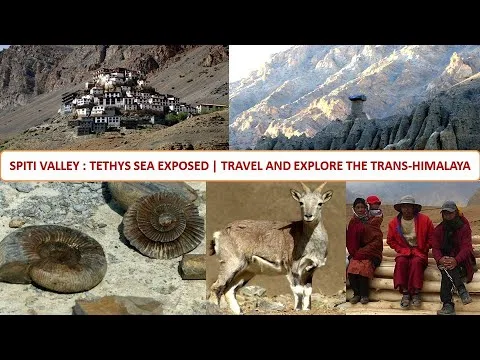
Nestled high in the remote Himalayas, Spiti Valley is a mesmerizing cold desert mountain region in the northeastern part of Himachal Pradesh, India. Known for its rugged terrain, stark landscapes, and ancient Buddhist monasteries, Spiti also holds a geological treasure—fossil-rich Tethyan sediments that reveal ancient secrets of Earth’s history.
The Tethys Sea Heritage of Spiti Valley
Millions of years ago, before the Indian plate collided with the Eurasian plate, the region was submerged under the Tethys Sea. As tectonic forces reshaped the Himalayas, these marine sediments were uplifted, exposing an extraordinary collection of fossils—ammonites, brachiopods, and other marine creatures that thrived in the ancient ocean.
Spiti and Lahaul stand out as geoheritage sites, attracting geologists, paleontologists, and curious travelers. The Tethyan sediments found here provide crucial insights into Earth’s evolutionary history, making Spiti a natural open-air museum.
Geotourism in Spiti Valley: A Journey Through Time
Geotourism is an emerging concept in Spiti, offering travelers an opportunity to explore its geological wonders while preserving its pristine environment. Key attractions include:
- Fossil Beds (Langza, Hikkim, Komic): Villages like Langza are known for ammonite fossils, some embedded in rocks and even used in local construction.
- Pin Valley National Park: A hotspot for rare fossilized marine species and unique Himalayan flora and fauna.
- Chandratal & Suraj Tal: High-altitude lakes with stunning geological formations around them.
A field study conducted between 2014-2019 highlighted the potential for geotourism development in Spiti. Researchers used GPS mapping and GIS to identify key sites, emphasizing the need for geoconservation policies and geo-parks to protect these invaluable formations.
Challenges and Opportunities
Despite its geological wealth, Spiti faces challenges:
✔ Lack of geoconservation laws: Fossils are often taken as souvenirs, risking damage.
✔ Inaccessibility: Remote terrain makes infrastructure development difficult.
✔ Awareness gaps: More educational programs for tourists and locals are needed.
To overcome these, experts suggest:
- Establishing fossil parks and geo-parks (similar to UNESCO Global Geoparks).
- Promoting responsible tourism to ensure minimal environmental impact.
- Strengthening local community involvement in conservation efforts.
Spiti Valley Through the Lens of Dr. Krishnanand
Renowned geographer and educator Dr. Krishnanand, in his travel documentary, deciphers the geological evolution of Spiti Valley. His work provides an in-depth understanding of the Tethyan sediments and the valley’s unique Trans-Himalayan ecosystem.
For those intrigued by geology, adventure, and untouched landscapes, Spiti Valley is more than a tourist destination—it’s a gateway to Earth’s prehistoric past.
Plan Your Visit & Stay Informed
🌍 Visit The Geoecologist for more geological explorations.
📷 Follow on Instagram @thegeoecologist for stunning visuals and updates.
#SpitiValley #FossilPark #TethyanSediments #Geotourism #Himalayas #LahaulSpiti
(Video Credits: Geo_XP YouTube Channel for post-production)
This article encapsulates Spiti Valley’s geological marvels, tourism potential, and conservation needs, making it an engaging read for travelers and researchers alike. Would you like any modifications for a specific audience?
To Download E-Books & Study Material Visit The Shop Page