


Mass Wasting:Types and Characteristics | Denudational Process-3 | Geomorphology| Dr. Krishnanand
Mass Wasting: Types and Characteristics | Denudational Process
Introduction
Mass wasting, also known as slope movement or mass movement, is a fundamental denudational process in geomorphology that involves the downslope movement of rock, soil, and debris under the influence of gravity. This natural phenomenon plays a crucial role in shaping landscapes and is an important topic in geography, particularly for UPSC aspirants studying World Physical Geography (General Studies Paper-1).
In his insightful lecture, Dr. Krishnanand, founder of TheGeoecologist, explains the various types and characteristics of mass wasting, making it an essential resource for competitive exams and geography students.
What is Mass Wasting?
Mass wasting refers to the movement of Earth materials down a slope due to gravity. Unlike erosion, which involves external agents like water or wind, mass wasting occurs primarily due to gravitational pull acting on weakened slopes. Factors such as steepness, water saturation, vegetation loss, and seismic activity contribute to mass wasting processes.
Types of Mass Wasting
Mass wasting can be classified based on speed, moisture content, and material type. The major types include:
1. Slow Movements (Creep)
- Soil Creep: Gradual downhill movement of soil due to freeze-thaw cycles, wetting-drying, and gravity.
- Rock Creep: Slow movement of bedrock fragments.
- Solifluction: Saturated soil flows slowly over a frozen subsurface (common in periglacial regions).
2. Rapid Movements
- Landslides: Sudden collapse of slope materials, including rockfalls and debris slides.
- Slumps: Rotational movement along a curved surface, leaving a crescent-shaped scar.
- Mudflows: Fast-moving mixture of water and fine debris, common in volcanic and deforested regions.
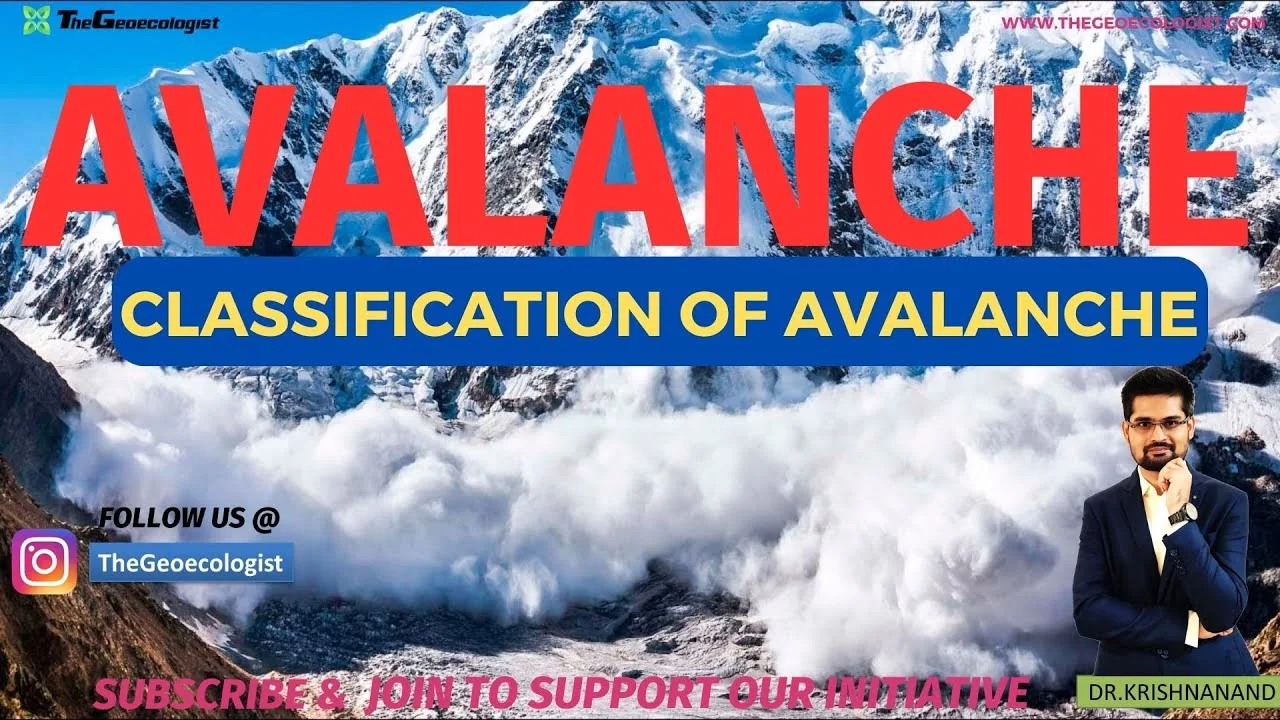
- Avalanches: Rapid movement of snow, ice, and debris down steep slopes.
3. Subaqueous Mass Wasting
- Movements occurring underwater, such as turbidity currents and submarine landslides.
Characteristics of Mass Wasting
- Triggering Factors: Heavy rainfall, earthquakes, volcanic activity, and human activities (e.g., deforestation, construction).
- Material Composition: Can include rock, soil, debris, or a mixture.
- Speed Variation: Ranging from millimeters per year (creep) to hundreds of km/h (rockfalls, mudflows).
- Impact: Can cause significant topographical changes, destruction of habitats, and human disasters.
Importance for UPSC and Geography Students
Understanding mass wasting is crucial for:
✅ General Studies Paper-1 (World Physical Geography)
✅ Geography Optional for UPSC Mains
✅ Academics and environmental studies
For in-depth knowledge, refer to the Simplified Geomorphology E-Book by Dr. Krishnanand:
🔗 https://mithilacraft.com/product/simplified-geomorphology-ebook/
Conclusion
Mass wasting is a key geomorphological process that continuously reshapes Earth’s surface. Dr. Krishnanand’s lecture provides a simplified yet comprehensive explanation, making it beneficial for UPSC aspirants and geography enthusiasts.
📌 Subscribe to THEGEOECOLOGIST for more educational content.
📧 Email: krishna.geography@gmail.com
🌐 Website: https://thegeoecologist.com/
📸 Instagram: https://www.instagram.com/thegeoecologist/
Geography #MassWasting #Geomorphology #UPSC #TheGeoecologist #Landslides #DenudationProcess
To Download E-Books & Study Material Visit The Shop Page