


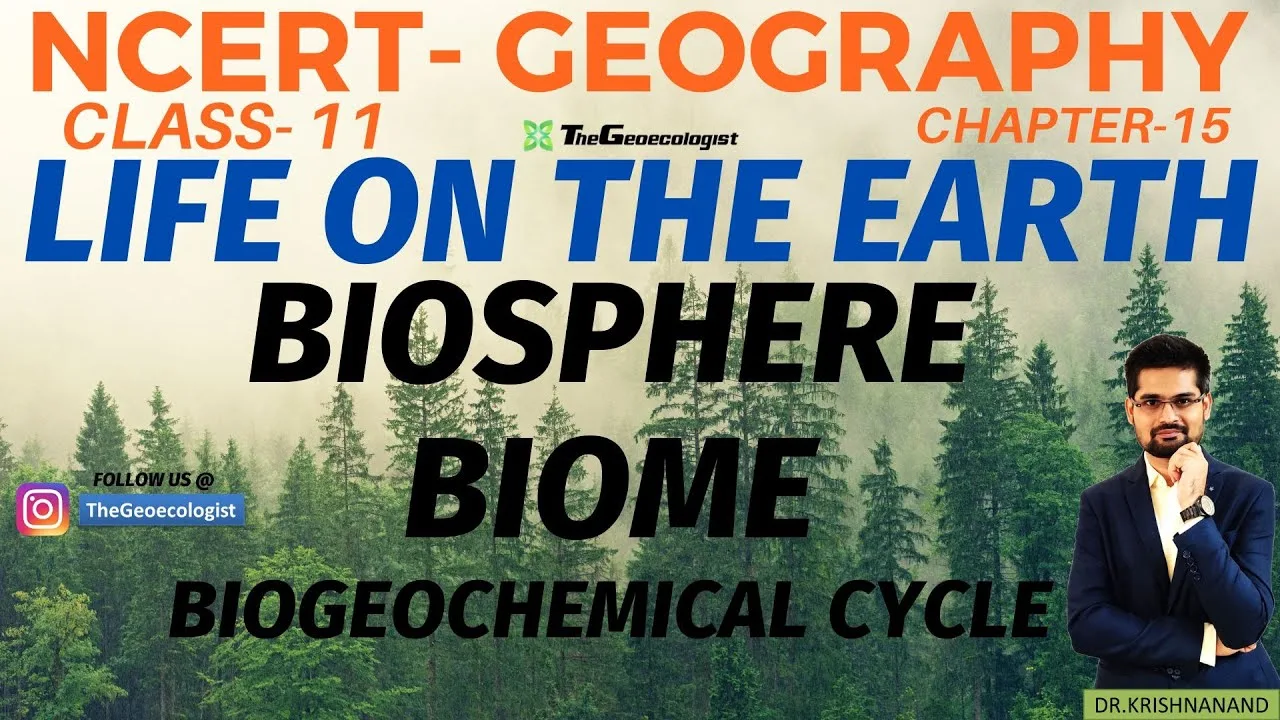
Life on the Earth- Biosphere- NCERT Class 11-Chapter 15
Understanding Life on Earth: The Biosphere – NCERT Class 11 Geography Chapter 15 Simplified
The biosphere, a dynamic and interconnected layer of Earth where life thrives, is a critical topic for CBSE Class 11 students and competitive exam aspirants. This article simplifies Chapter 15 of NCERT Class 11 Geography, integrating insights from TheGeoecologist’s Hindi-English video, to help you grasp the essentials of the biosphere, its components, and its significance.
What is the Biosphere?
The biosphere (जैवमंडल) encompasses all living organisms and their environments, spanning the lithosphere (land), hydrosphere (water), and atmosphere (air). It is a delicate balance of biotic (living: plants, animals) and abiotic (non-living: soil, sunlight) components. NCERT emphasizes how energy flow and nutrient cycles (e.g., carbon, nitrogen) sustain this system.
Ecosystems and Biomes: Diversity on Earth
An ecosystem (पारिस्थितिकी तंत्र) is a community of organisms interacting with their environment. India’s diverse biomes include:
- Tropical Rainforests: Western Ghats and Northeast India, rich in biodiversity.
- Deciduous Forests: Central India’s teak forests.
- Mangroves: Sundarbans, home to the Royal Bengal Tiger.
- Himalayan Alpine Zones: Unique cold-adapted flora and fauna.
TheGeoecologist’s video highlights these biomes with relatable examples, explaining concepts like food chains (खाद्य श्रृंखला) and energy pyramids in Hinglish for clarity.
Biodiversity in India: A Global Hotspot
India hosts 8% of the world’s biodiversity. Key regions include:
- Western Ghats: UNESCO World Heritage Site with endemic species.
- Sundarbans: Largest mangrove ecosystem and tiger reserve.
- Himalayas: Rare species like snow leopards and red pandas.
NCERT underscores the importance of biodiversity for ecological stability and human survival, while TheGeoecologist links this to UPSC-focused topics like conservation policies.
Human Impact and Conservation
Human activities—deforestation (वनों की कटाई), pollution, and urbanization—threaten the biosphere. NCERT discusses concepts like ecological balance and sustainable development. India’s conservation efforts include:
- Project Tiger (1973): Safeguarding tiger habitats.
- Biosphere Reserves: Nilgiri, Sundarbans, and Pachmarhi.
- National Action Plan on Climate Change: Promoting renewable energy.
TheGeoecologist’s video simplifies these initiatives, connecting them to current issues like climate change and COP meetings.
Exam Preparation Tips
- Focus on Definitions: Terms like biosphere, ecosystem, and biodiversity.
- Practice Diagrams: Energy flow, carbon cycle, and soil profiles.
- Case Studies: Indian biosphere reserves and conservation projects.
- UPSC Relevance: Link topics to environment-related questions in prelims and mains.
Why This Matters
Understanding the biosphere is key to addressing environmental challenges. For competitive exams, integrating NCERT content with real-world examples strengthens answers.
Enhance Your Learning!
For detailed lessons, enroll in TheGeoecologist’s courses at https://thegeoecologist.com/. Follow on Instagram @thegeoecologist for updates and tips.
ncertclass11geography #biosphere #upscpreparation #cbseclass11 #environmentalstudy
This article blends NCERT concepts with practical insights, tailored for both CBSE students and aspirants aiming for UPSC. By contextualizing examples and simplifying terminology, it bridges classroom learning and competitive exam readiness.
To Download E-Books & Study Material Visit The Shop Page