Blog
Land Resources and Agriculture- Chapter 3 -Class 12- NCERT

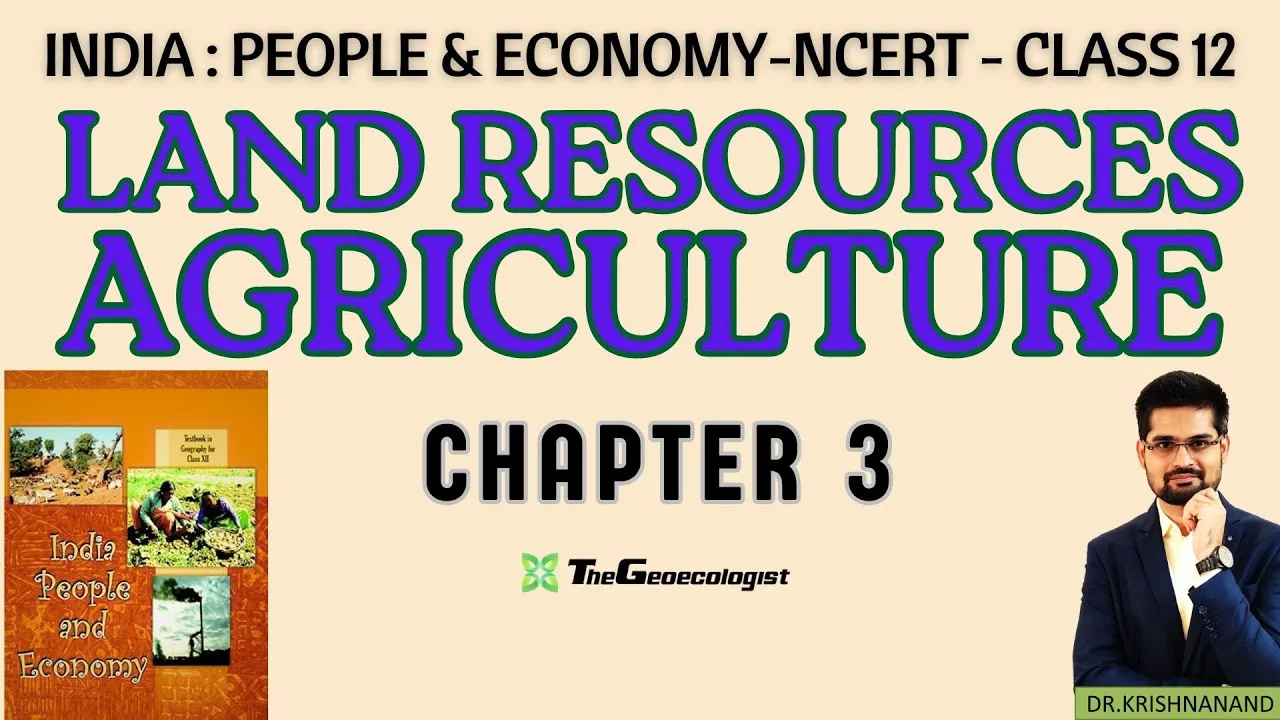
Land Resources and Agriculture- Chapter 3 -Class 12- NCERT
Land Resources and Agriculture: The Backbone of India’s Economy
(Based on NCERT Class 12 Geography & TheGeoecologist’s Insights)
Land resources and agriculture form the cornerstone of India’s economy and cultural identity. Chapter 3 of India’s People and Economy (NCERT Class 12) delves into the intricate relationship between land utilization, agricultural practices, and socio-economic development. This article synthesizes key concepts from the textbook and TheGeoecologist’s video lecture, offering a comprehensive guide for CBSE students, CUET, UPSC, and UGC NET aspirants.
1. Land Resources: Utilization and Challenges
India’s land use pattern, as per the Agricultural Census, is categorized into:
- Net Sown Area (NSA): ~54% of total land, used for crop cultivation.
- Forest Cover: ~22%, vital for ecological balance but under pressure from urbanization.
- Barren and Wasteland: ~12%, highlighting challenges in land degradation.
- Non-agricultural Uses: ~8%, including urban and industrial areas.
Key Issues:
- Land Degradation: Soil erosion, waterlogging, and salinization affect 30% of land, reducing productivity.
- Fragmentation of Landholdings: Over 85% of farmers own less than 2 hectares, complicating mechanization and economies of scale.
2. Agricultural Practices in India
India’s agriculture is shaped by monsoon dependency, diverse agro-climatic zones, and socio-economic factors.
Types of Farming:
- Subsistence Farming: Predominant in Eastern India, reliant on monsoon and traditional methods.
- Commercial Farming: Focused on cash crops (e.g., sugarcane, cotton) in Punjab, Haryana, and Maharashtra.
- Plantation Agriculture: Tea, coffee, and rubber cultivation in Karnataka, Kerala, and Assam.
Cropping Seasons:
- Kharif (June–September): Rice, maize, cotton.
- Rabi (October–March): Wheat, barley, mustard.
- Zaid (April–June): Short-duration crops like watermelon and cucumber.
3. Major Crops and Their Geography
- Foodgrains:
- Rice: West Bengal, Punjab, and Tamil Nadu (requires 100+ cm rainfall).
- Wheat: UP, Punjab, Haryana (grown in well-drained loamy soil).
- Commercial Crops:
- Cotton (Gujarat, Maharashtra), Sugarcane (UP, Maharashtra).
- Horticulture: India is the world’s largest producer of fruits like mangoes and bananas.
4. Challenges in Indian Agriculture
- Climate Vulnerability: Erratic monsoons and rising temperatures threaten yield stability.
- Low Productivity: Outdated techniques and inadequate irrigation (only ~48% of land is irrigated).
- Policy Gaps: MSP (Minimum Support Price) controversies and lack of market access for small farmers.
Government initiatives like the Pradhan Mantri Krishi Sinchayee Yojana (irrigation), Soil Health Card Scheme, and Organic Farming Promotion aim to address these issues.
5. Sustainable Practices and Future Directions
- Agroforestry and Organic Farming: Reduces dependency on chemicals.
- Diversification: Shift toward high-value crops (e.g., spices, floriculture) and animal husbandry.
- Technology Integration: Precision farming, GIS mapping, and drone surveillance for efficient resource use.
Why This Matters for Exams
- UPSC/CUET: Focus on land use trends, Green Revolution impacts, and government policies.
- UGC NET: Theoretical frameworks like Von Thünen’s model and sustainable agriculture.
- Class 12 CBSE: Detailed maps of crop distribution and statistical data analysis.
Conclusion
Understanding land resources and agriculture is pivotal for grasping India’s economic and environmental dynamics. For deeper insights, explore TheGeoecologist’s video lectures, which simplify complex topics using bilingual explanations and real-world examples.
Enroll in our paid courses at https://thegeoecologist.com/ for structured guidance and exam-focused strategies. Follow us on Instagram for updates!
#ncertgeography #agriculture #upsc #cuet #landresources
By integrating NCERT concepts with contemporary analysis, this article bridges classroom learning and competitive exam preparation, empowering students to navigate India’s agricultural landscape with confidence.
To Download E-Books & Study Material Visit The Shop Page