Blog
Geography of Russia-Central Asian Region-Geoecologist

Geography of Russia-Central Asian Region-Geoecologist
Exploring the Geography of Russia & Central Asian Region: A Comprehensive Guide for UPSC Aspirants
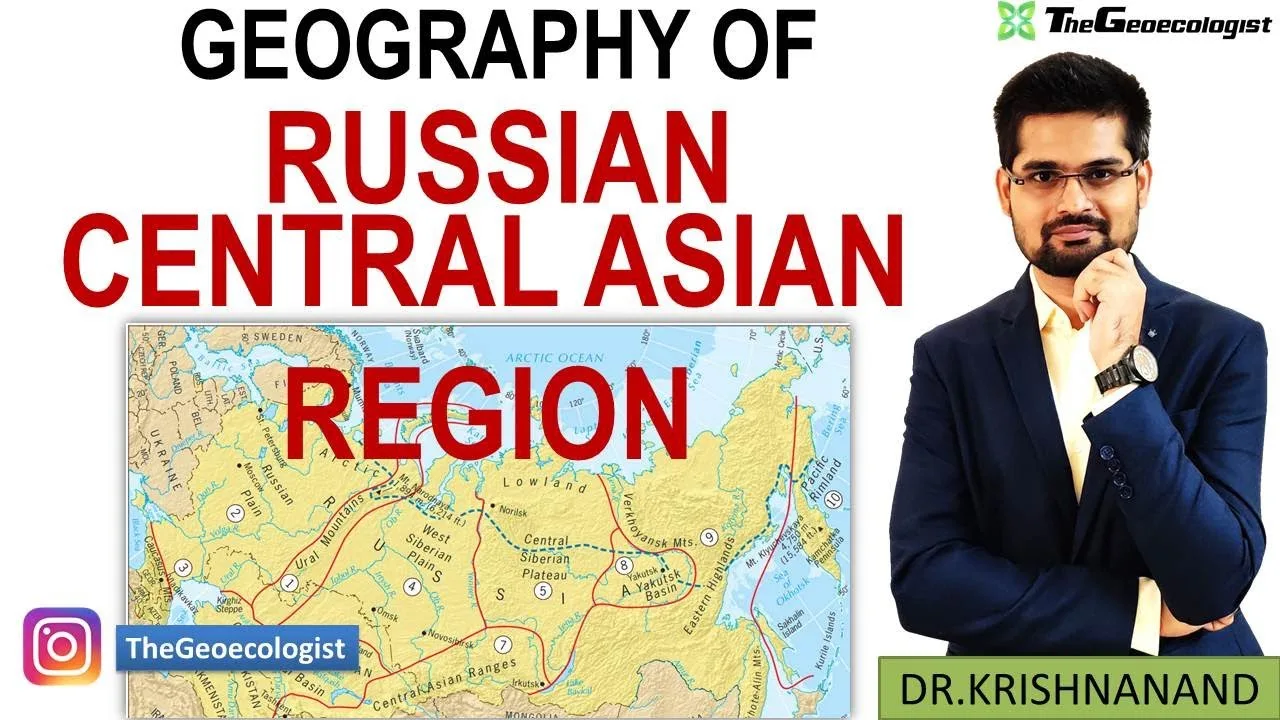
The vast and diverse landscapes of Russia and the Central Asian Region form a critical component of regional geography, especially for competitive examinations like the UPSC. This article delves into the key geographical concepts, ecological dynamics, and geopolitical intricacies of this strategically significant area, aligning with the insights from Dr. Krishnanand’s video lecture on TheGeoecologist YouTube channel.
1. Physical Geography: Landscapes and Climates
Russia, the world’s largest country, spans 11 time zones and features a mosaic of landforms:
- Ural Mountains: The traditional boundary between Europe and Asia.
- Siberian Plains: Dominated by the West Siberian Plain and the Central Siberian Plateau, these regions are known for permafrost and extreme winters.
- Volga River: Europe’s longest river, crucial for transportation and agriculture.
- Climate: Ranges from arctic tundra in the north to temperate steppes in the south, influenced by continentality.
Central Asia, comprising Kazakhstan, Uzbekistan, Turkmenistan, Kyrgyzstan, and Tajikistan, is characterized by:
- Arid Deserts: The Kyzylkum and Karakum deserts dominate the landscape.
- Mountain Ranges: The Pamir and Tian Shan mountains act as water towers, feeding rivers like the Amu Darya and Syr Darya.
- Water Bodies: The shrinking Aral Sea exemplifies ecological mismanagement, while the Caspian Sea is a key resource hub.
2. Human Geography: Culture and Urbanization
- Russia: Over 145 million people, with ethnic diversity across its republics. Major cities like Moscow and Saint Petersburg are economic hubs, while Siberia remains sparsely populated.
- Central Asia: A blend of Turkic and Persian influences, with Islam as the dominant religion. Urban centers such as Tashkent and Almaty reflect Soviet-era planning juxtaposed with modern development.
3. Geoecological Challenges
Both regions face pressing environmental issues:
- Russia: Melting permafrost due to climate change threatens infrastructure and releases stored methane. Deforestation in the Taiga biome impacts carbon sequestration.
- Central Asia: Water scarcity and the Aral Sea crisis highlight unsustainable irrigation practices. Desertification and soil salinity threaten agricultural productivity.
4. Geopolitical Dynamics
- Resource Powerhouse: Russia and Central Asia are global energy players, with vast oil, gas, and mineral reserves. Pipelines to Europe and China underscore their strategic roles.
- Russia-Ukraine War: The conflict has reshaped regional alliances, with Central Asian nations navigating ties with Russia, China (via the Belt and Road Initiative), and the West.
- Security Concerns: Organizations like the CSTO and SCO address regional stability, counter-terrorism, and economic cooperation.
Why This Matters for UPSC?
Understanding this region’s geography is vital for topics like:
- Physical and human geography interplay.
- Environmental governance and transboundary water disputes.
- Geopolitical strategies impacting global energy markets.
Conclusion
The Russia-Central Asian Region is a nexus of ecological diversity, cultural richness, and geopolitical significance. For UPSC aspirants, a nuanced grasp of its geography offers insights into global environmental and political challenges.
Enhance Your Preparation
For detailed video lectures by Dr. Krishnanand, visit THEGEOECOLOGIST and join the channel for exclusive perks. Stay updated on Instagram @thegeoecologist and explore more resources at thegeoecologist.com.
russia #centralasianregion #russiaukrainewar
Master regional geography with expert insights and ace your competitive exams! 🌍📚
To Download E-Books & Study Material Visit The Shop Page