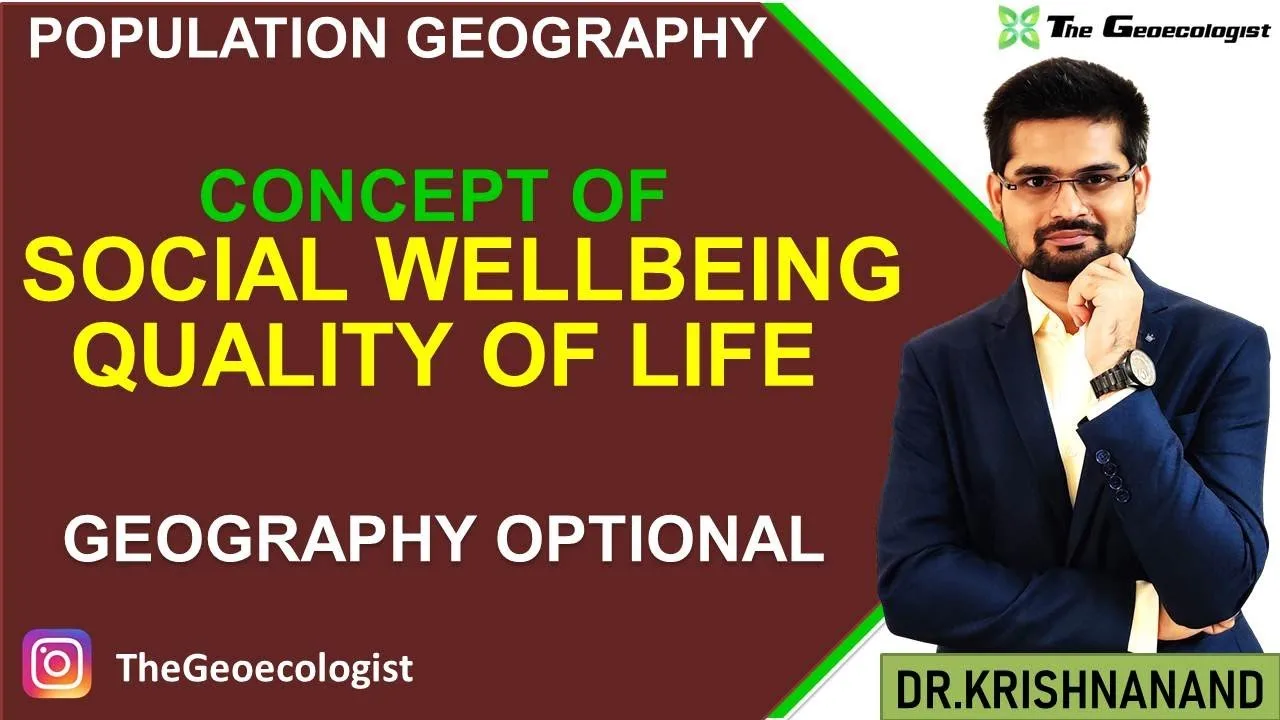
Social Wellbeing and Quality of Life – Population Geography
Exploring Social Wellbeing and Quality of Life through the Lens of Population Geography
Population geography, a critical sub-discipline of human geography, examines the spatial aspects of human populations, including their distribution, composition, and dynamics. At its core, it seeks to understand how demographic patterns influence—and are influenced by—social, economic, and environmental factors. Two intertwined concepts central to this field are social wellbeing and quality of life, which serve as vital indicators of a population’s health, prosperity, and overall development. This article delves into these concepts, their interdependence, and their significance in population geography, while highlighting valuable resources like the Simplified Population Geography e-book for aspirants and students.
Understanding Social Wellbeing
Social wellbeing encompasses the collective welfare of communities, measured through factors such as access to healthcare, education, housing, employment, and social cohesion. It reflects how individuals perceive their happiness, security, and inclusion within society. Population geographers analyze spatial disparities in social wellbeing by studying variables like regional poverty rates, literacy levels, and healthcare infrastructure. For instance, rural-urban divides or migration trends often reveal stark contrasts in social wellbeing, driven by uneven resource distribution or policy frameworks.
Quality of Life: Beyond Material Wealth
Quality of life (QoL) is a broader concept that evaluates the overall living conditions of individuals, incorporating both objective metrics (e.g., income, life expectancy) and subjective experiences (e.g., life satisfaction, mental health). Indicators like the Human Development Index (HDI) and Multidimensional Poverty Index (MPI) help geographers assess QoL across regions. Factors such as environmental quality, urban planning, and governance effectiveness directly impact QoL. Rapid urbanization, while boosting economic opportunities, may strain resources and degrade living standards, highlighting the need for balanced development strategies.
The Interconnection Between Social Wellbeing and Quality of Life
Social wellbeing and quality of life are deeply interconnected. Improved access to education (a social wellbeing metric) enhances employability, thereby raising income levels and QoL. Conversely, environmental degradation—a QoL concern—can undermine social wellbeing by displacing communities or intensifying health crises. Population geography provides the tools to map these relationships, identifying regions that require targeted interventions. Policies addressing gender equality, sustainable urbanization, or healthcare access often emerge from such analyses.
Population Geography’s Role in Shaping Development
Population geographers play a pivotal role in shaping policies by:
- Mapping demographic trends (e.g., aging populations, youth bulges).
- Analyzing migration patterns and their socioeconomic impacts.
- Identifying regions vulnerable to inequality or climate change.
For UPSC aspirants, mastering these concepts is crucial for topics like regional planning, demographic transition, and sustainable development in the Geography Optional syllabus.
The Simplified Population Geography E-book: A Key Resource
For students and aspirants seeking in-depth knowledge, the Simplified Population Geography e-book (available here) offers a comprehensive yet accessible guide. Authored by Dr. Krishnanand, founder of TheGeoecologist, this resource breaks down complex themes like social wellbeing, QoL, and demographic methodologies into digestible sections. It aligns perfectly with UPSC syllabus requirements and serves as an excellent supplement for university-level geography courses.
Why Focus on Social Wellbeing and QoL for UPSC?
These concepts are integral to topics such as:
- Human Development Reporting (e.g., HDI rankings).
- Urban and Regional Planning (e.g., smart cities mission).
- Sustainable Development Goals (SDGs).
Aspirants are encouraged to explore case studies (e.g., Kerala’s high HDI despite low income) and recent data to enrich their answers.
Conclusion
Social wellbeing and quality of life are not just academic concepts but foundational pillars for equitable development. By studying them through the lens of population geography, students gain insights into crafting policies that bridge disparities and foster inclusive growth. For those preparing for competitive exams or deepening their geographical expertise, resources like the Simplified Population Geography e-book and TheGeoecologist’s YouTube channel (subscribe here) are invaluable.
Explore Further:
- Follow TheGeoecologist on Instagram for daily updates.
- Visit TheGeoecologist’s website for study materials and blogs.
socialwellbeing #qualityoflife #populationgeography
(About the Author: Dr. Krishnanand is a renowned educator and founder of TheGeoecologist, specializing in simplifying geographical concepts for UPSC aspirants and students worldwide.)
To Download E-Books & Study Material Visit The Shop Page