Blog
Population Problems of Bihar-Demographic Profile & Migration Problems in Bihar- BPSC

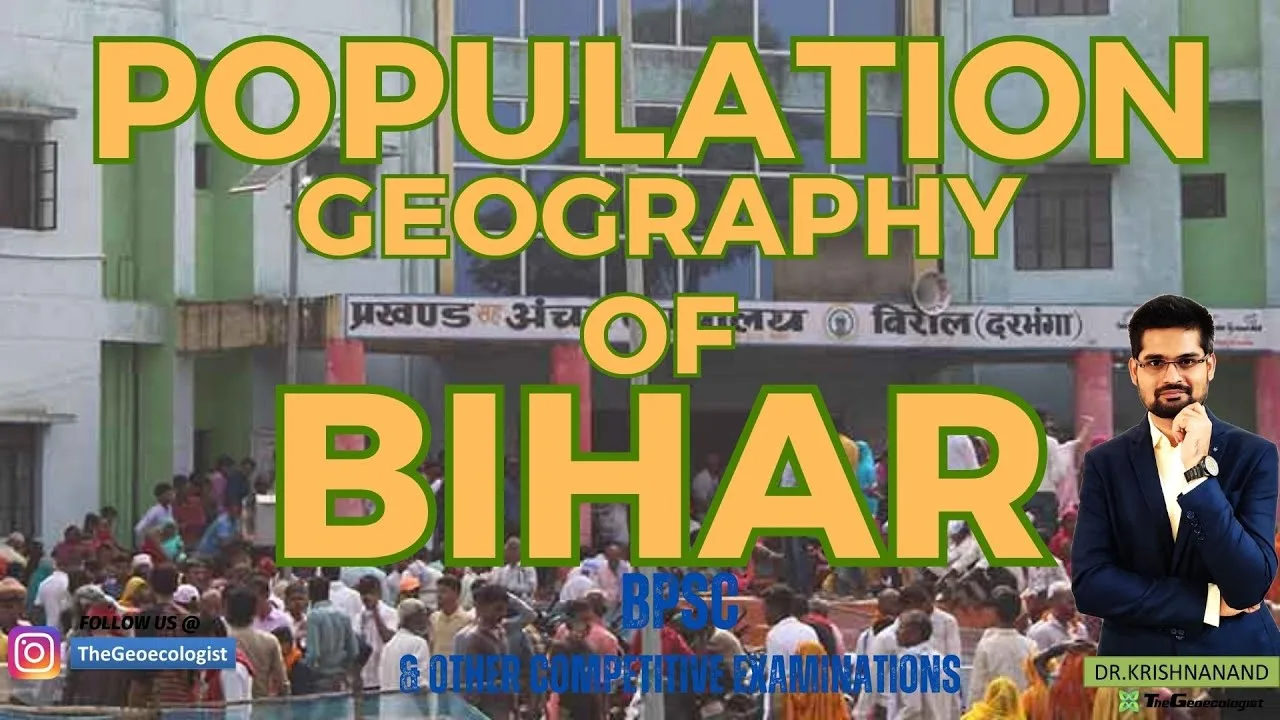
Population Problems of Bihar-Demographic Profile & Migration Problems in Bihar- BPSC
Understanding Bihar’s Population Challenges and Migration Dynamics: A BPSC Aspirant’s Guide
Bihar, one of India’s most populous states, faces significant demographic and migration-related challenges that are critical for BPSC aspirants and geography enthusiasts to comprehend. Dr. Krishnanand, founder of TheGeoecologist, has addressed these issues in a comprehensive Hindi-English mixed-language video as part of his BPSC-focused course. This article synthesizes key insights from his teachings, offering a structured overview of Bihar’s demographic profile, migration problems, and their implications for governance and development.
Demographic Profile of Bihar: Key Challenges
Bihar’s population dynamics are marked by unique characteristics that shape its socio-economic landscape:
High Population Density:
With over 110 million people, Bihar is India’s third-most populous state. Its population density of approximately 1,106 persons per sq km (2011 Census) is nearly three times the national average, straining resources and infrastructure.Rapid Population Growth:
Bihar’s decadal growth rate (25.4% in 2001–2011) outpaces the national average, driven by high fertility rates, early marriages, and limited access to family planning services. This growth exacerbates pressure on education, healthcare, and employment systems.Youthful Population:
Over 58% of Bihar’s population is under 25, presenting a demographic dividend opportunity. However, inadequate skill development and job creation hinder harnessing this potential.Gender Disparities:
Bihar’s sex ratio (918 females per 1,000 males in 2011) and female literacy rate (53.3% vs. the national 64.6%) reflect persistent gender inequality, impacting women’s socio-economic participation.- Low Urbanization:
Only 11.3% of Bihar’s population resides in urban areas (2011), compared to India’s 31.2%. Weak urban planning and rural-urban migration further strain cities like Patna.
Migration Problems: Causes and Consequences
Migration is a defining feature of Bihar’s economy, with millions migrating seasonally or permanently for livelihoods:
Drivers of Migration:
- Agrarian Distress: Over 70% of Bihar’s workforce depends on agriculture, but fragmented landholdings and low productivity push rural laborers to seek work elsewhere.
- Limited Industrialization: Sparse industrial growth fails to absorb the growing workforce, forcing migration to states like Punjab, Delhi, and Maharashtra.
- Better Wages: Daily wage labor in construction or manufacturing in destination states offers higher incomes than local opportunities.
Impacts of Migration:
- Economic Dependence: Remittances form a significant part of household incomes but create dependency on external economies.
- Social Costs: Family separation and exploitation of migrants (e.g., low wages, poor working conditions) are common.
- Brain Drain: Skilled workers leaving Bihar reduce local human capital, hindering development.
- Seasonal Migration:
Cyclical migration, especially from districts like Gaya and Madhubani, sees laborers moving for 6–8 months annually, disrupting education and community cohesion.
Government Initiatives and BPSC Relevance
Addressing these challenges is central to Bihar’s development agenda. Key initiatives include:
- Bihar Migration Survey: Launched in 2021, it tracks migration patterns to inform policy.
- Skill Development Programs: Schemes like Kushal Yuva Program aim to enhance employability.
- Women Empowerment: Mission Jeevika promotes self-help groups to boost rural livelihoods.
For BPSC aspirants, understanding these issues is crucial. Questions on Bihar’s demography, migration trends, and governance strategies frequently appear in prelims and mains. Dr. Krishnanand’s video lecture simplifies these topics using maps, case studies, and bilingual explanations, making complex concepts accessible.
Resources for Aspirants
Dr. Krishnanand’s Geography of Bihar eBook (download here) and paid courses on TheGeoecologist offer in-depth coverage of Bihar’s geography, demography, and migration. These resources, tailored for competitive exams, integrate academic rigor with practical insights.
Conclusion
Bihar’s population and migration challenges underscore the need for balanced policies that leverage its demographic dividend while addressing systemic gaps. For BPSC aspirants, mastering these topics is not just about exam success but also about contributing to informed governance. By engaging with resources like Dr. Krishnanand’s courses, students gain the analytical tools to tackle Bihar’s complex socio-geographical issues effectively.
#Bihar #BiharGeography #BPSC #BiharMigrants
Follow TheGeoecologist on Instagram for updates and insights.
To Download E-Books & Study Material Visit The Shop Page