



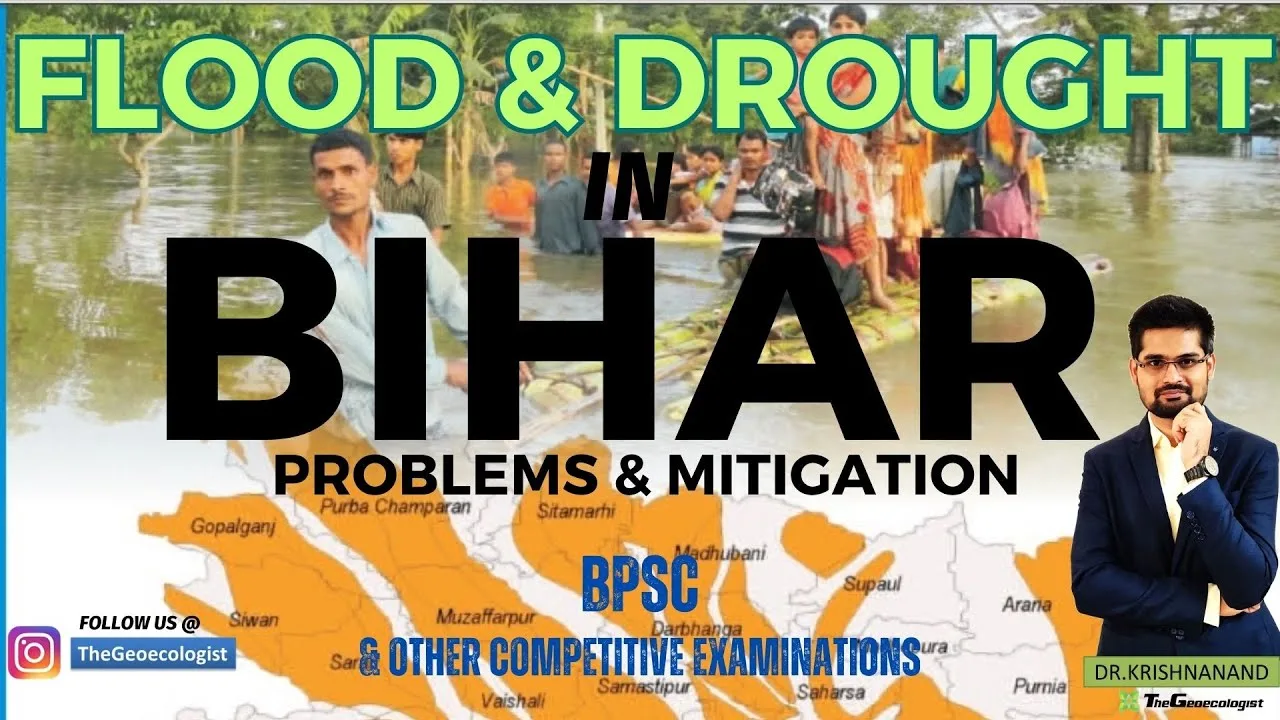
Flood and Drought in Bihar- Problems and Mitigation- BPSC TheGeoecologist
Floods and Droughts in Bihar: Problems and Mitigation Strategies
(Relevant for BPSC and Competitive Exams)
Bihar, a state in eastern India, faces dual challenges of floods and droughts due to its unique geography and climatic conditions. These disasters disrupt livelihoods, agriculture, and socio-economic development. Understanding their causes, impacts, and mitigation measures is critical for BPSC aspirants and geography enthusiasts.
Floods in Bihar: Causes and Impacts
Geographical Vulnerability:
- Bihar’s northern plains are traversed by Himalayan rivers like the Kosi, Gandak, Bagmati, and Ghaghara, which carry heavy silt and have shifting courses. The Kosi River, called "Bihar’s Sorrow," frequently breaches embankments.
- Flat terrain, inadequate drainage, and glacial melt exacerbate flooding.
Annual Devastation:
- 73% of Bihar’s population in North Bihar districts (e.g., Supaul, Khagaria, Madhubani) faces annual floods.
- Loss of lives, displacement, crop damage, and infrastructure destruction (e.g., roads, bridges).
- Human-Induced Factors:
- Embankment breaches, encroachment of floodplains, and deforestation reduce natural water retention capacity.
Mitigation Strategies for Floods:
- Structural Measures: Strengthen embankments, build reservoirs (e.g., proposed Kosi High Dam), and promote river interlinking.
- Non-Structural Measures: Improve flood forecasting with satellite tech, enforce strict zoning laws, and raise community awareness.
- Ecological Solutions: Restore wetlands (e.g., Kanwar Lake) and afforest catchment areas.
Droughts in Bihar: A Silent Crisis
Climatic Challenges:
- Despite 1,000–1,200 mm annual rainfall, erratic monsoon distribution affects southern Bihar (e.g., Rohtas, Aurangabad, Kaimur).
- Over-reliance on groundwater and low irrigation coverage worsen water scarcity.
- Impacts:
- Crop failure (predominantly rainfed agriculture) leads to farmer distress and migration.
- Depletion of groundwater and drying of traditional water bodies (e.g., ahars and pynes).
Mitigation Strategies for Droughts:
- Water Conservation: Revive traditional rainwater harvesting systems and implement watershed management.
- Agricultural Reforms: Promote drought-resistant crops (e.g., millets) and micro-irrigation techniques.
- Policy Initiatives: Expand schemes like Jal Jeevan Hariyali for afforestation and groundwater recharge.
Role of Climate Change and Holistic Planning
Climate change intensifies both floods (via extreme rainfall) and droughts (through delayed monsoons). A holistic approach is vital:
- Integrate floodplain zoning with drought-proofing measures.
- Empower local communities through training and participatory disaster management.
- Prioritize sustainable development to balance ecological and economic needs.
Conclusion
Addressing Bihar’s flood-drought paradox requires scientific planning, policy enforcement, and community engagement. Aspirants must grasp these dynamics for BPSC exams, which often focus on regional geography and disaster management. For in-depth study, refer to Dr. Krishnanand’s Bihar Geography E-book (Download Here) and explore courses on TheGeoecologist.
Follow Updates:
- Email: krishna.geography@gmail.com
- Instagram: @thegeoecologist
- Hashtags: #BPSCC #BiharFlood #BiharDrought #BiharGeography
Note: This article blends English-Hindi terminology to cater to diverse learners, reflecting Dr. Krishnanand’s pedagogical style.
To Download E-Books & Study Material Visit The Shop Page