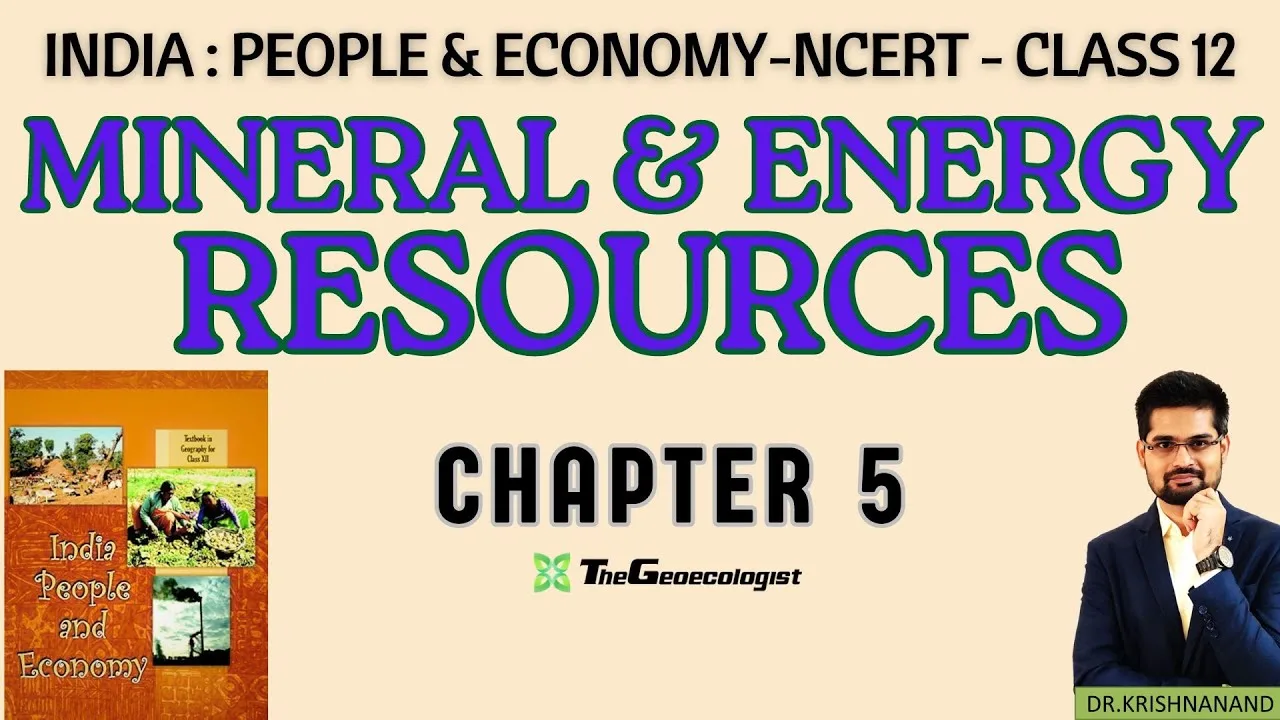
Minerals & Energy Resources-Chapter 5 -NCERT Class 10
Understanding Minerals & Energy Resources: A Comprehensive Guide for CBSE Class 10 and Competitive Exams
Minerals and Energy Resources, covered in Chapter 5 of NCERT Class 10 Geography, form the backbone of a nation’s economic development. This article simplifies key concepts from the chapter, integrating insights from a bilingual Hindi-English video resource, to cater to CBSE students and competitive exam aspirants like those preparing for UPSC. Let’s dive in!
1. What Are Minerals?
Minerals are naturally occurring inorganic substances with definite chemical and physical properties. They are broadly classified into:
- Metallic Minerals: Iron, copper, bauxite (ferrous—contain iron; non-ferrous—no iron).
- Non-Metallic Minerals: Mica, limestone, salt.
Minerals occur in various forms: veins (thin layers), lodes (large deposits), and sedimentary layers (e.g., coal).
2. Distribution of Minerals in India
India’s mineral wealth is unevenly distributed. Key regions include:
- Chota Nagpur Plateau: Stores iron, coal, manganese, and bauxite.
- Mica Belt: Stretches across Jharkhand, Andhra Pradesh, and Rajasthan.
- Oil Reserves: Mumbai High, Gujarat, and Assam.
Map Insight: Practice locating these regions—crucial for CBSE board exams!
3. Conventional Energy Resources
These non-renewable sources dominate India’s energy mix:
- Coal: Anthracite (high-grade, Jharkhand), Bituminous (most widely used).
- Petroleum: Found in offshore Mumbai, Assam, and Gujarat; refined at Digboi, Mathura, and Jamnagar.
- Natural Gas: Used in power plants and as CNG.
- Electricity: Thermal (coal-based) vs. Hydel (Bhakra Nangal, Damodar Valley).
4. Non-Conventional Energy Resources
To combat environmental challenges, India is shifting to renewables:
- Solar Energy: Leading projects in Rajasthan (Bhadla Solar Park) and Gujarat.
- Wind Energy: Tamil Nadu and Gujarat coast.
- Biogas: Rural India uses gobar gas for cooking and electricity.
- Nuclear Energy: Uranium from Jharkhand; plants in Kudankulam and Tarapur.
Did You Know? India aims for 500 GW of renewable energy by 2030!
5. Conservation & Sustainable Development
Mining causes deforestation, soil erosion, and pollution. Key solutions:
- Recycling metals.
- Using energy-efficient technologies.
- Promoting the 3Rs (Reduce, Reuse, Recycle).
Why Watch the Bilingual Video?
The Hindi-English video explanation simplifies complex topics through:
- Visual Maps: Easy understanding of mineral distribution.
- Bilingual Narration: Ideal for Hindi-speaking learners.
- Exam Tips: Tailored for CBSE and UPSC pattern questions.
Conclusion
Mastering this chapter is vital for CBSE Class 10 exams (expect map-based questions!) and competitive exams like UPSC. Integrating NCERT content with multimedia resources ensures conceptual clarity and retention.
Explore Our Paid Courses for in-depth guidance: thegeoecologist.com
Follow on Instagram: @thegeoecologist
class10geography #ncertgeography #ncertrevision #upscpreparation #mineralsandenergy
Empower your learning journey with smart resources and ace your exams! 🌍✨
To Download E-Books & Study Material Visit The Shop Page