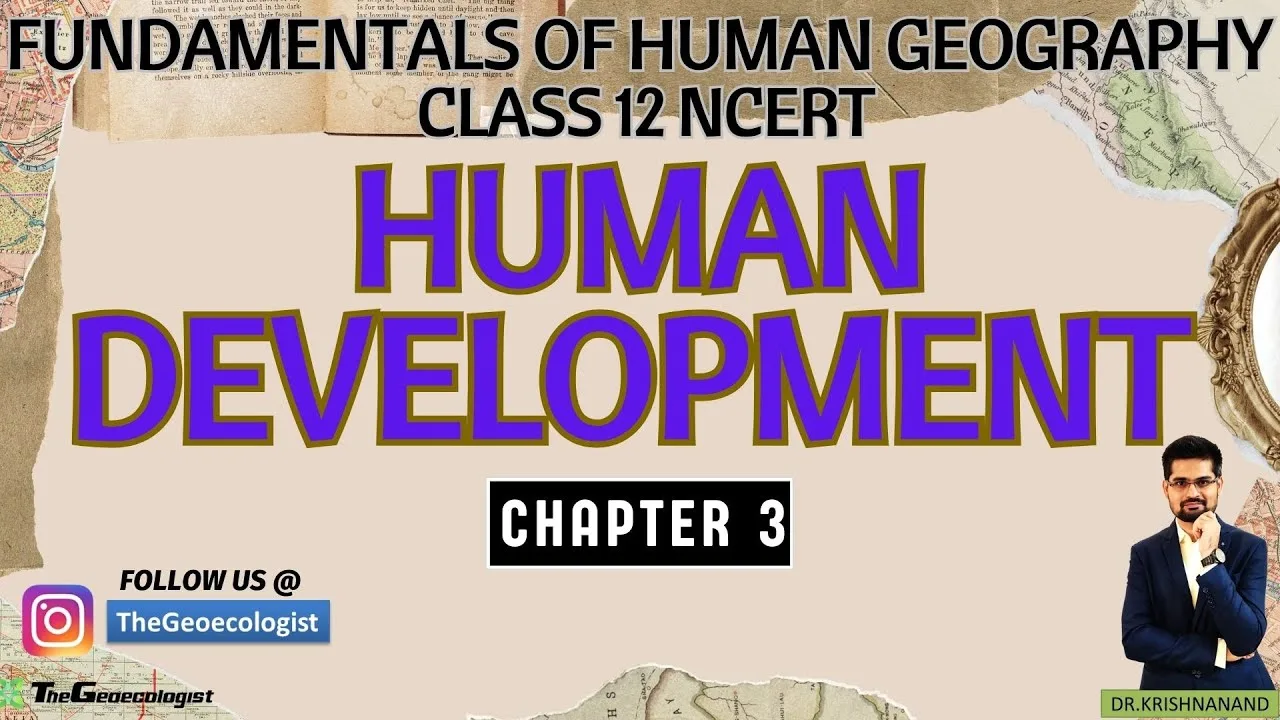
Human Development-Chapter 3-Class 12 NCERT Geography
Understanding Human Development: Insights from Class 12 NCERT Geography (Chapter 3) and TheGeoecologist’s Guide
Human Development, a pivotal concept in Class 12 NCERT Geography (Chapter 3 of Fundamentals of Human Geography), serves as a cornerstone for understanding socio-economic progress. This article distills the chapter’s key themes, aligned with TheGeoecologist’s bilingual video, to aid CBSE students and competitive exam aspirants in mastering the topic.
1. Introduction to Human Development
Human Development, as defined by the UNDP, revolves around expanding people’s choices by improving health, education, and income. Unlike mere economic growth, it emphasizes well-being and empowerment. TheGeoecologist’s video simplifies this by likening development to tools enabling a fulfilling life, using Hindi terms like मानव विकास to resonate with diverse learners.
2. Pillars and Approaches
The chapter highlights four pillars:
- Equity: Fair access to opportunities.
- Sustainability: Ensuring resources for future generations.
- Productivity: Enhancing human capabilities.
- Empowerment: Freedom to make choices.
Approaches to Human Development:
- Income Approach: Focuses on economic growth.
- Welfare Approach: State-provided services.
- Basic Needs Approach: Prioritizes essentials like food, shelter.
- Capabilities Approach (Amartya Sen): Freedom to achieve potential.
TheGeoecologist’s video uses relatable examples, such as comparing Kerala’s education initiatives (high HDI) with states lagging behind, to explain these concepts.
3. Measuring Development: Key Indices
Human Development Index (HDI): Composite index based on:
- Life Expectancy
- Education (Mean and Expected Years of Schooling)
- GNI per Capita
Formula: ( text{HDI} = sqrt[3]{text{Health} times text{Education} times text{Income}} )
- Other Indices:
- HPI (Human Poverty Index)
- GDI (Gender Development Index)
- GEM (Gender Empowerment Measure)
Criticisms of HDI, such as overlooking inequality and environmental factors, are explained in the video with infographics, making abstract ideas tangible.
4. Global and Indian Perspectives
- Global Rankings: Norway, Switzerland, and Iceland often top HDI rankings, while nations like Niger face challenges.
- India’s Position: Ranked 132 out of 191 countries in the 2021 HDI, India struggles with disparities but shows improvement in literacy and health. States like Kerala and Punjab exemplify high regional HDI due to robust social policies.
5. Exam Relevance
For CUET, UPSC, and UGC NET, focus on:
- Distinguishing economic growth vs. human development.
- Critiquing HDI and understanding alternative indices.
- Case Studies: Kerala’s decentralization vs. Bihar’s challenges.
TheGeoecologist’s mnemonics, like “ELS” (Education, Life Expectancy, Standard of Living) for HDI components, aid quick revision.
Conclusion
Human Development bridges academic theory and real-world policy, shaping initiatives like India’s National Health Mission. TheGeoecologist’s bilingual approach demystifies complex topics, making them accessible for exams and beyond.
Enhance your preparation with detailed courses on TheGeoecologist. Follow us on Instagram for updates!
humandevelopment #hdr #class12 #fundamentalsofhumangeography #humangeography #ncertgeography #natureandscopeofhumangeography
By integrating NCERT insights and dynamic video content, this article equips learners to tackle both exams and informed discussions on global development challenges.
To Download E-Books & Study Material Visit The Shop Page