Blog
How River Valleys are formed #geomorphology #rivervalley #shorts

How River Valleys are formed #geomorphology #rivervalley #shorts
How River Valleys Are Formed: A Geomorphological Journey
🌊🏔️
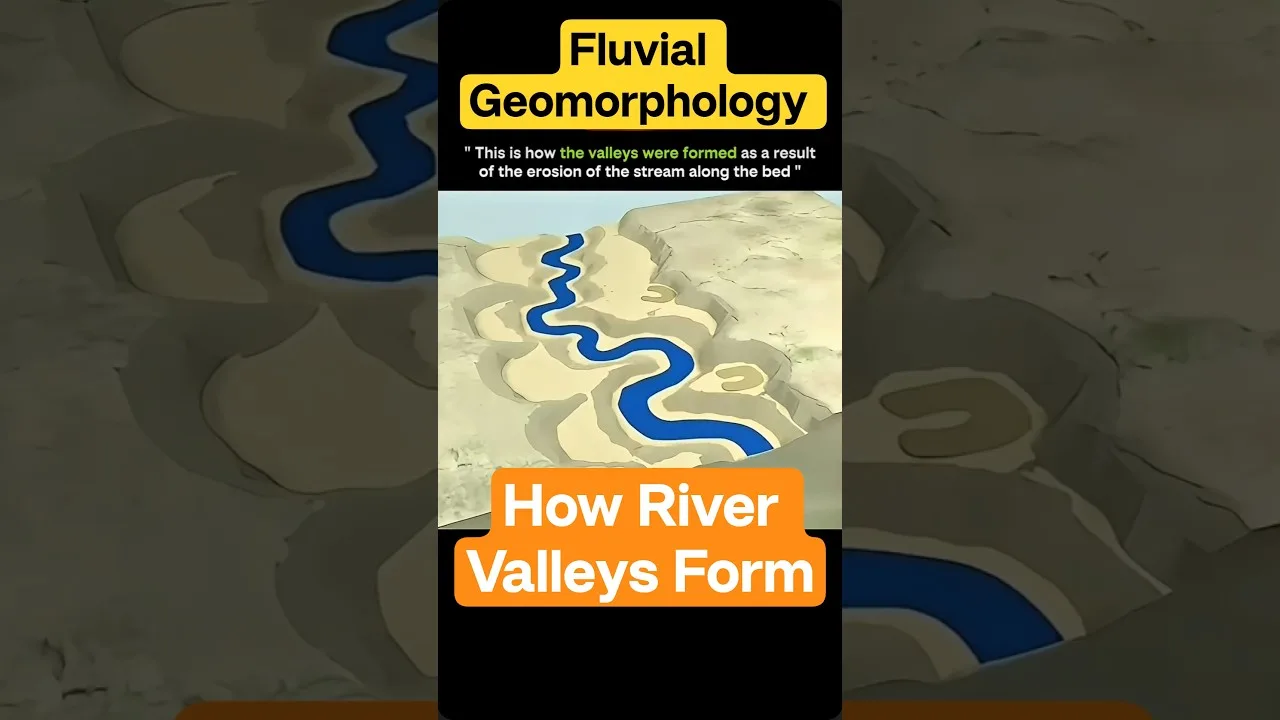
River valleys are among Earth’s most iconic landforms, sculpted by water’s relentless force over millennia. This dynamic process—critical for Geography students and aspirants of UPSC, CUET, NET, and State PSCs—transforms landscapes through erosion, transportation, and deposition. Let’s break down how valleys evolve, from steep V-shaped gorges to wide plains.
The Core Process: Erosion in Action
A river’s journey begins as runoff or groundwater, gathering power as it flows downhill. Its energy—dictated by gradient, volume, and sediment load—governs two types of erosion:
- Vertical Erosion: Dominant in the youthful stage, where fast-flowing water cuts downward, carving a narrow, V-shaped valley. Steep slopes form as water excavates rock and soil, often creating waterfalls or rapids.
- Lateral Erosion: As the river matures, energy shifts sideways. Water erodes valley walls (especially on meanders), widening the valley and depositing sediment to form floodplains—flat, fertile terraces ideal for agriculture.
Stages of River Valley Development
Youthful Stage:
- Characteristics: Steep gradient, fast flow, and vertical erosion.
- Valley Shape: V-shaped with a narrow channel. No floodplains yet.
- Example: Upper course of the Colorado River (Grand Canyon).
Mature Stage:
- Characteristics: Reduced gradient, meandering flow, and dominant lateral erosion.
- Valley Shape: Wider with a distinct floodplain and bluffs (steep cliffs carved by erosion). Deposition features like point bars may appear.
- Example: Middle course of the Mississippi River.
Old Stage:
- Characteristics: Very gentle gradient, slow flow, and minimal energy.
- Valley Shape: Extremely wide with extensive floodplains, oxbow lakes (abandoned meanders), and deltas. Deposition dominates over erosion.
- Example: Lower Nile River valley.
Key Factors Influencing Valley Formation
- River Energy: High energy (steep, water-rich) favors V-shaped valleys; low energy leads to broad plains.
- Rock Resistance: Hard rock (e.g., granite) resists erosion, creating narrow gorges; soft rock (e.g., shale) erodes easily, widening valleys.
- Climate: Arid regions see flash floods carving dramatic valleys; humid regions promote slow, steady widening via chemical erosion.
Why It Matters
River valleys are vital for:
- Human Civilization: Provide fertile soil, water, and trade routes.
- Exam Relevance: UPSC, CUET, and NET exams test fluvial landforms, erosion types, and valley stages. Understanding this helps answer questions on geomorphology and physical geography.
Your Next Step
Master river valley formation with clear visuals and exam tips! Follow @thegeoecologist for daily Geography shorts and visit www.thegeoecologist.com for in-depth resources.
RiverValley #FluvialLandforms #Geomorphology #PhysicalGeography #GeographyShorts #UPSCGeography #CUETGeography #NETGeography #TheGeoEcologist
📌 Tip: Focus on key terms—V-shaped valleys, floodplains, meanders, and erosion types—to ace competitive exams! 🎯
To Download E-Books & Study Material Visit The Shop Page